Seen, remembered, imitated, unconscious
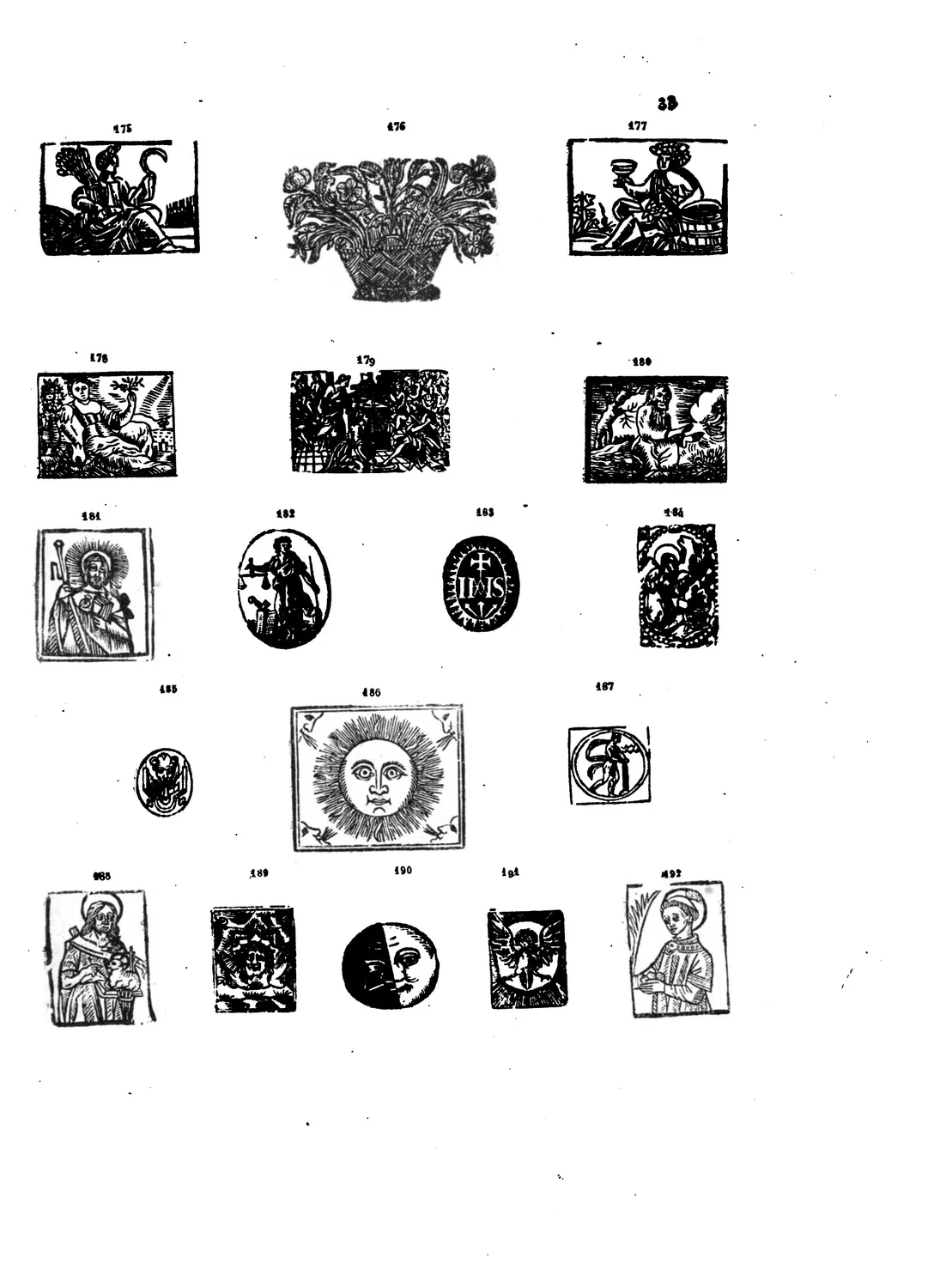
As we explored the extensive Club Collecte catalogue, our gaze was drawn to the yellow cover of Les Aventures du roi Pausole CFL72, adorned on either side with anthropomorphic depictions of the moon and the sun. These two small engravings feel familiar, since we had come across them a few years earlier in the pages of L’Ymagier 3, the art journal founded by Alfred Jarry and Rémy de Gourmont in 1894. We know that these images were first printed in an almanac, before being repurposed in 17th-century chapbooks. It seems that these mischievous celestial figures are no strangers to the printed page !
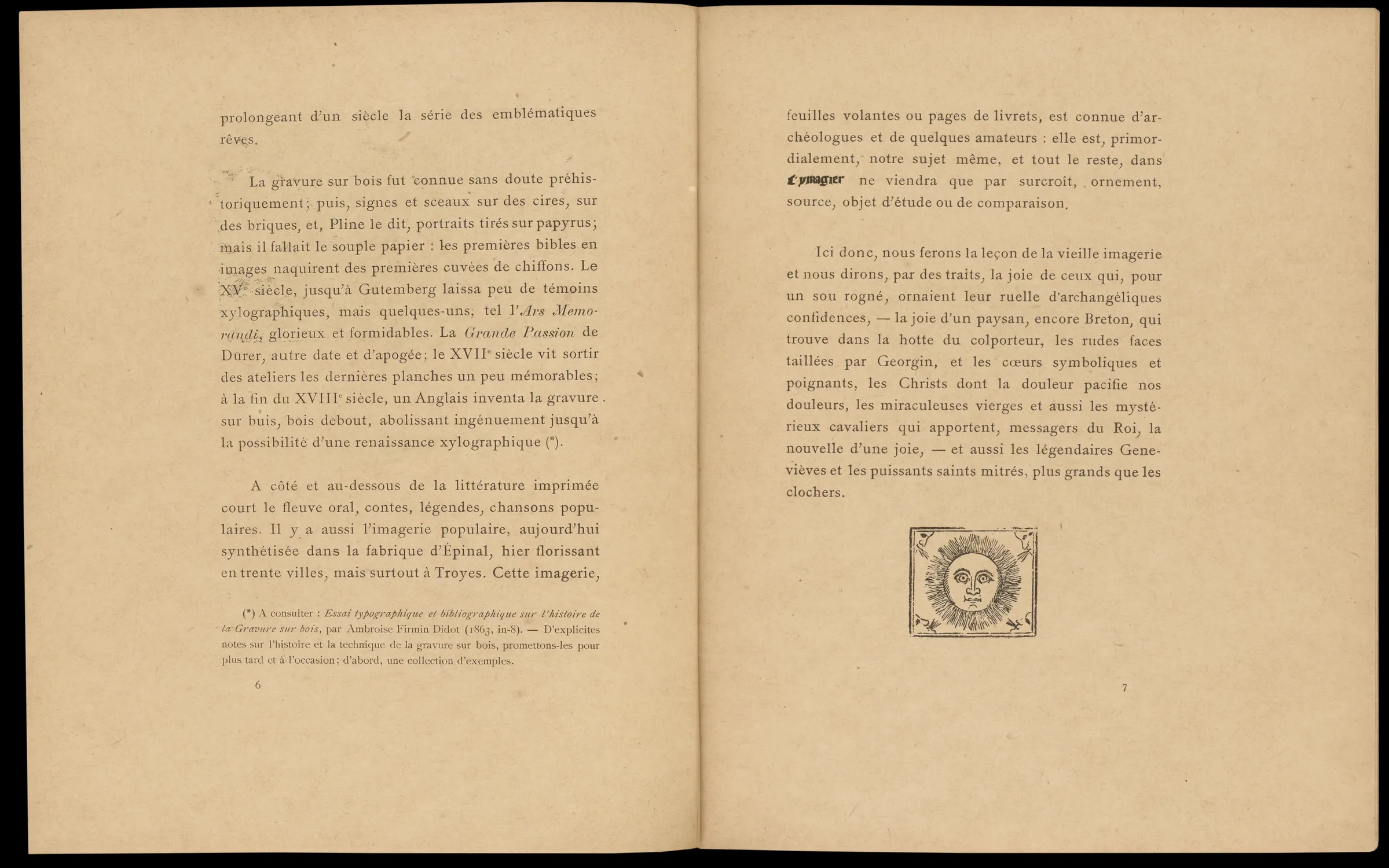
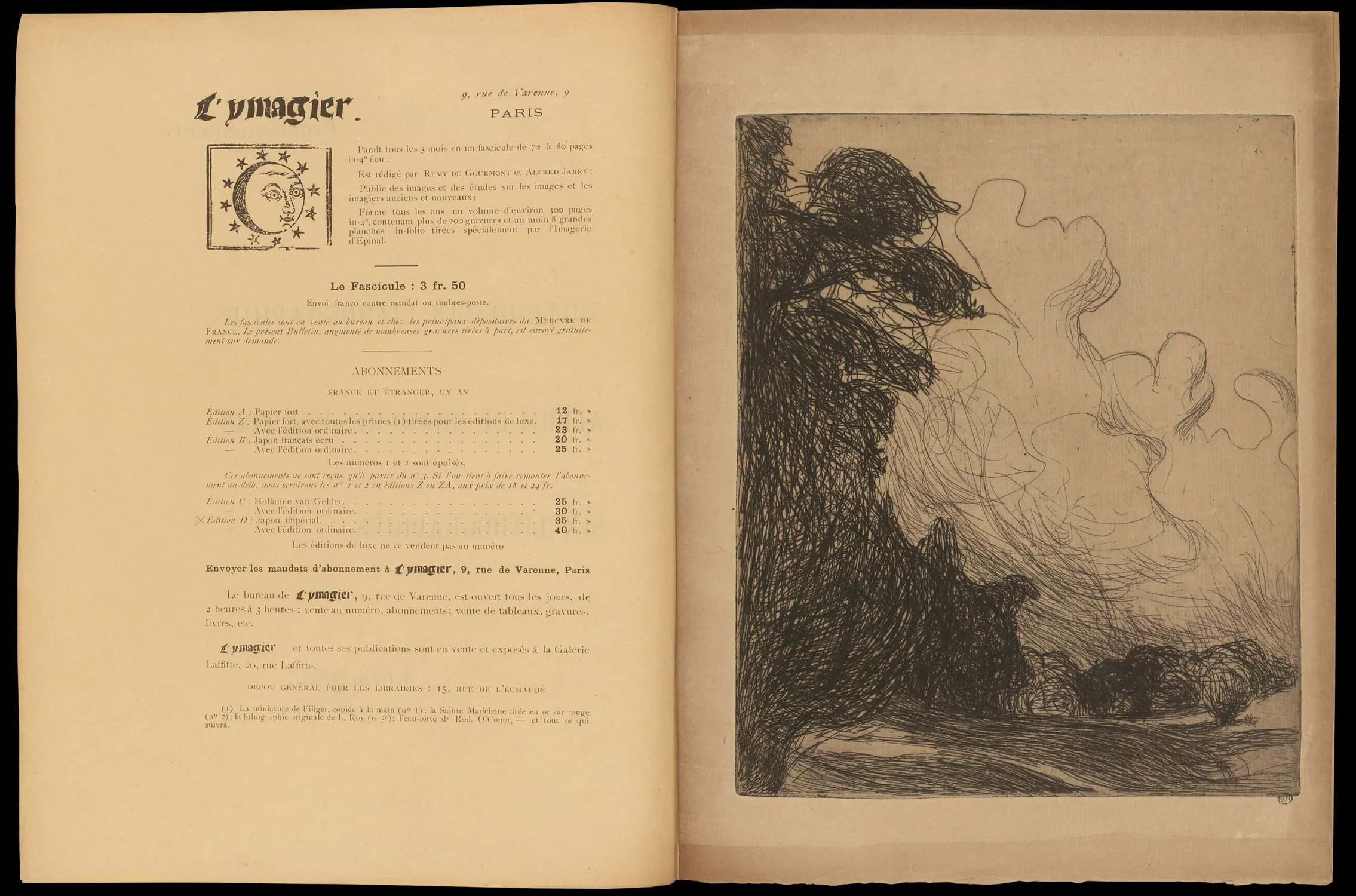
This serendipitous discovery then became the spearhead of research into the layered histories of iconographic material within Club books – tracing their multiple publications, appearances and printings. Our investigation soon focused on the woodcuts of the 15th and 16th centuries, featuring frequently in works designed by Jeanine Fricker, Robert Massin, Jacques Darche and Pierre Faucheux. The fascination of these book designers for ancient popular prints caught our attention as graphic designers, drawn to such mesmerising images.
The rest of this article follows the thread of our discussions (at times, we digress) and attempts to document our findings.
The conversation begins with Jean Giono’s Le Hussard sur le toit CML114, designed by Robert Massin in 1956 for the Club du Meilleur Livre.
ZL
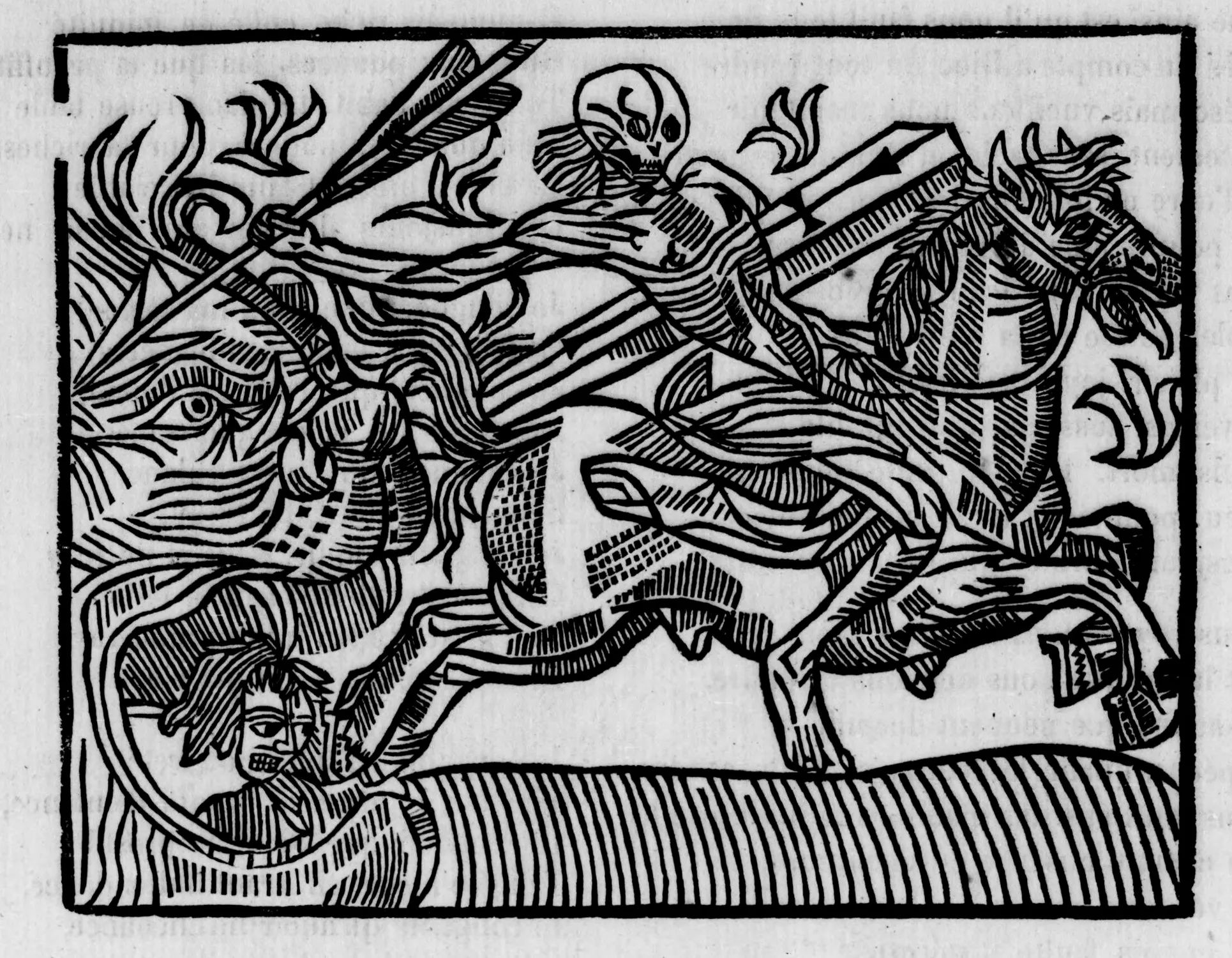
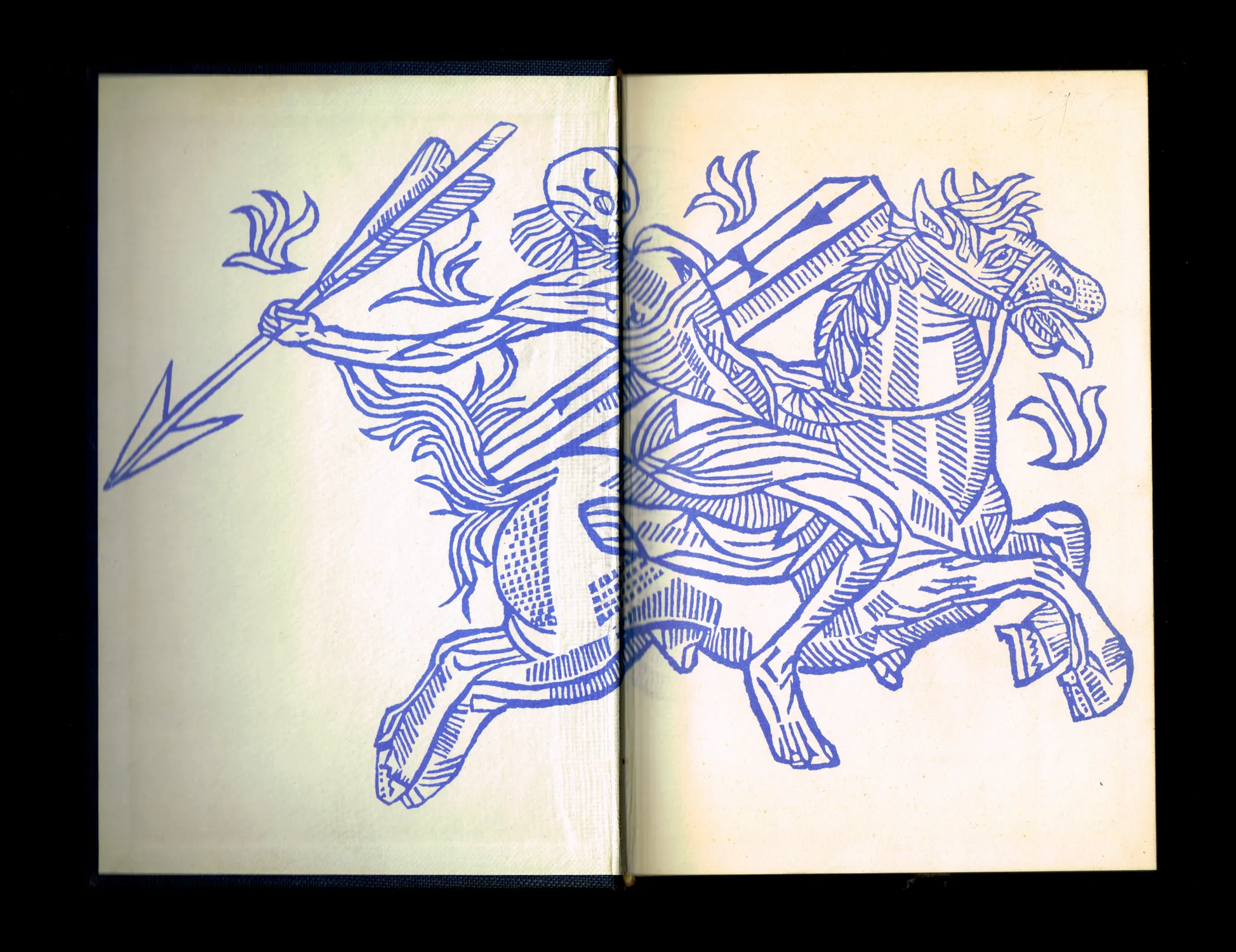
Let’s take the book off the shelf: its cover is simple – only a hussard’s sword adorns the cloth binding. Open it, and the sword turns into an imposing arrow, now wielded by a skeleton astride a winded steed. The image, an old woodcut with thick, naïve lines, fills the entire inside cover page and flyleaf.
MLH
Repeated symmetrically at the end of the book, it envelops Giono’s novel, which tells the story of Angelo Pardi, a young colonel travelling through Provence in the throes of a cholera pandemic.
A sword for the horseman, galloping death for the devastating plague: the different elements of the image, through synecdoque, evoke the very forces that shape the plot.
ZL
On that note, I discovered a 1953 radio adaptation of the novel. In the archive, Jean Giono’s melodious voice declares “The Hussard is a story that begins at a horse’s walk and then gallops on” 5. Massin designed the book three years after the broadcast. Perhaps he had heard the author’s words and decided to translate them into images.
MLH
That is one hypothesis. But to better unravel Massin’s choices, it would be interesting to take a closer look at the history of this particular engraving. Where is it from? What life(s) might it have led before gracing the cover of Le Hussard sur le toit?
ZL
The engraving is taken from a danse macabre, a widespread theme in the late Middle Ages, highlighting the vanity of social distinctions, since Death claims both emperor and peasant alike.
Danse macabre scenes always unfold as a series of illustrations depicting every layer of society. Men, women and skeletal figures dance hand in hand, forming a great winding procession.
As I ponder this Death on horseback and examine its appearances, I realise it comes in countless variations. The image is sometimes engraved with subtle stylistic differences 6, sometimes reproduced identically.
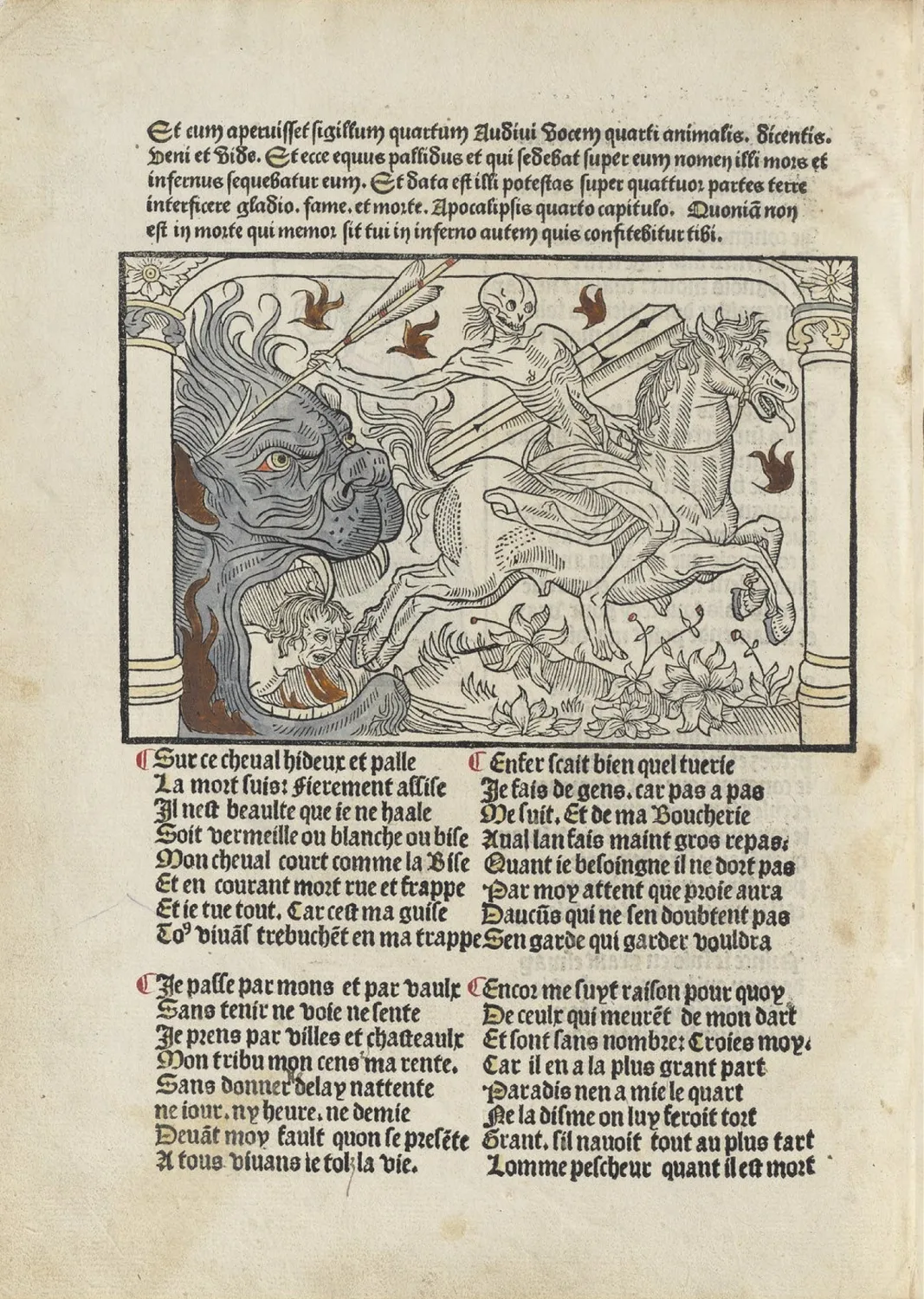
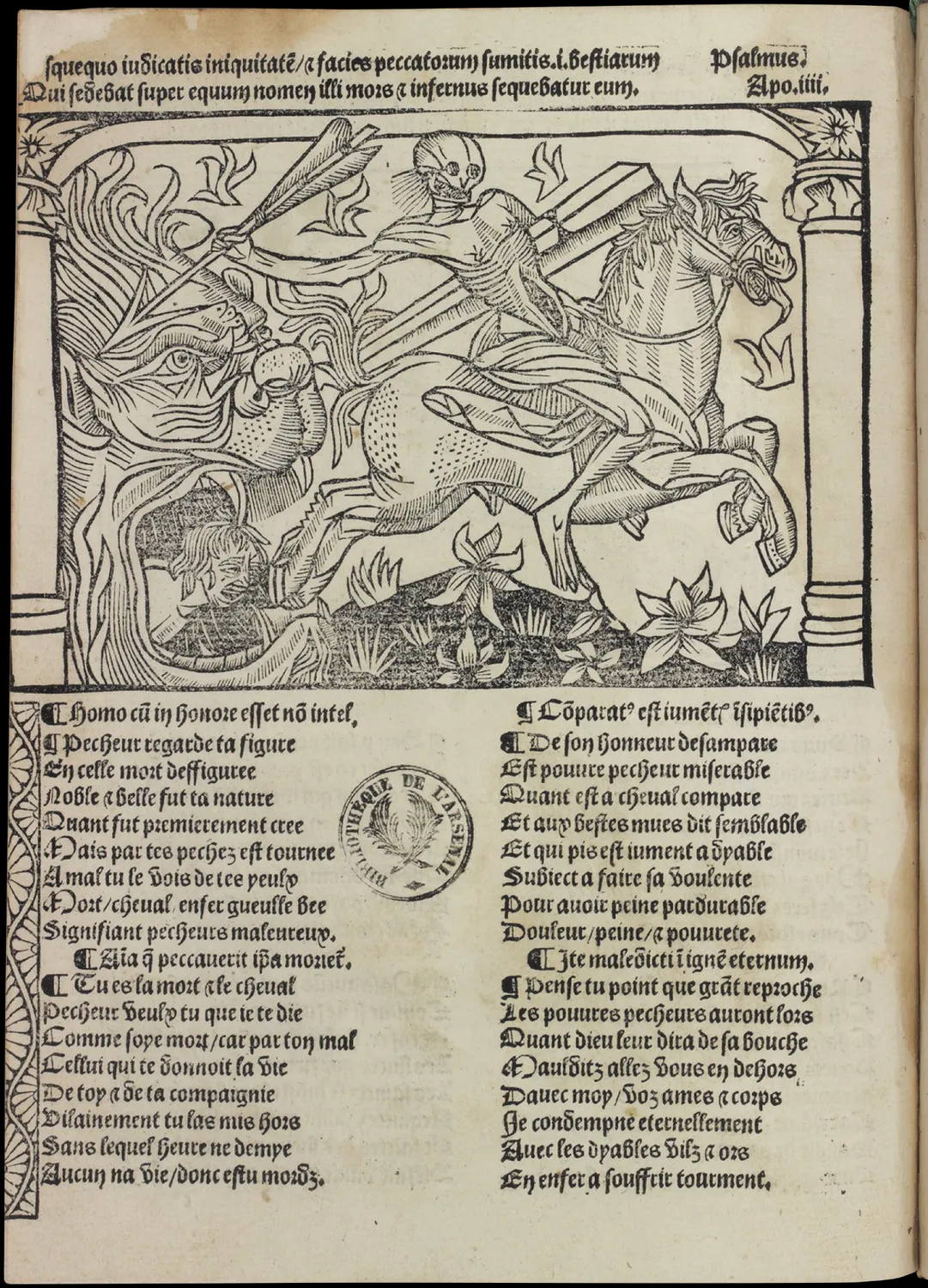
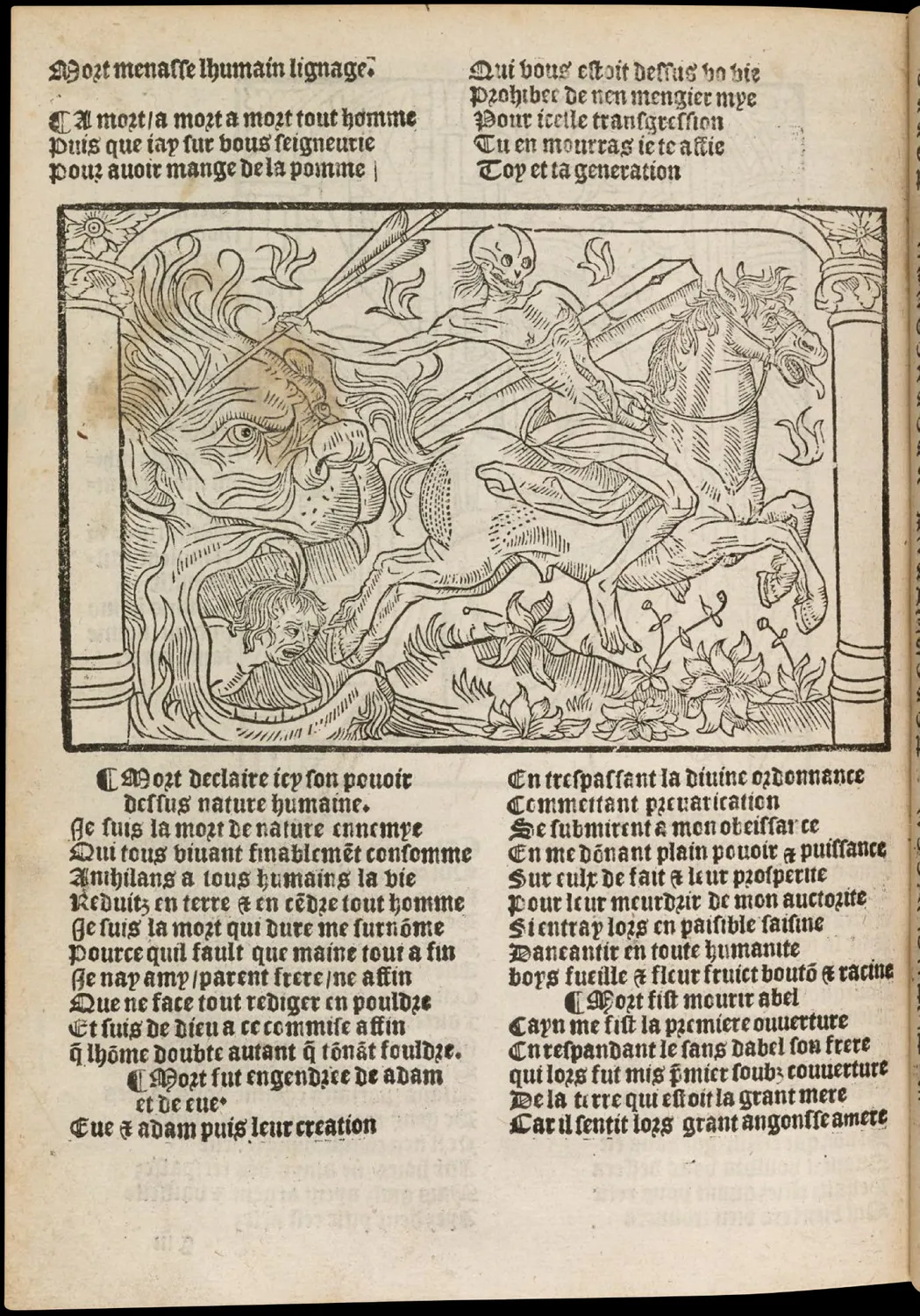
The engraving found at the beginning of Giono’s novel first appeared in a popular 15th century work, which can no longer be found today. 7
It resurfaced in 1850 when Louis Varlot (antique dealer and publisher) released a collection of images entitled Illustration de l’ancienne imprimerie Troyenne 8 which compiled many old engravings, in board form. At the beginning of the book, over twenty pages depict a danse macabre that culminates with our deceased knight.
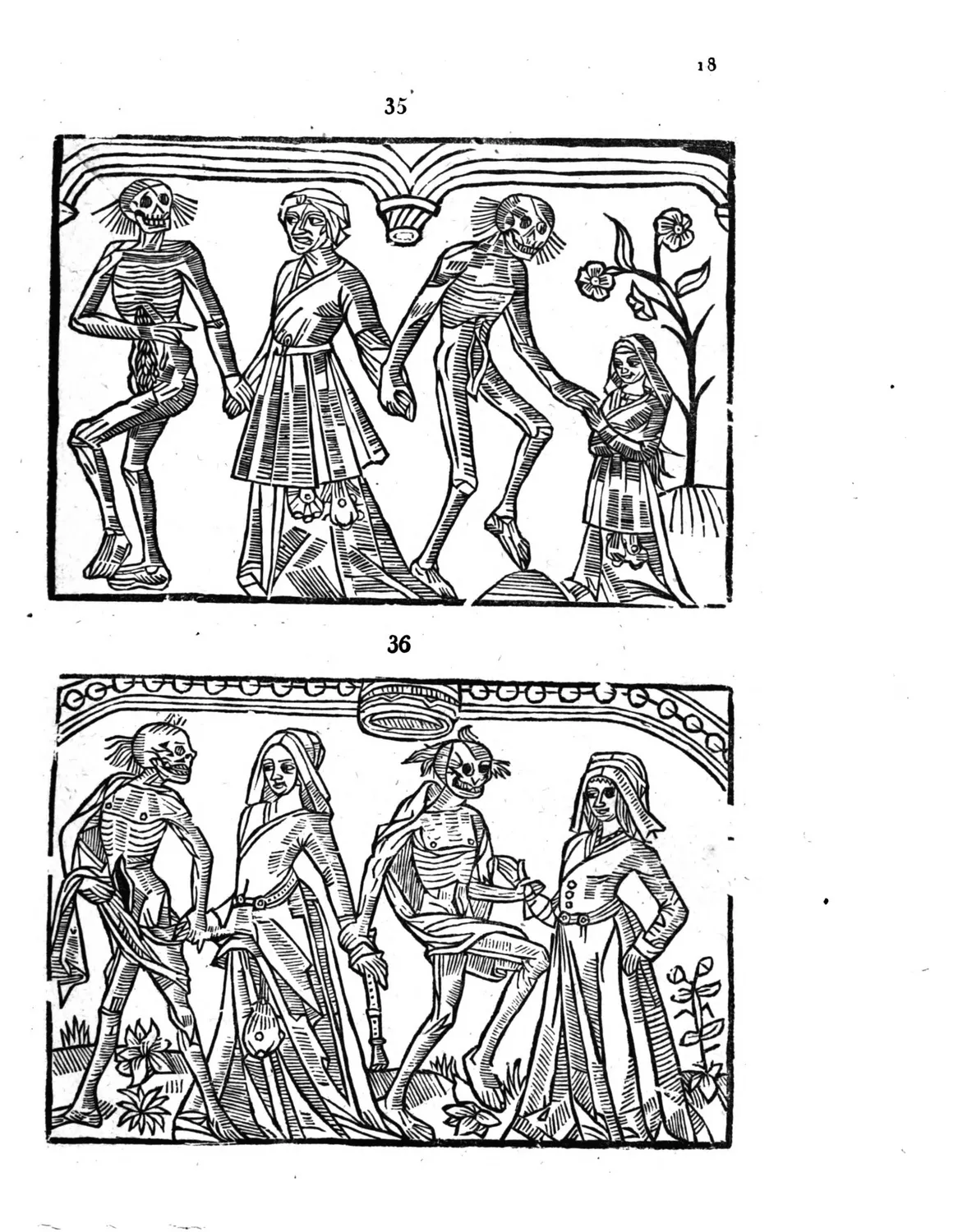
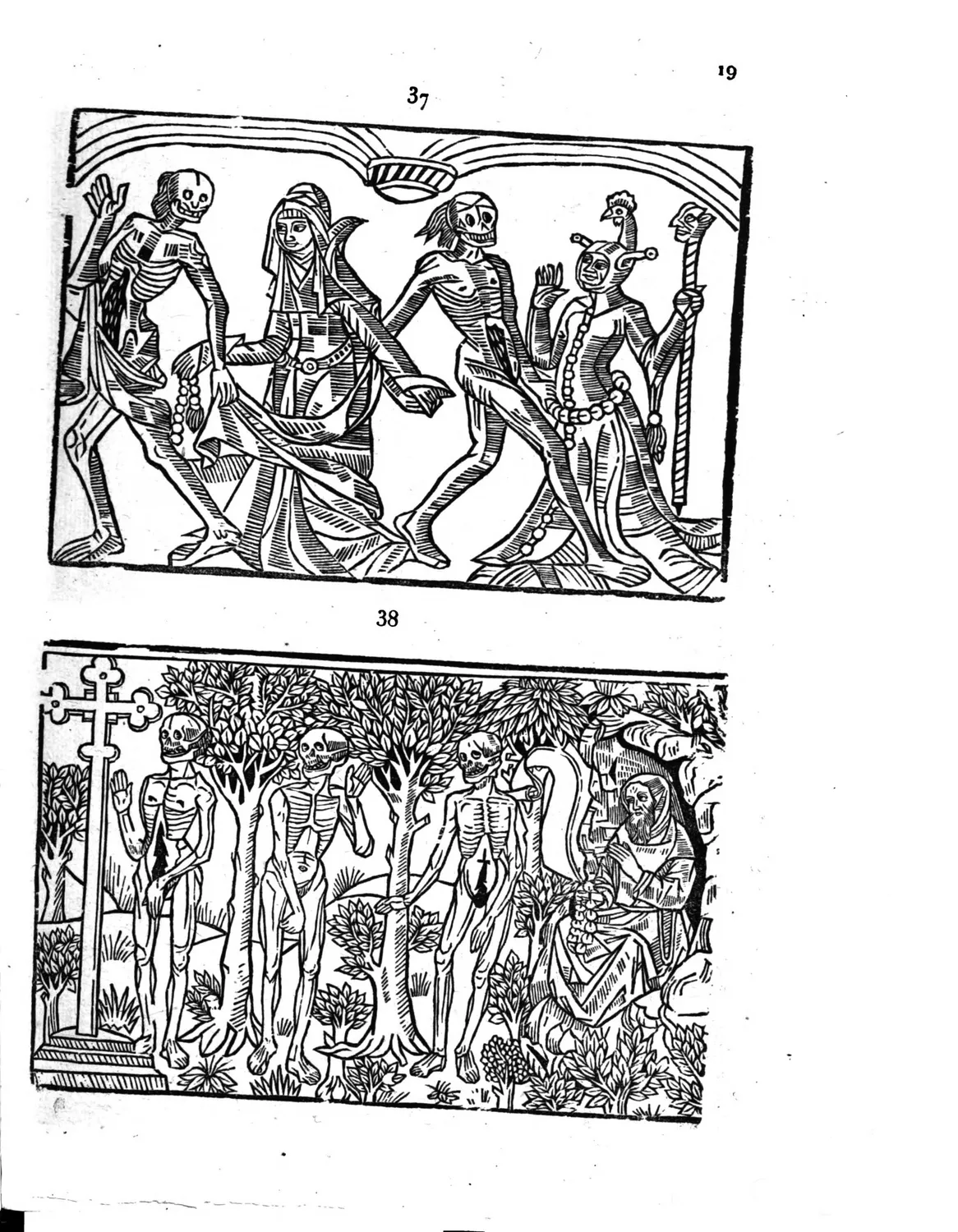
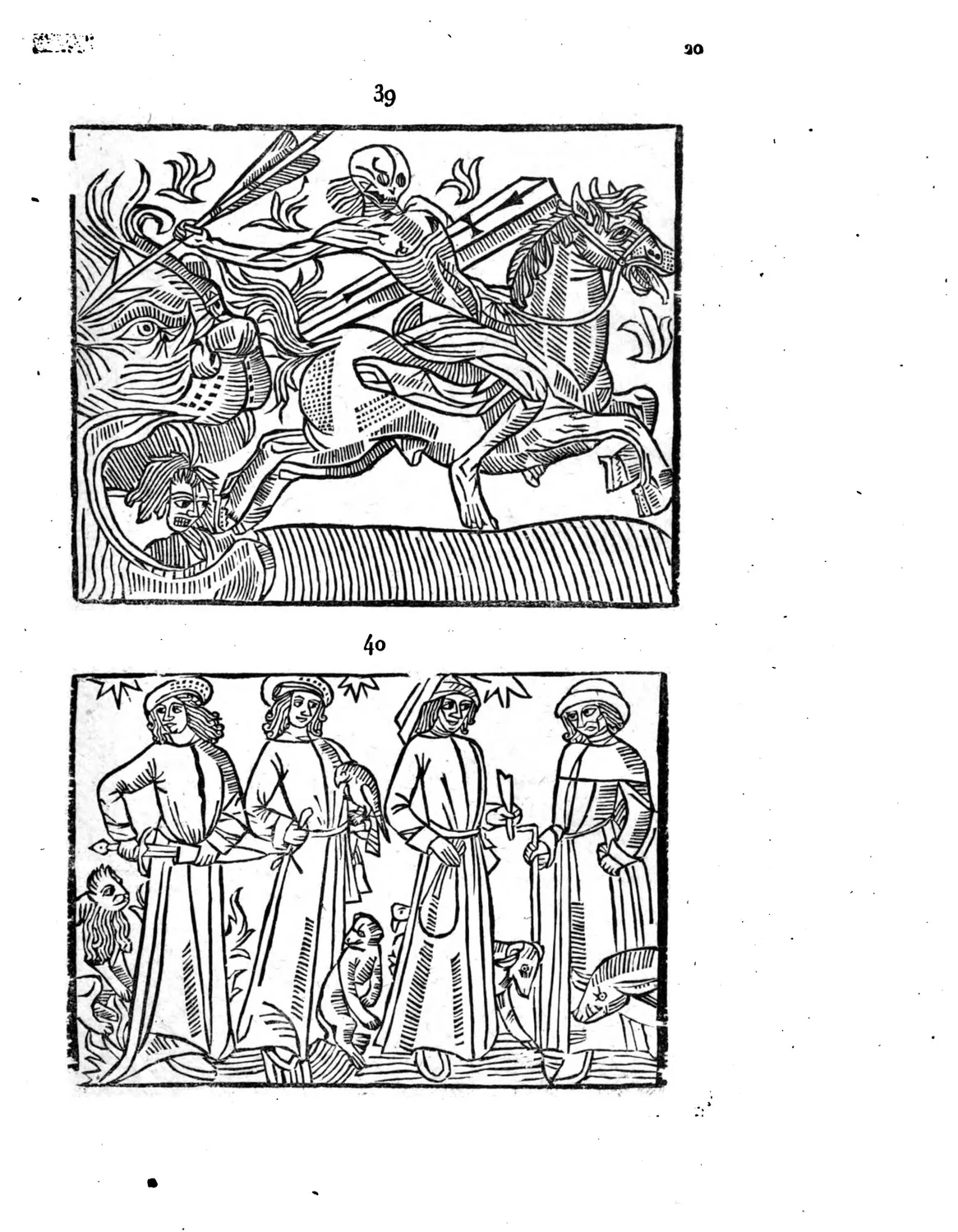
A second volume came to light in 1859, prefaced by “a letter from the bibliophile Jacob” who assured readers that this new collection “will meet the same enthusiasm among bibliophiles and iconographers” 9. Indeed, the combined 781 engravings in both volumes are a treasure trove for anyone interested in historical imagery. I can easily imagine Alfred Jarry and Remy de Gourmont scouring these pages for unusual prints – monsters, knights, and other curiosities - to reproduce in l’Ymagier 10. Several engravings from their journal do appear in these collections. This is the case for the human-faced celestial bodies mentioned above, as well as other images that also resurface in some Club books.
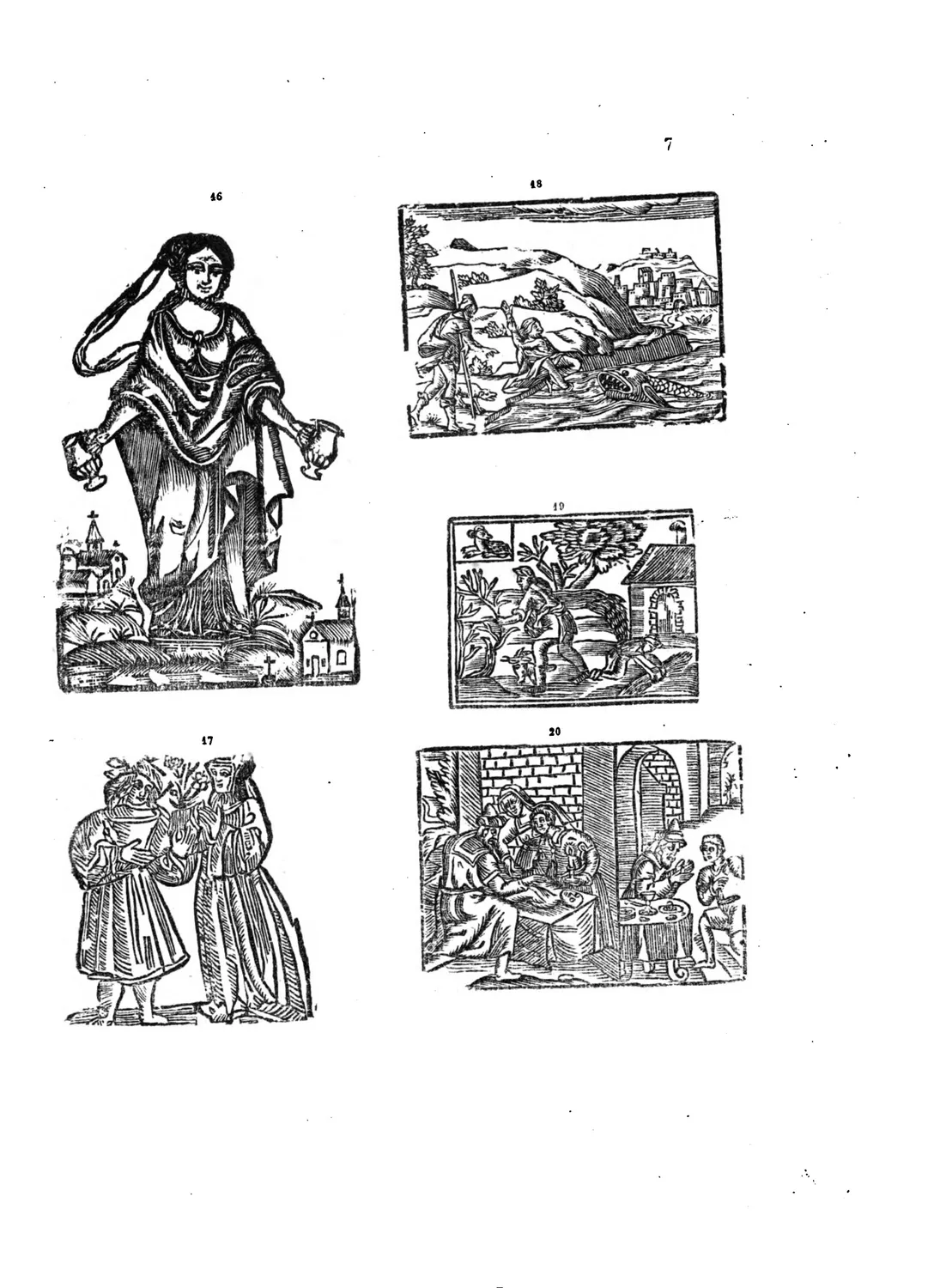
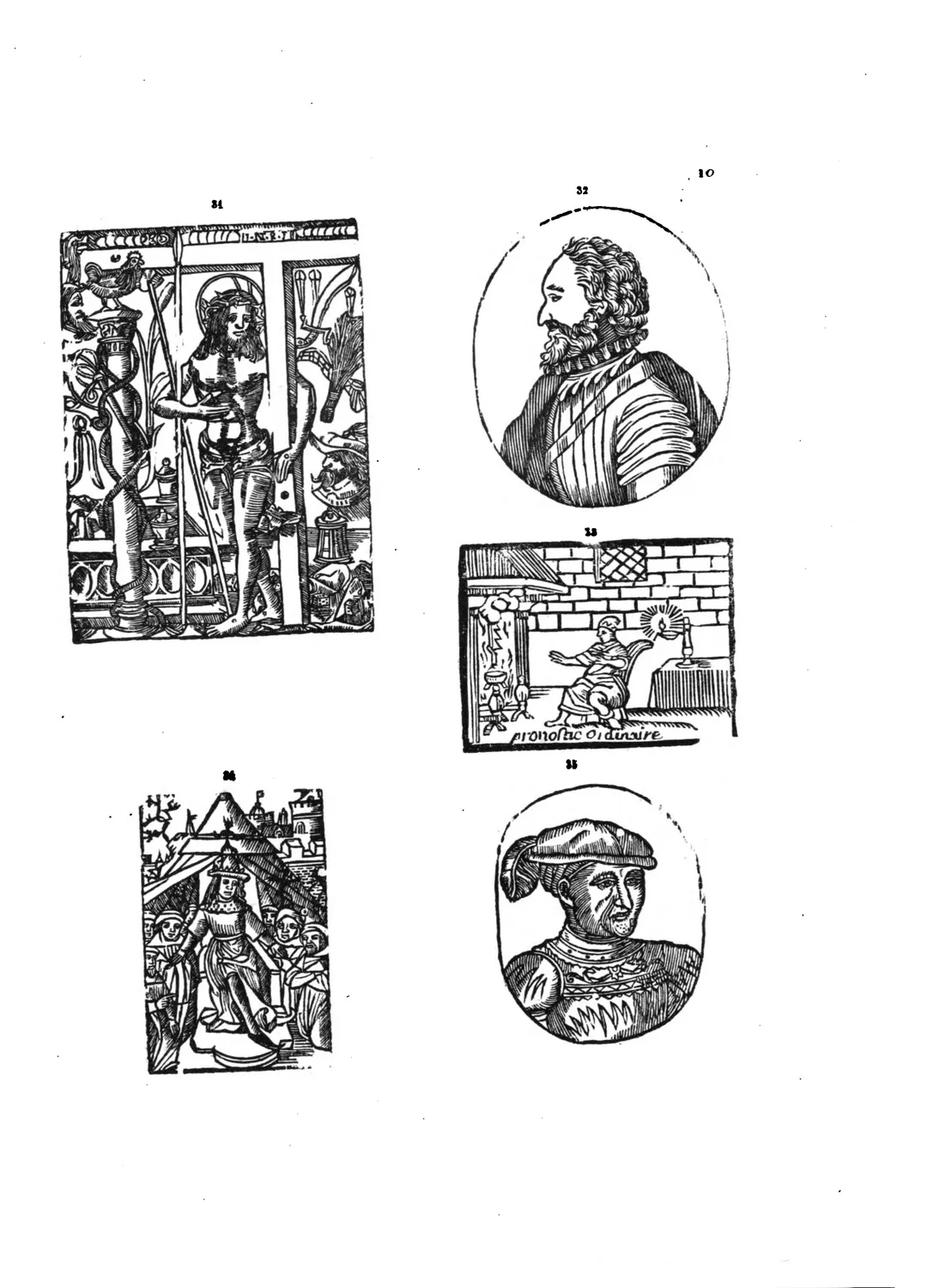
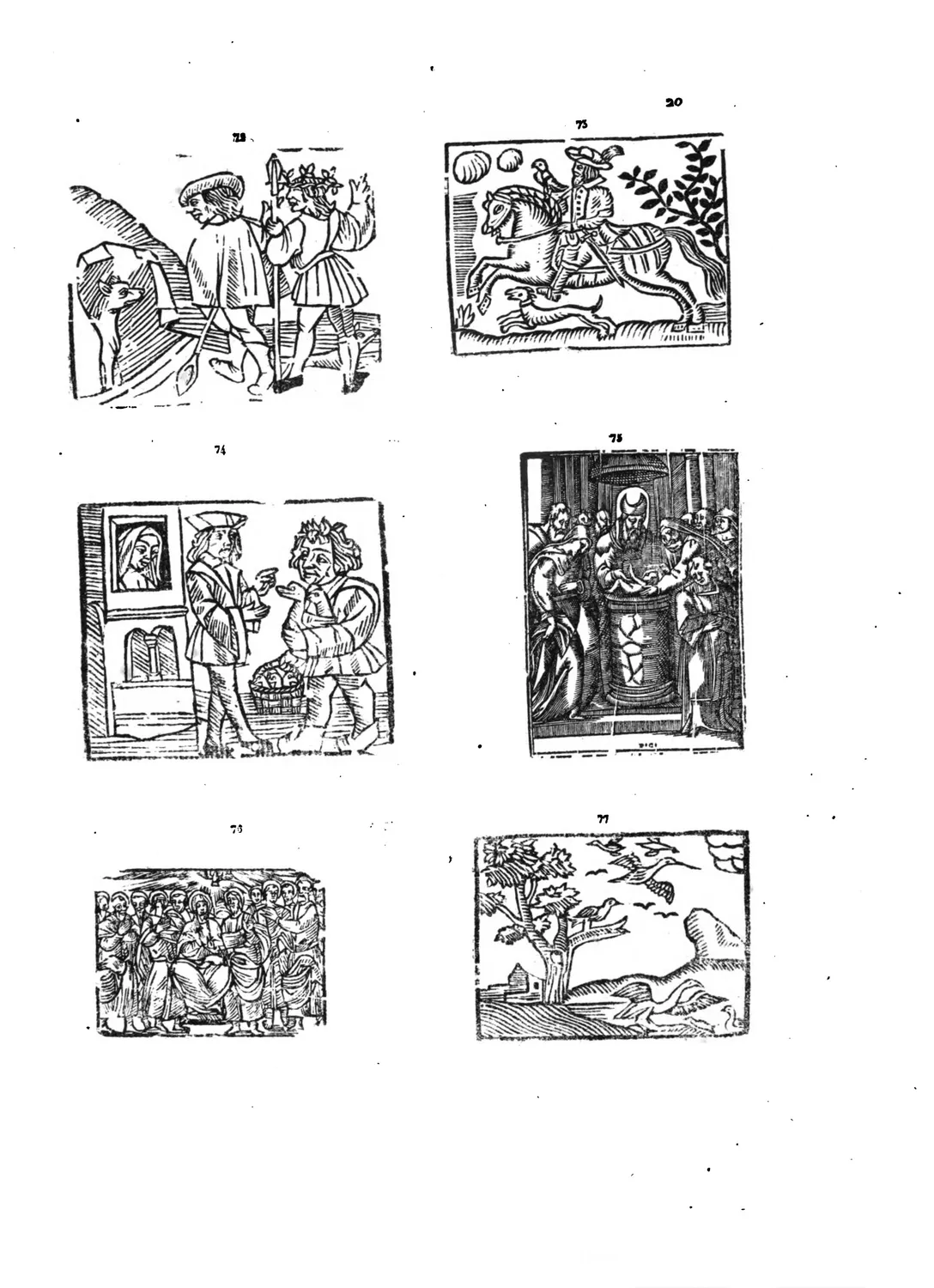
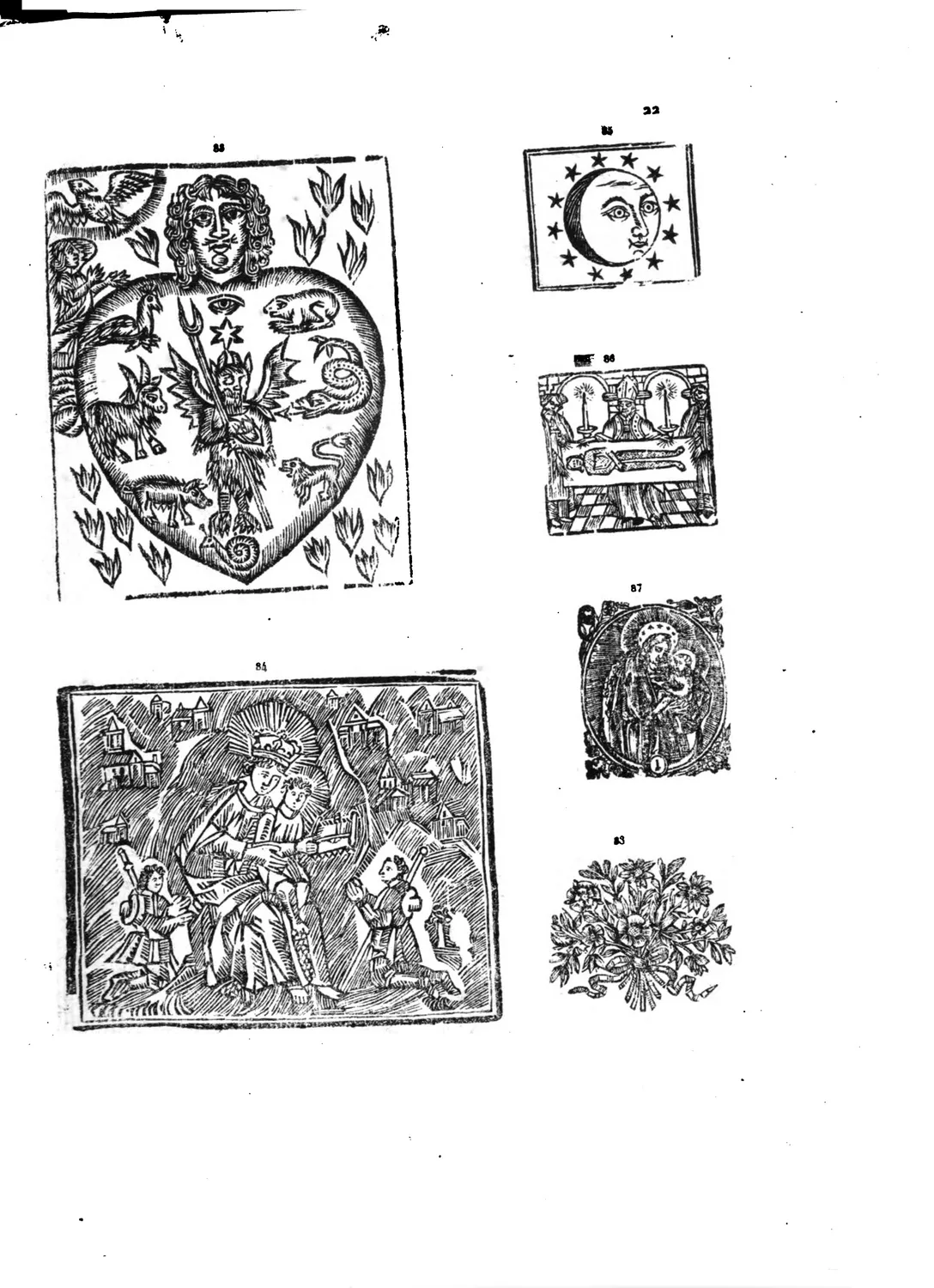
But let’s return to Giono’s novel. Upon opening Le Hussard sur le toit, it is evident that Massin transformed the knight’s image. Much of the original engraving has been removed, leaving only the central figure; the image has been enlarged to fill the entire double-page spread; and the choice of blue ink breathes new life into the old print, harmonising it with the book’s cloth binding.
MLH
Ultimately, paired with Giono’s narrative, the engraving takes on a whole new interpretation, a contextualised reading, far removed from danse macabre and other rhythmic processions.
ZL
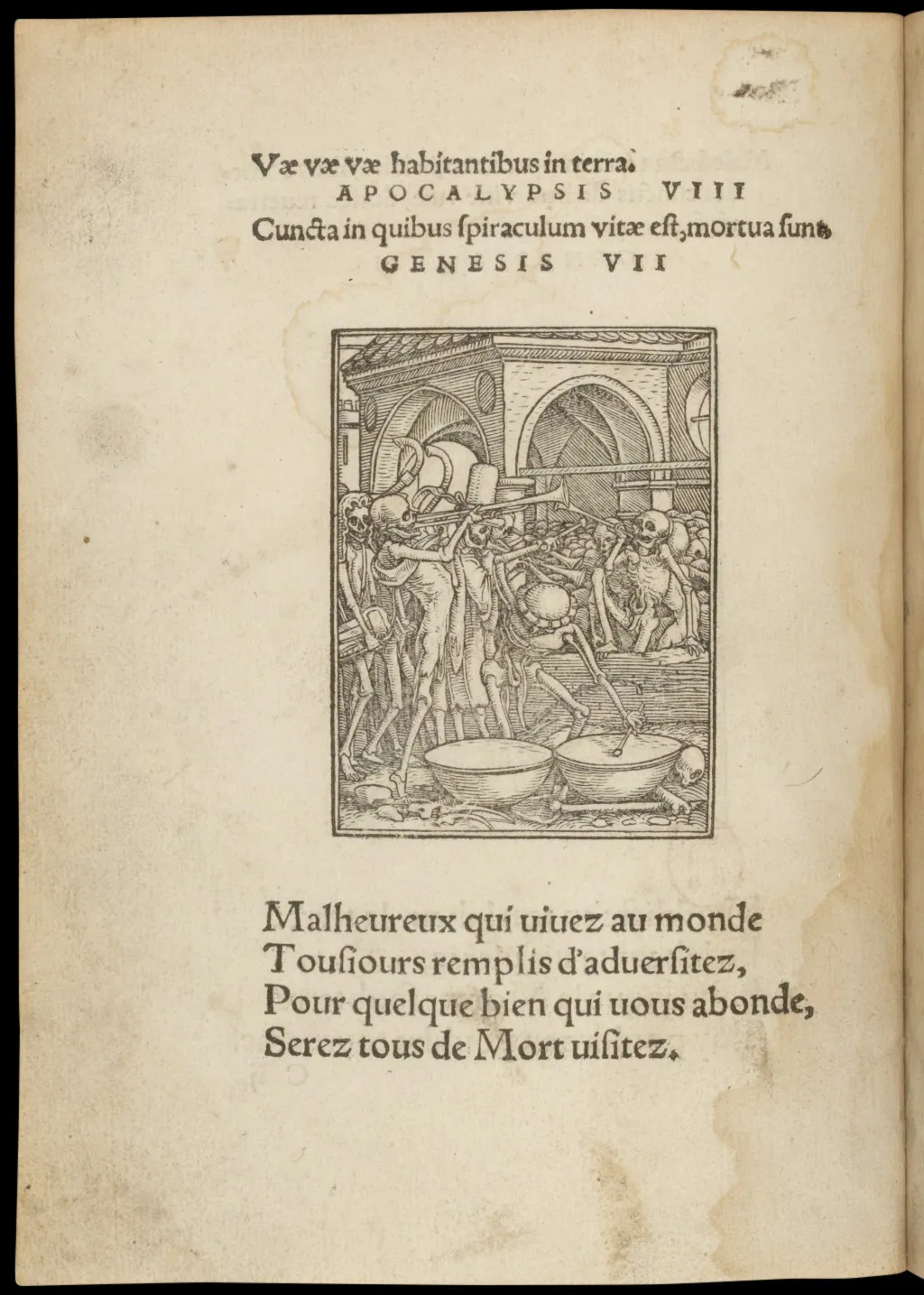
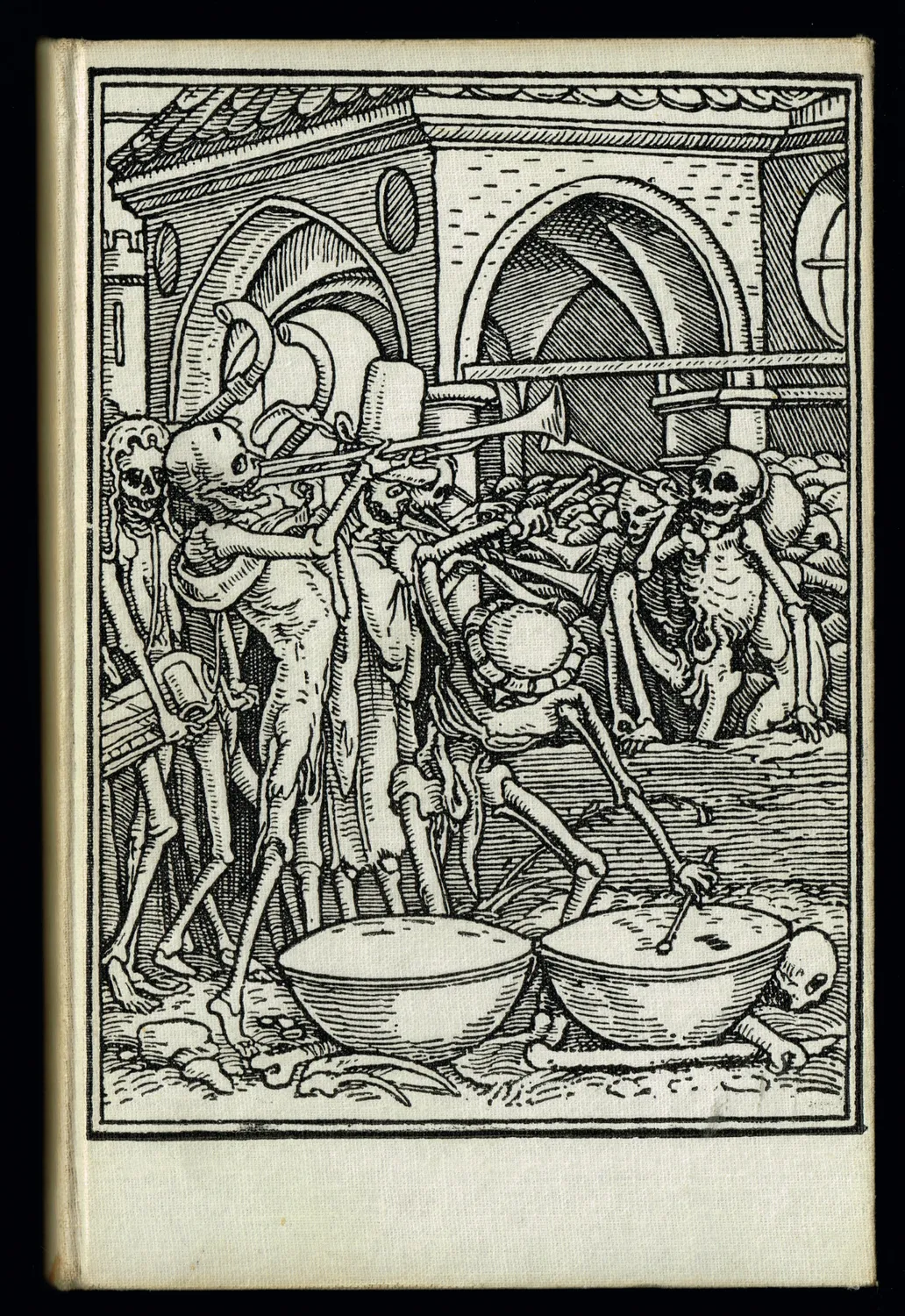
Indeed, browsing through the Club Collecte archives reveals other depictions of these deadly dances. For instance, a Hans Holbein the Younger engraving 11 illustrates the cover page of Camus’ La Peste CML78. The book was also designed by Massin a year before Giono’s novel. Both literary works share terrifying, allegorical diseases at their core.
MLH
When exploring the catalogue, I was struck by how many engravings revolve around death, directly or indirectly. I don’t know whether it’s because it is a very common theme in these kinds of images or whether the book designers deliberately intended to play with this relationship to time.
ZL
Death is indeed present in many forms throughout these medieval popular prints. At the time, religion was deeply influential, emphasizing the futility of life, and thus its finite character.
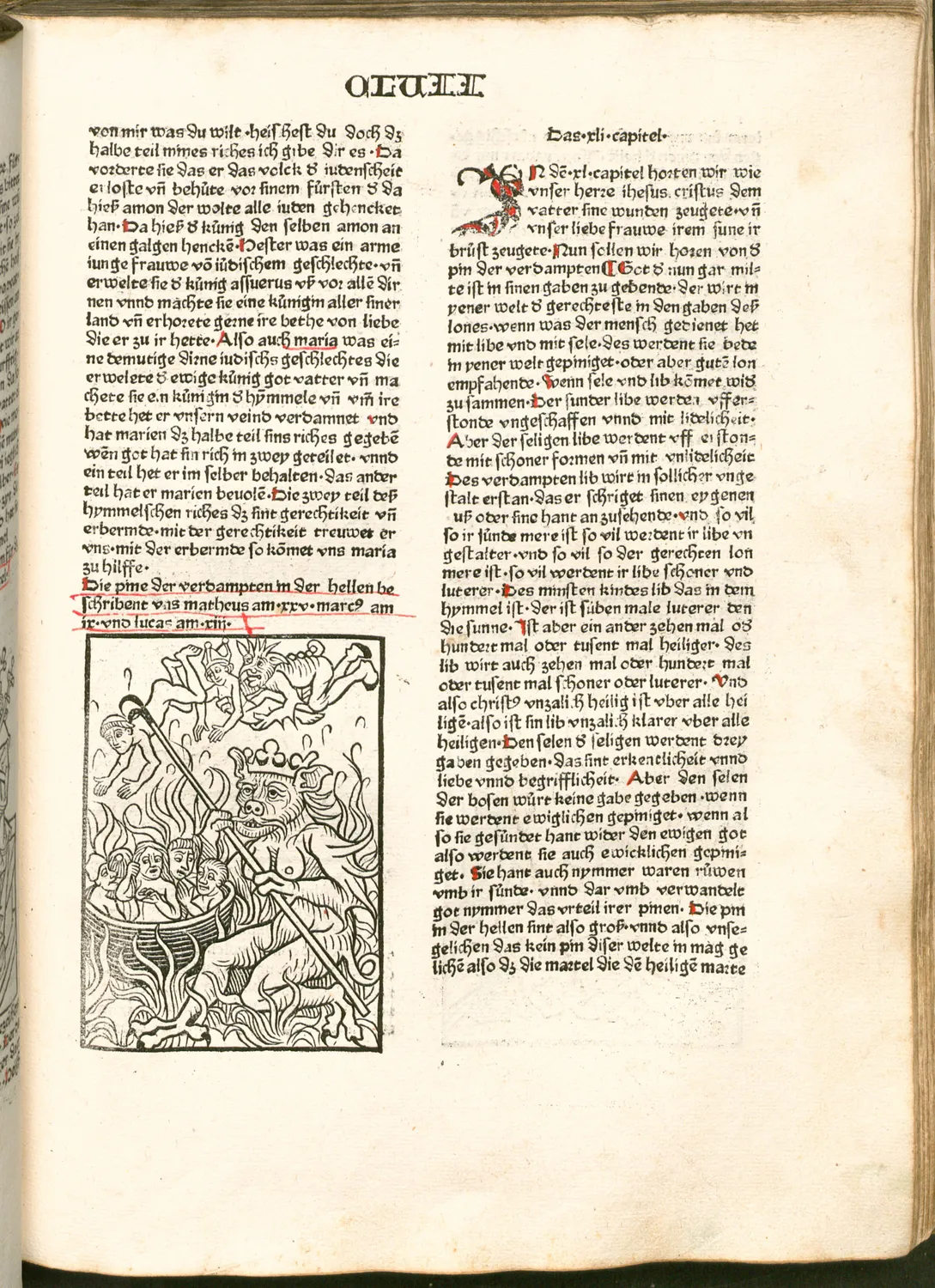
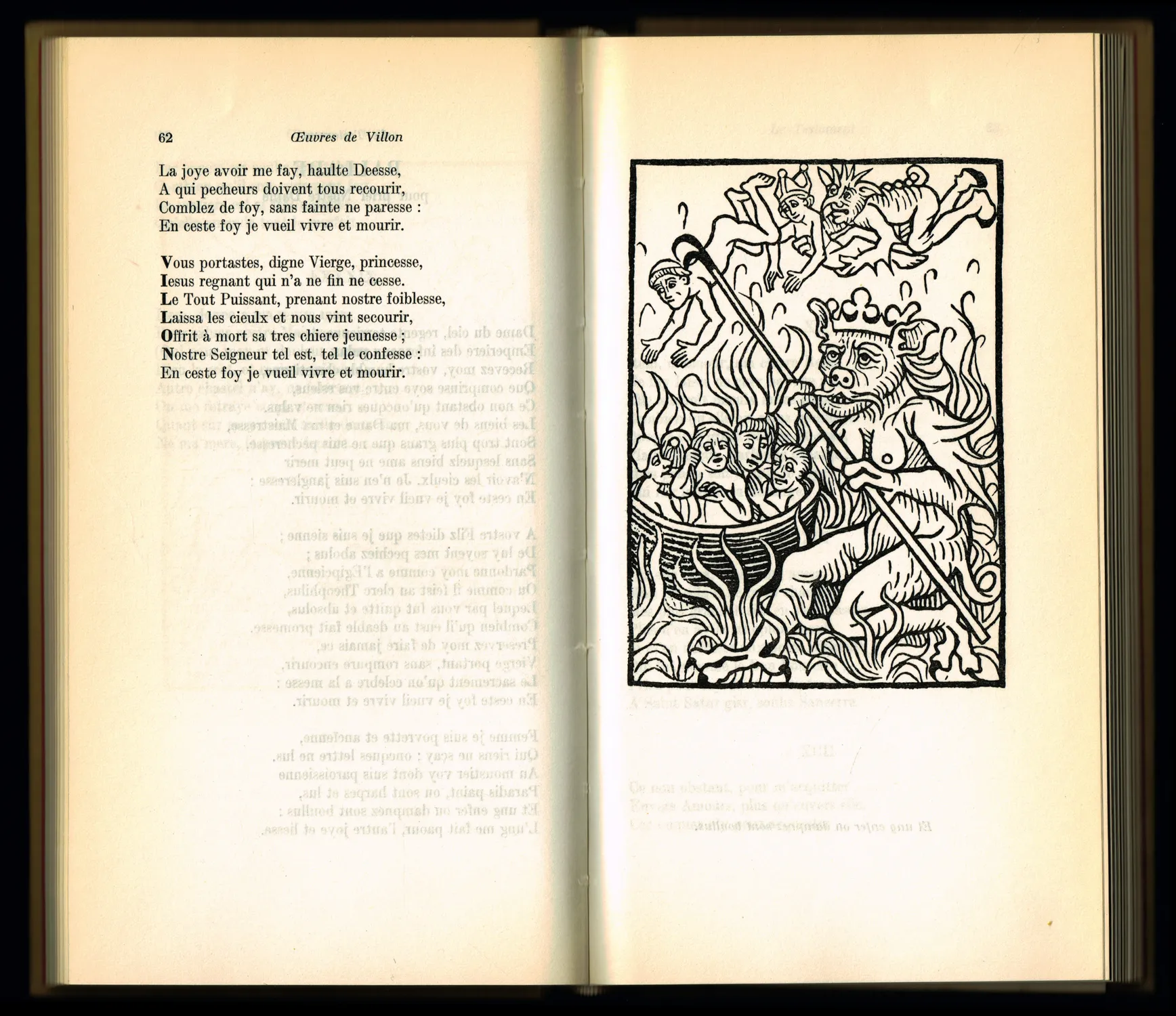
It can lurk in the guise of the Devil, like in Francois Villon’s Œuvres CMLS33, designed by Jeanine Fricker in 1959 (who repurposed a 15th-century engraving here 14).
MLH
This leitmotiv extends even to the process of “iconographic reissuing” itself. Club book designers carried out a kind of exhumation of images: by restaging and repaginating them, they brought these ancient engravings back to life. Perhaps to ensure they would never die? Or rather, to make them live forever, always in new forms?
ZL
Like ghost images haunting publications. But the relationship with time goes beyond this analogy to death: it takes on a thousand forms through the many facets of books.
MLH
Absolutely. The question of temporality is inherent to the very concept of the Club phenomenon, which offers a wide range of texts, most of which are reissues. The act of reissuing implies a genuine shift: the literary work is plucked from the past and placed in a new present, undergoing various transformations.
A similar process occurs with images. The relationship to time is particularly visible and manifests itself in different ways, sometimes highlighted, sometimes intentionally obscured.
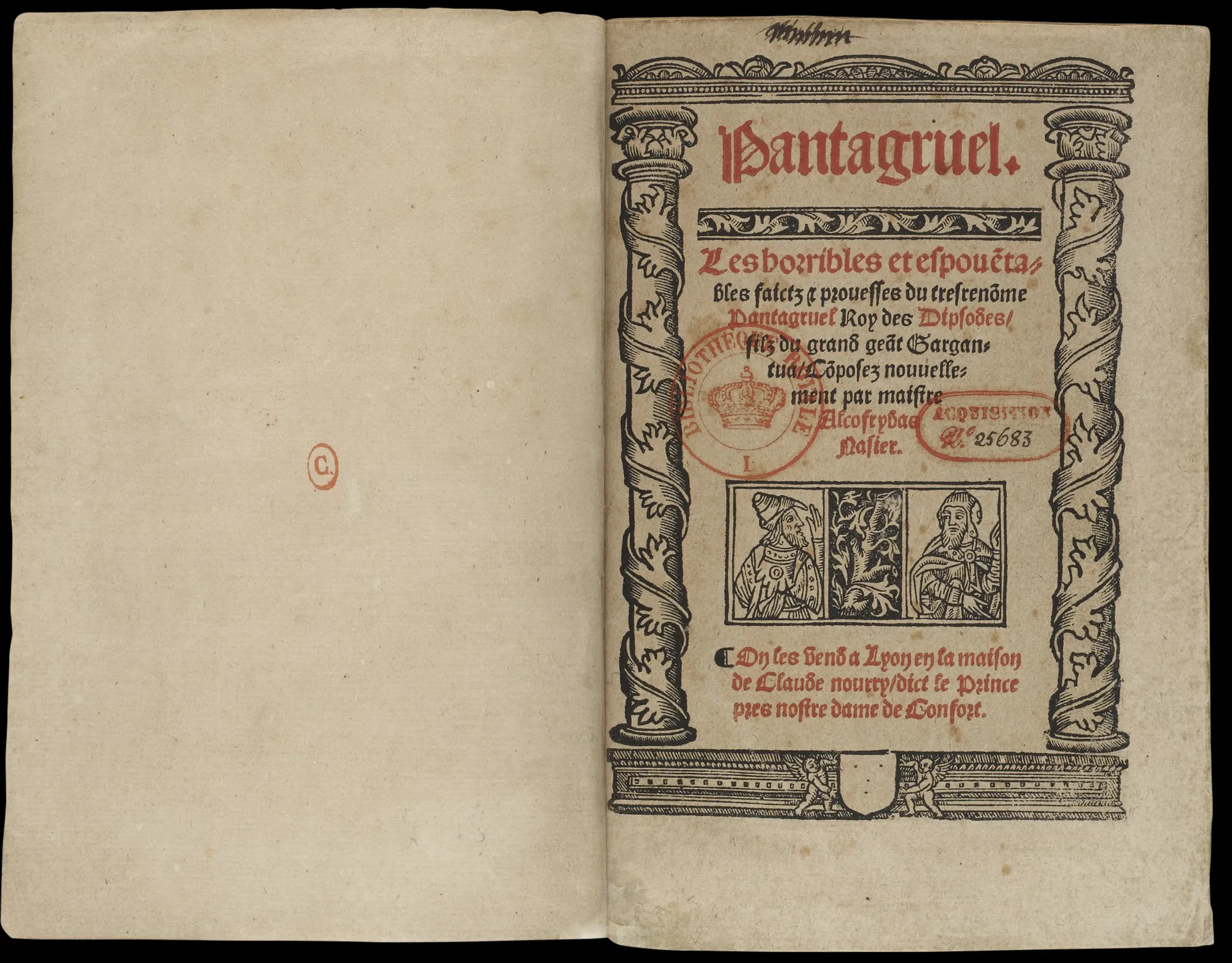
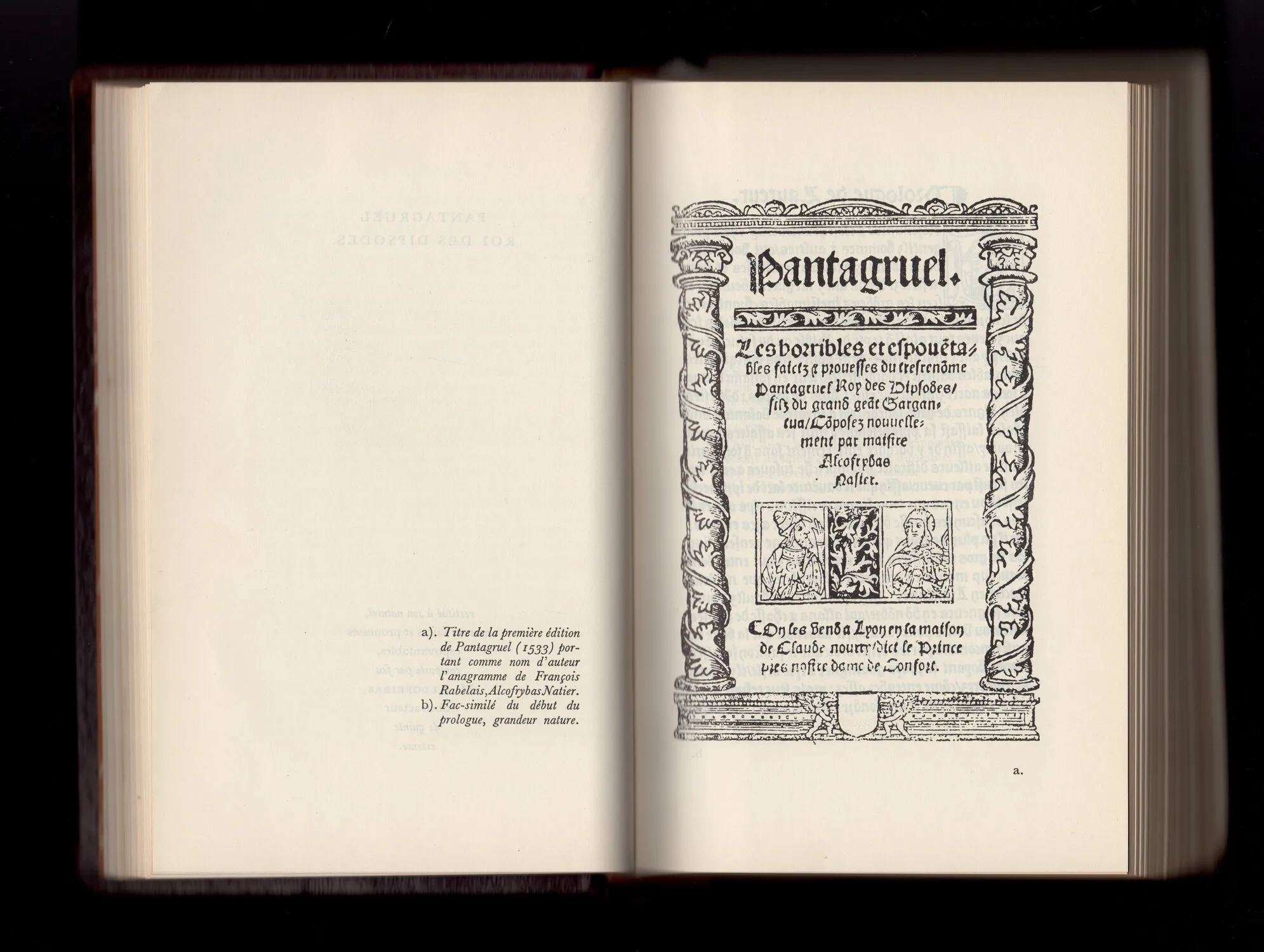
Every image carries its own history and form, and reissuing can become an opportunity to pay tribute to these original characteristics. This is evident in the reissue of Rabelais’ Œuvres complètes 15. The Club Français du Livre faithfully reproduced the form and composition of the frontispiece from the original 1532 edition 16, at the beginning of the book.
ZL
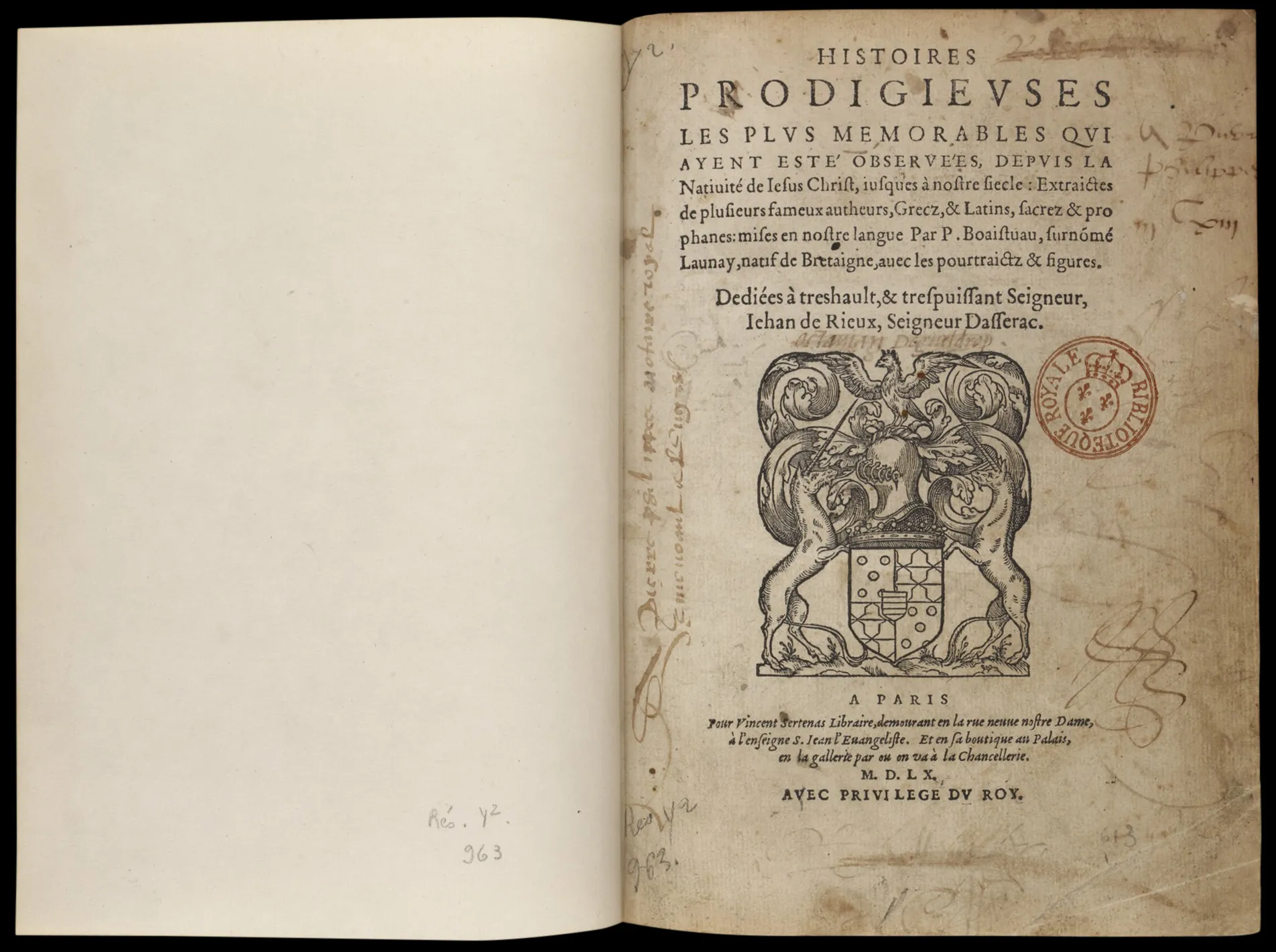
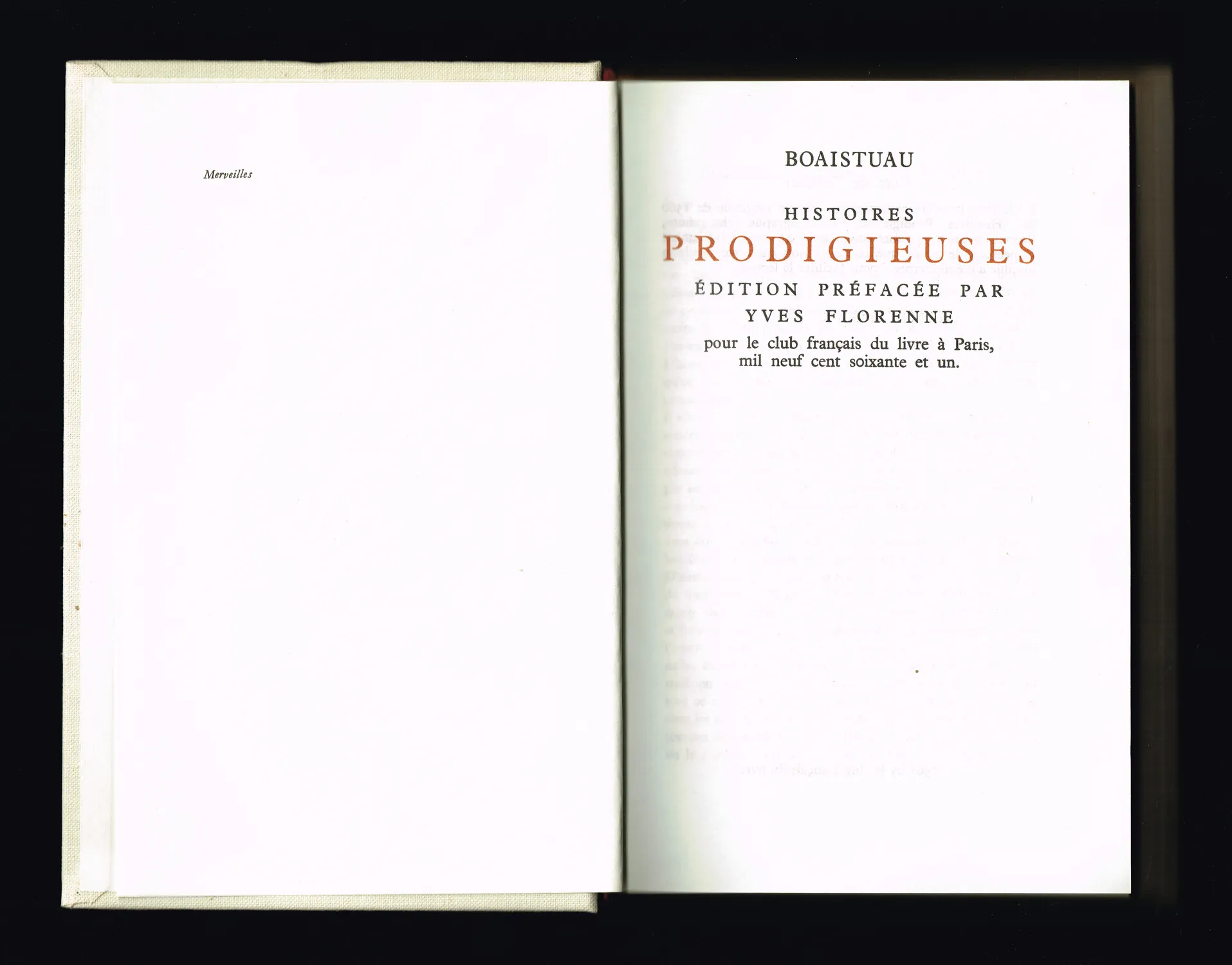
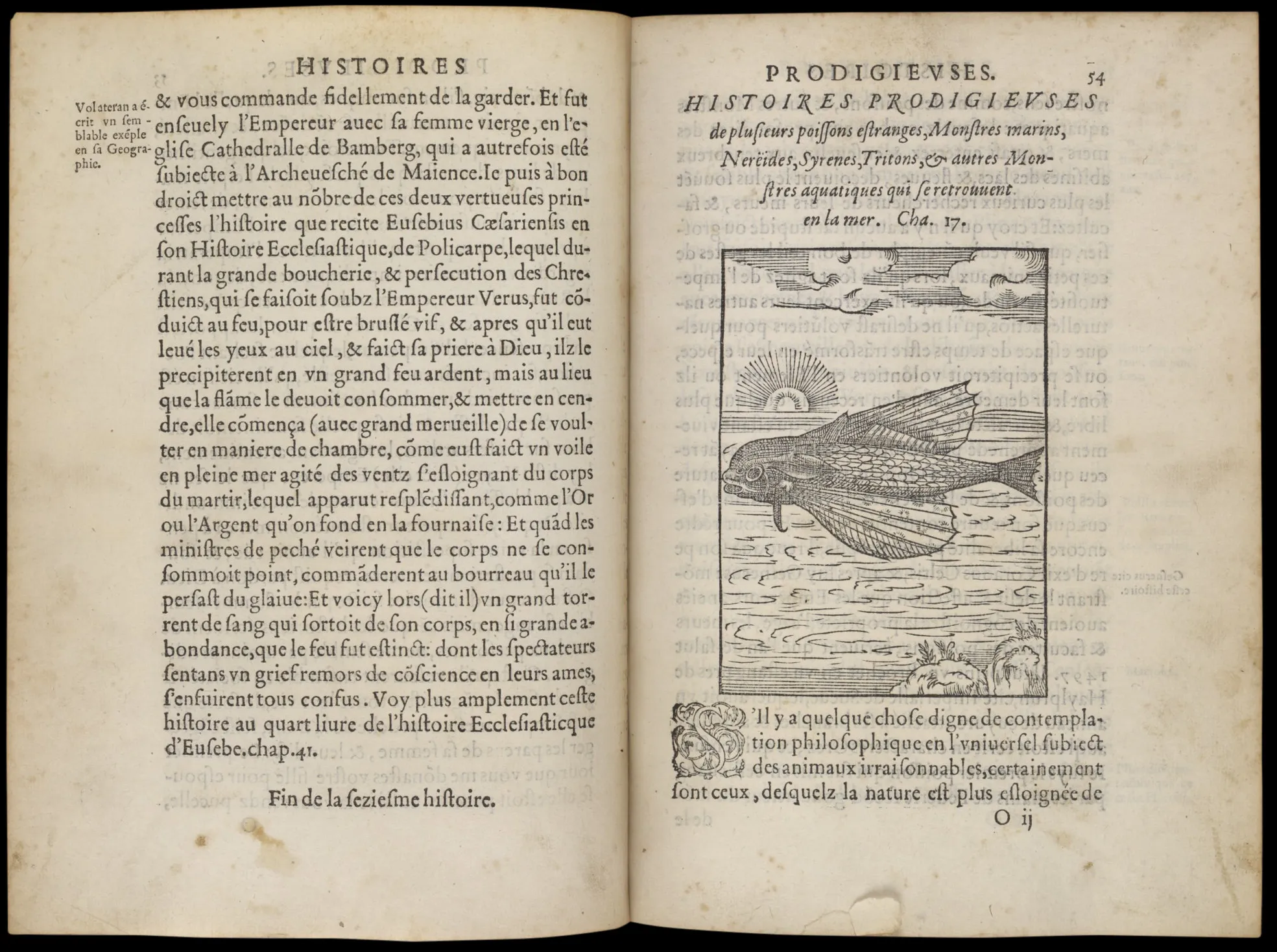
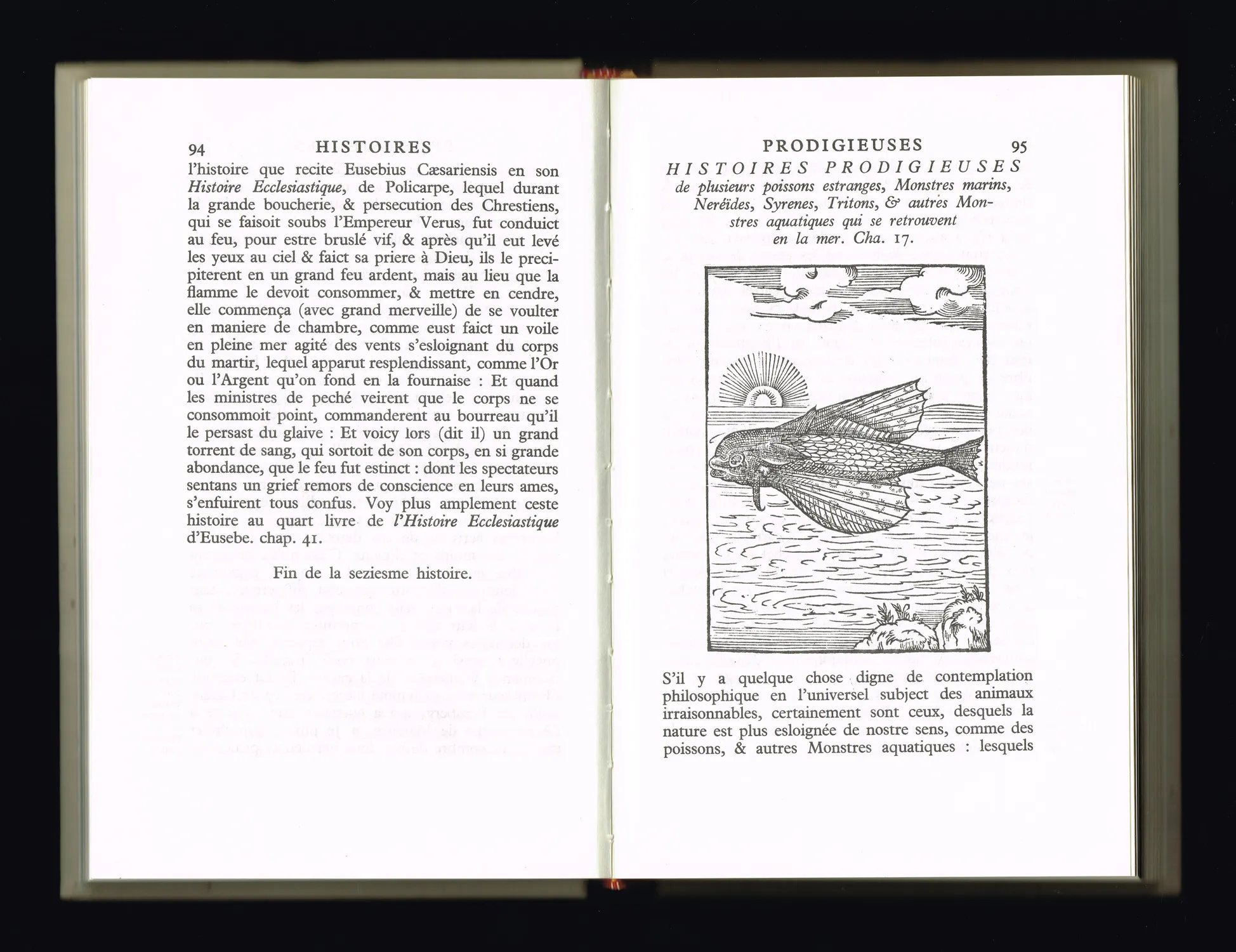
Some Clubs even offered particularly faithful reissues of old volumes. This is the case with Histoires prodigieuses CFL700, designed by Jacques Daniel. Originally translated and compiled by Pierre Boaistuau in 1560, the work consists of forty-four tales describing monsters, plants and celestial bodies, true or made-up facts, with real and legendary animals.
The Club français du livre provided a reissue that remained faithful to the original collection: the layout (pagination, glosses, text composition, illustrations and so on) and spelling were preserved, with only the typography modernised to enhance readability. 18
MLH
The decision to include such a book in the Club catalogue seems to reflect the publishers’ enthusiasm for such old works with their strange engravings. When viewed as a whole, these illustrations reveal recurring forms, styles, and themes. Rough lines, geometric representations, simplified hatching, characters with exaggerated expressions and surprising compositions. Together, they create an iconography that feels like a familiar refrain.
Beyond the images, whose raw charm likely captivated the Clubs’ book designers, I imagine there was a broader admiration for the graphic and typographic qualities of these old editions (text composition, humanist typefaces, initial letters and so on).
As seen in Histoires prodigieuses, there is sometimes a genuine desire to honour the historical legacy of the object. Conversely, in other titles, the chronology of the images can be completely flattened, almost erased, delving the different temporalities into thick fog…
ZL
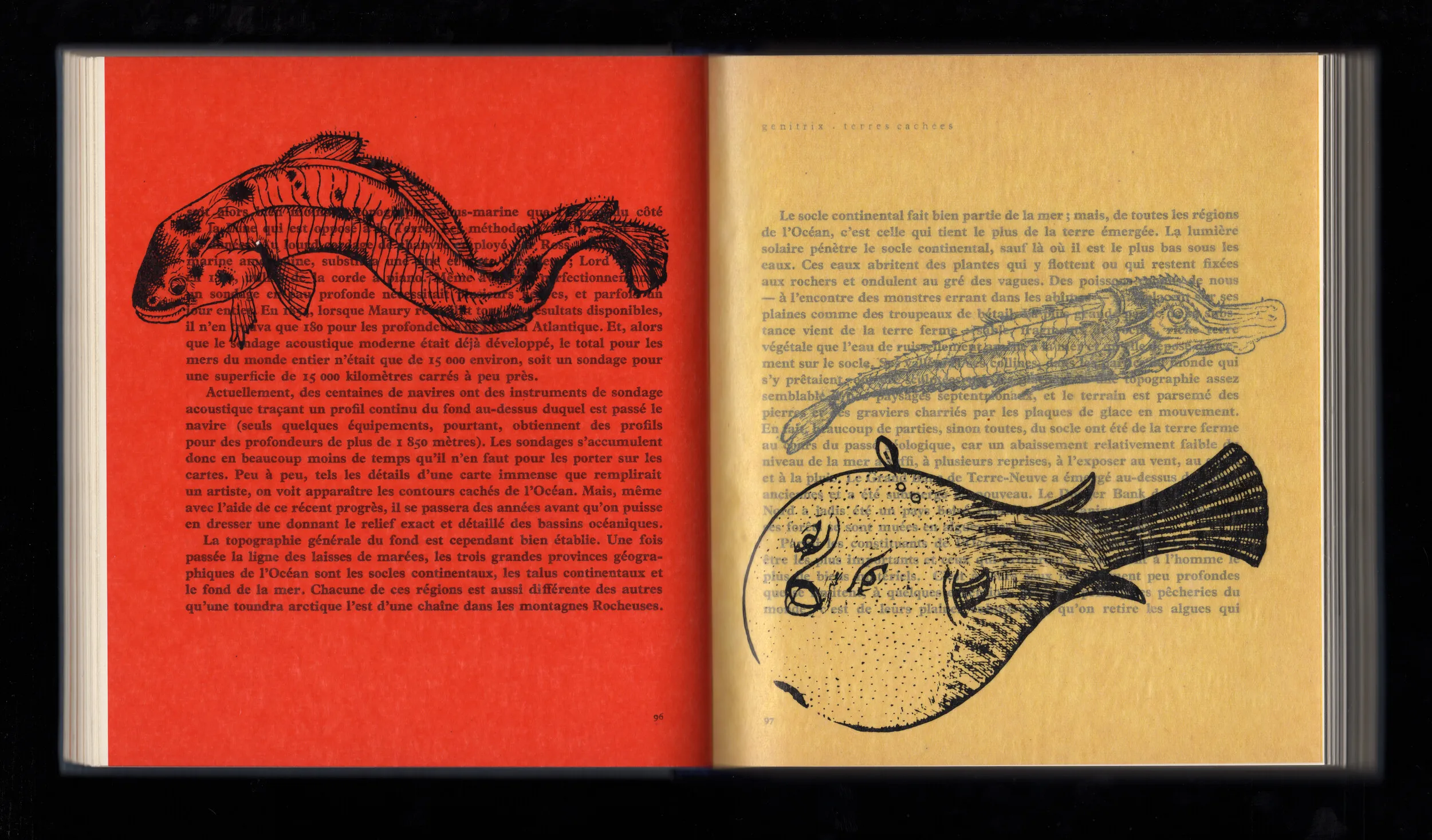
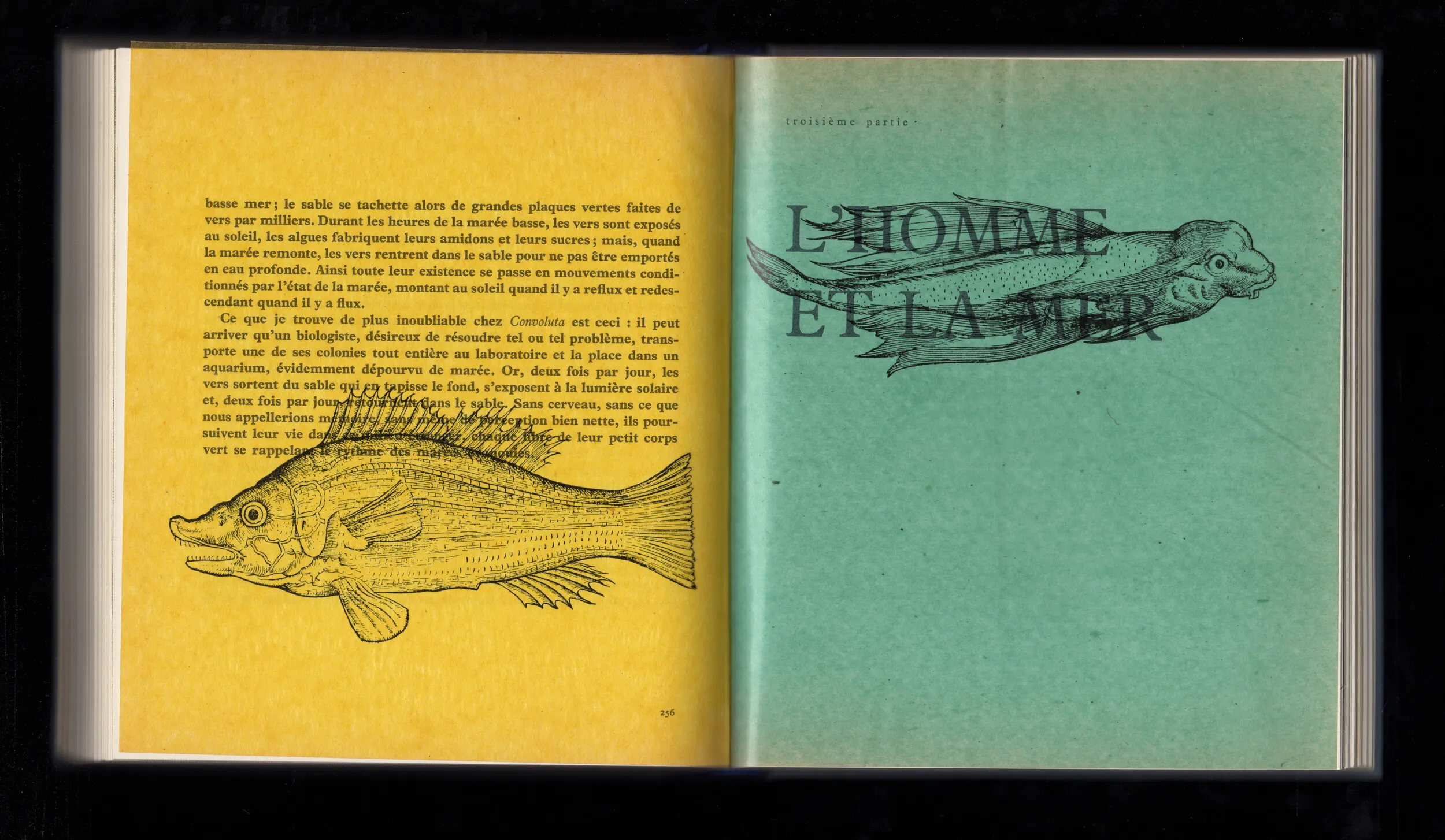
…which sometimes comes with a muddle of styles and techniques. This is what I sense when exploring Cette mer qui nous entoure CML62 by Rachel L. Carson, designed by Jeanine Fricker in 1954.
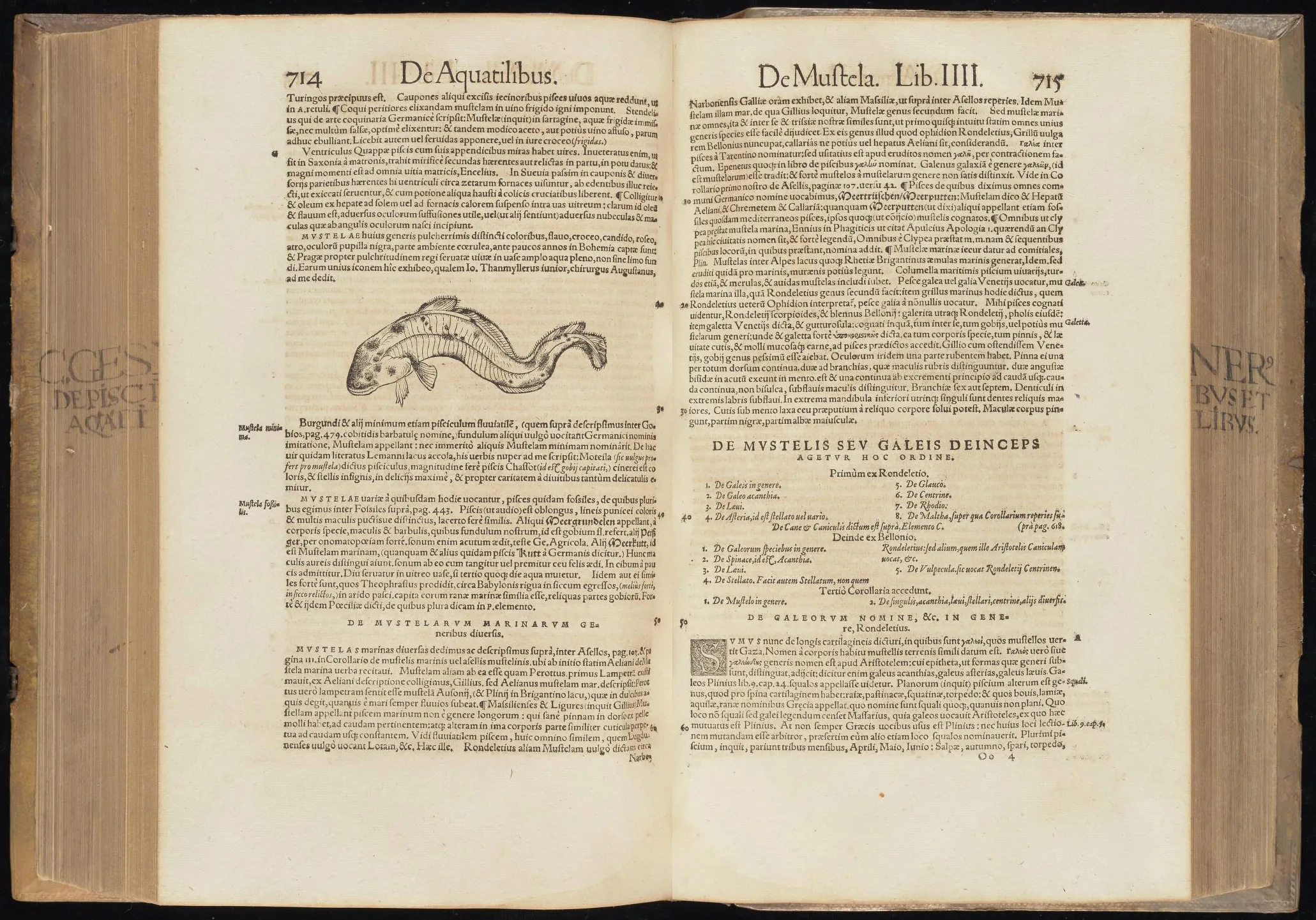
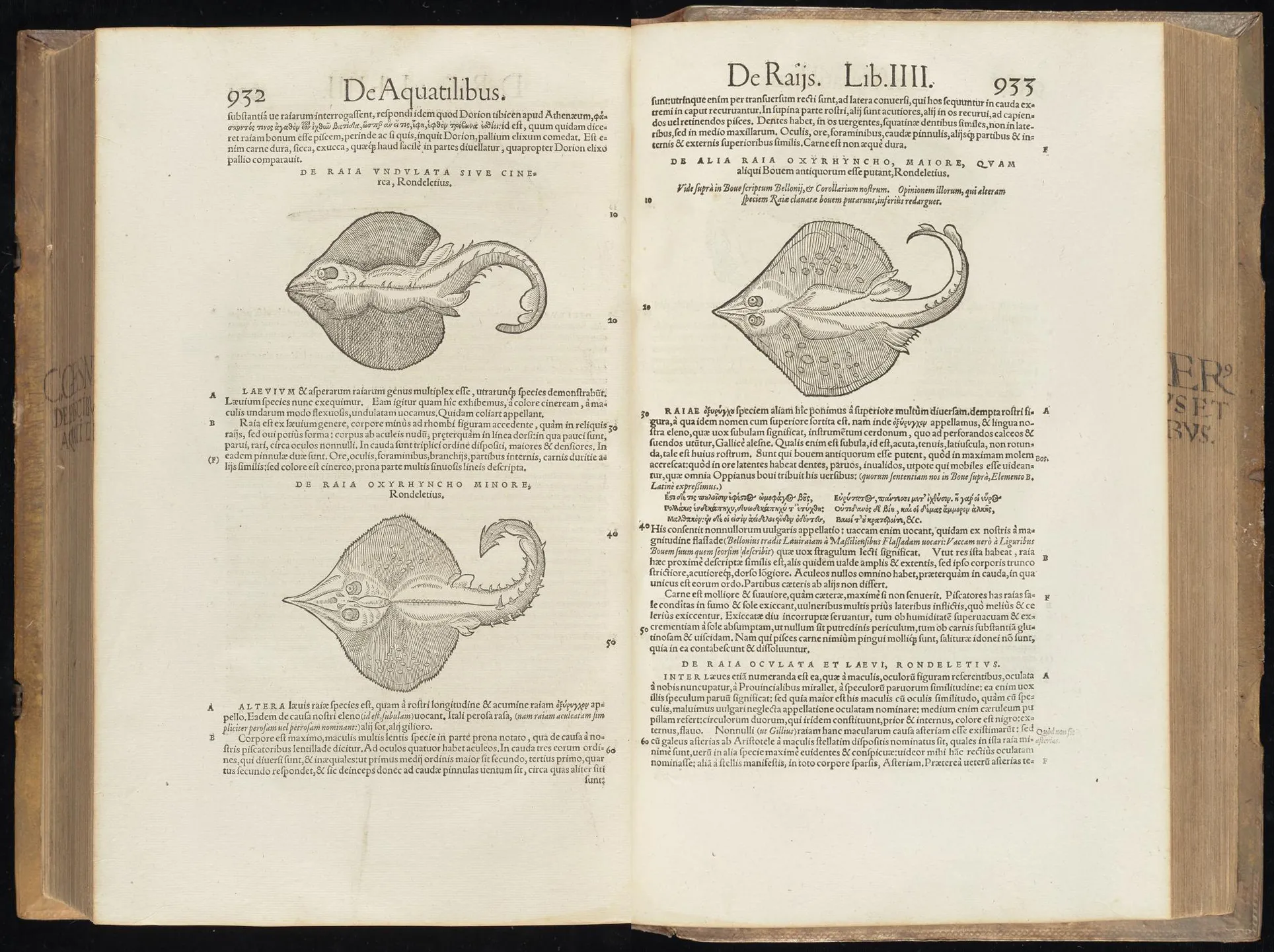
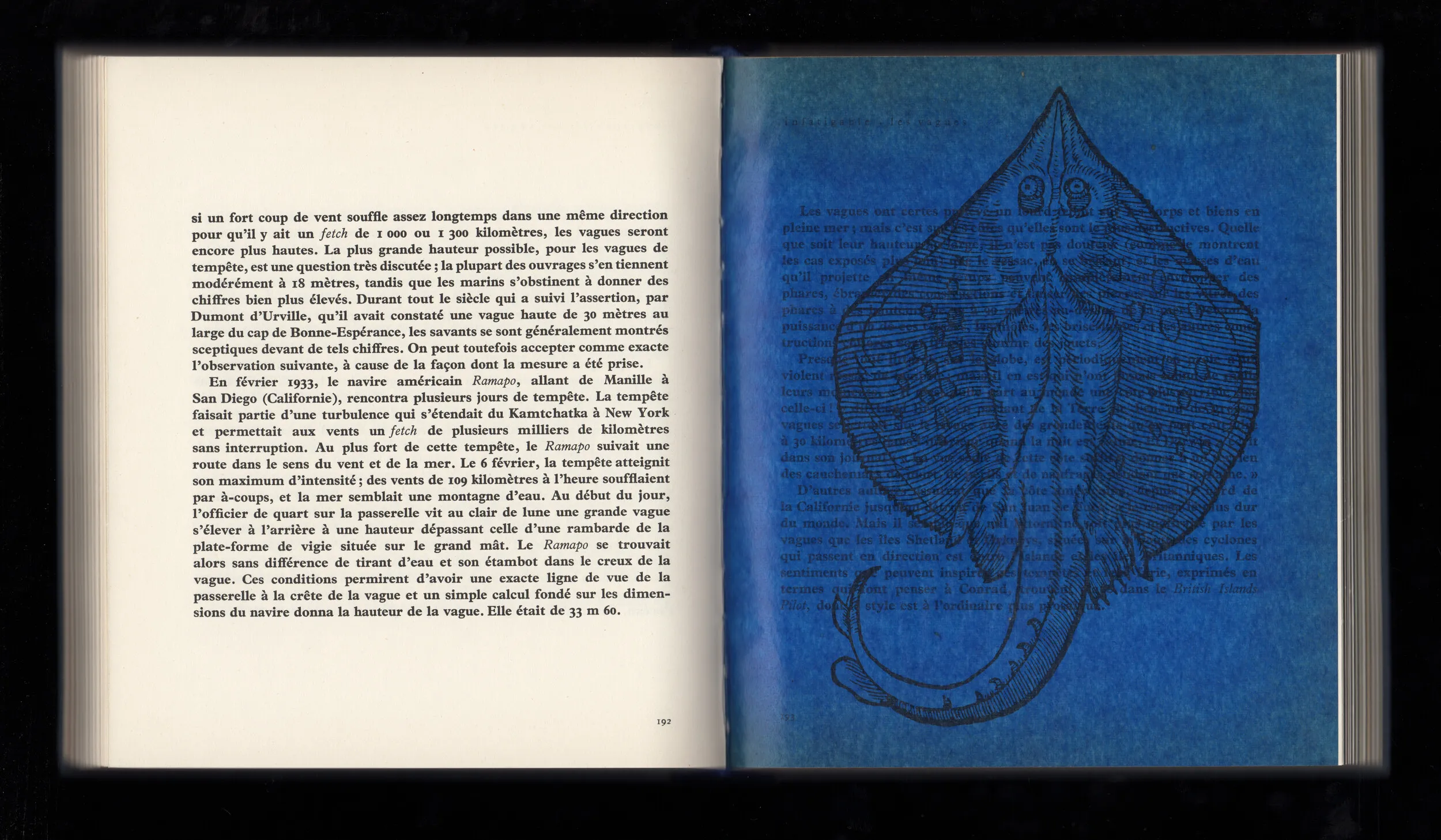
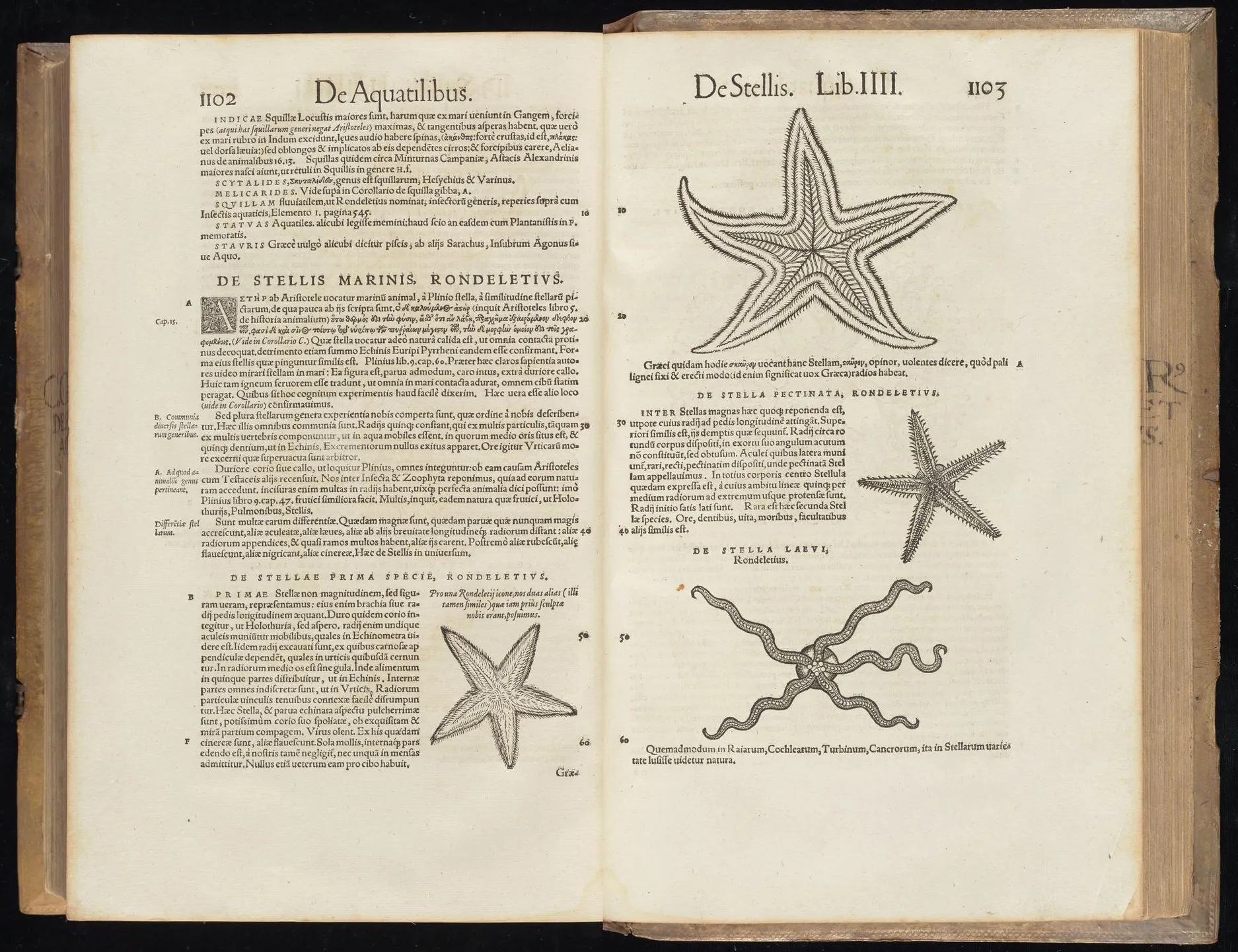
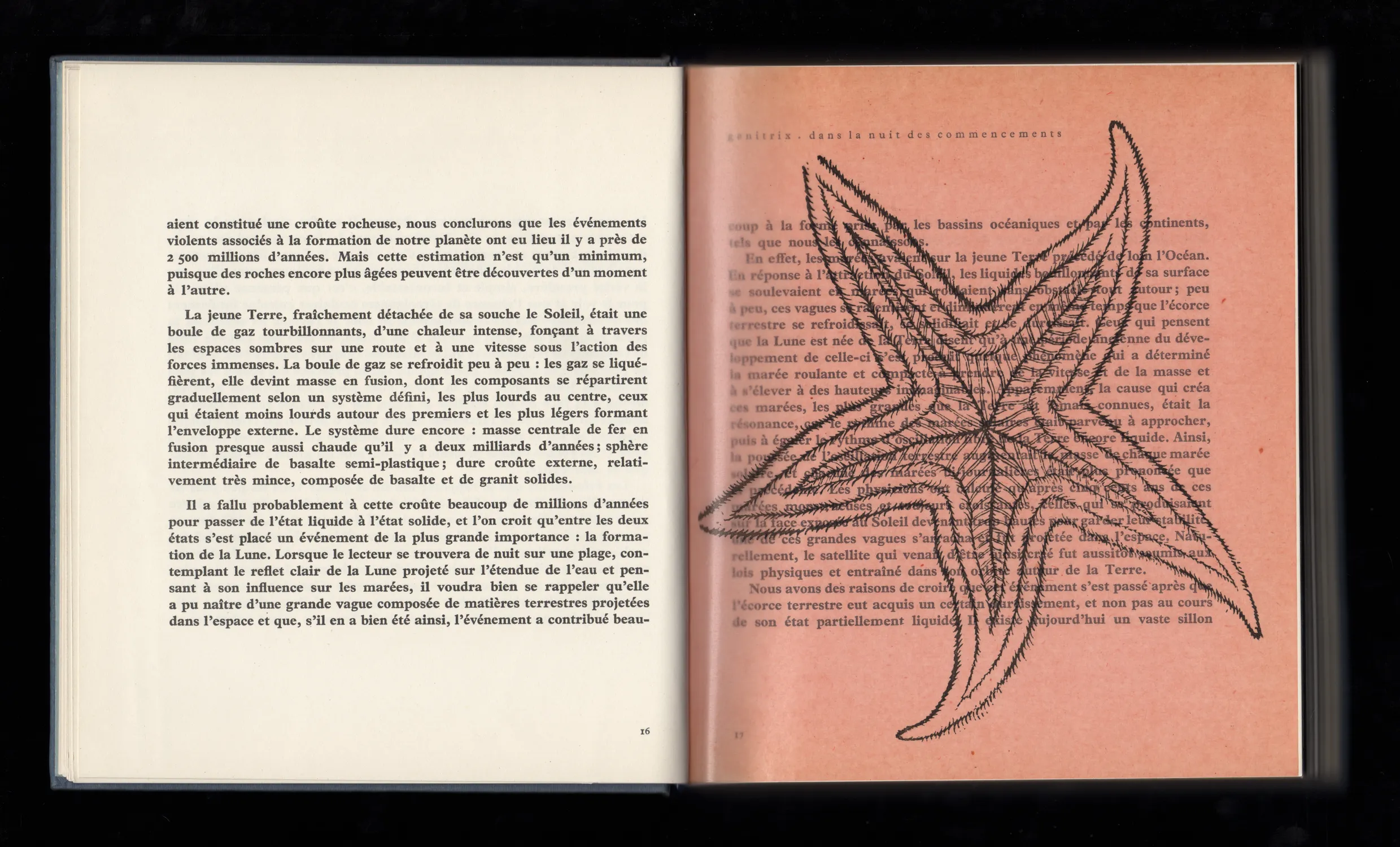
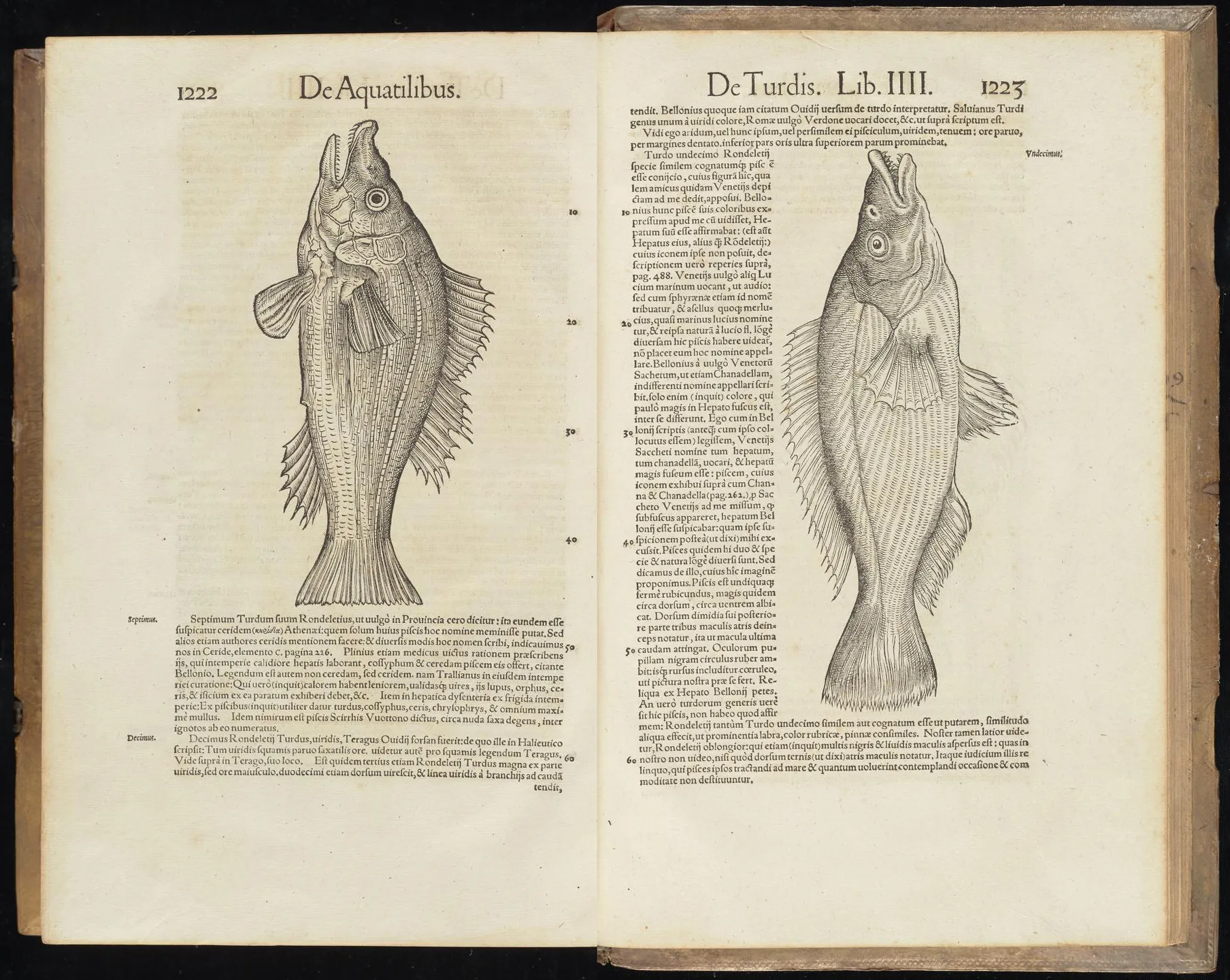
In this poetic edition of popular science, the book designer juxtaposed ancient engravings with black-and-white photographs. Most of the prints come from Historia Animalium (1558) 20, which can be considered as the first zoological encyclopaedia of the Renaissance, compiled by Conrad Gesner, a Swiss doctor and naturalist.
MLH
The example you mentioned is interesting because here, the engravings sport an entirely new materiality, and thus a new existence. Printing such images on coloured crystal paper gives rise to layers of intersection and superimposition. The different engravings engage in dialogue with the text and photographs, disrupting their reading and intertwining to form hybrid creatures.
They hold a central place in the book, influencing its comprehension. It is surprising that they are not credited (unlike the black-and-white photographs that also feature in the book). I wonder if this was Jeanine Fricker’s intention, perhaps aiming to obscure the different time frames?
ZL
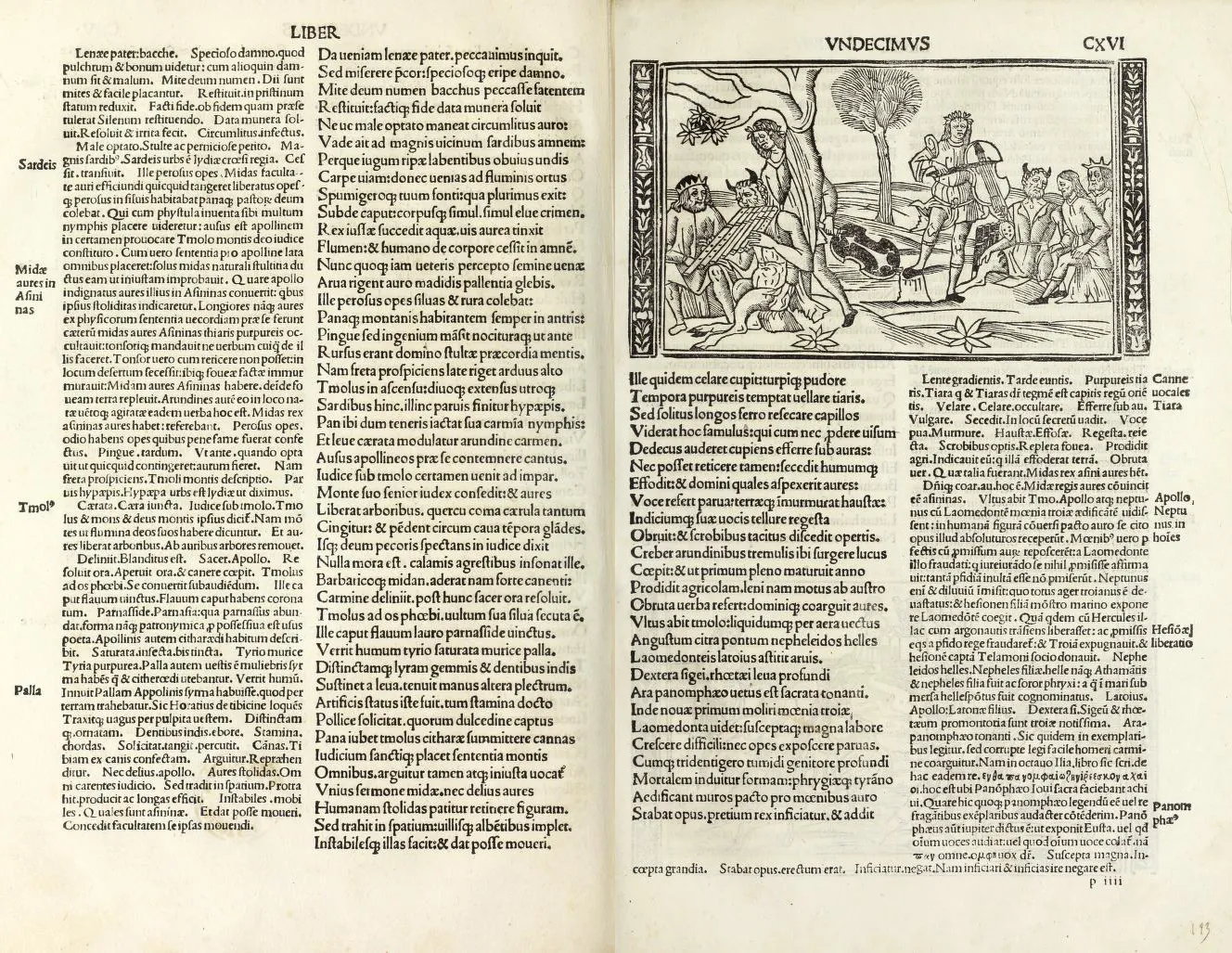
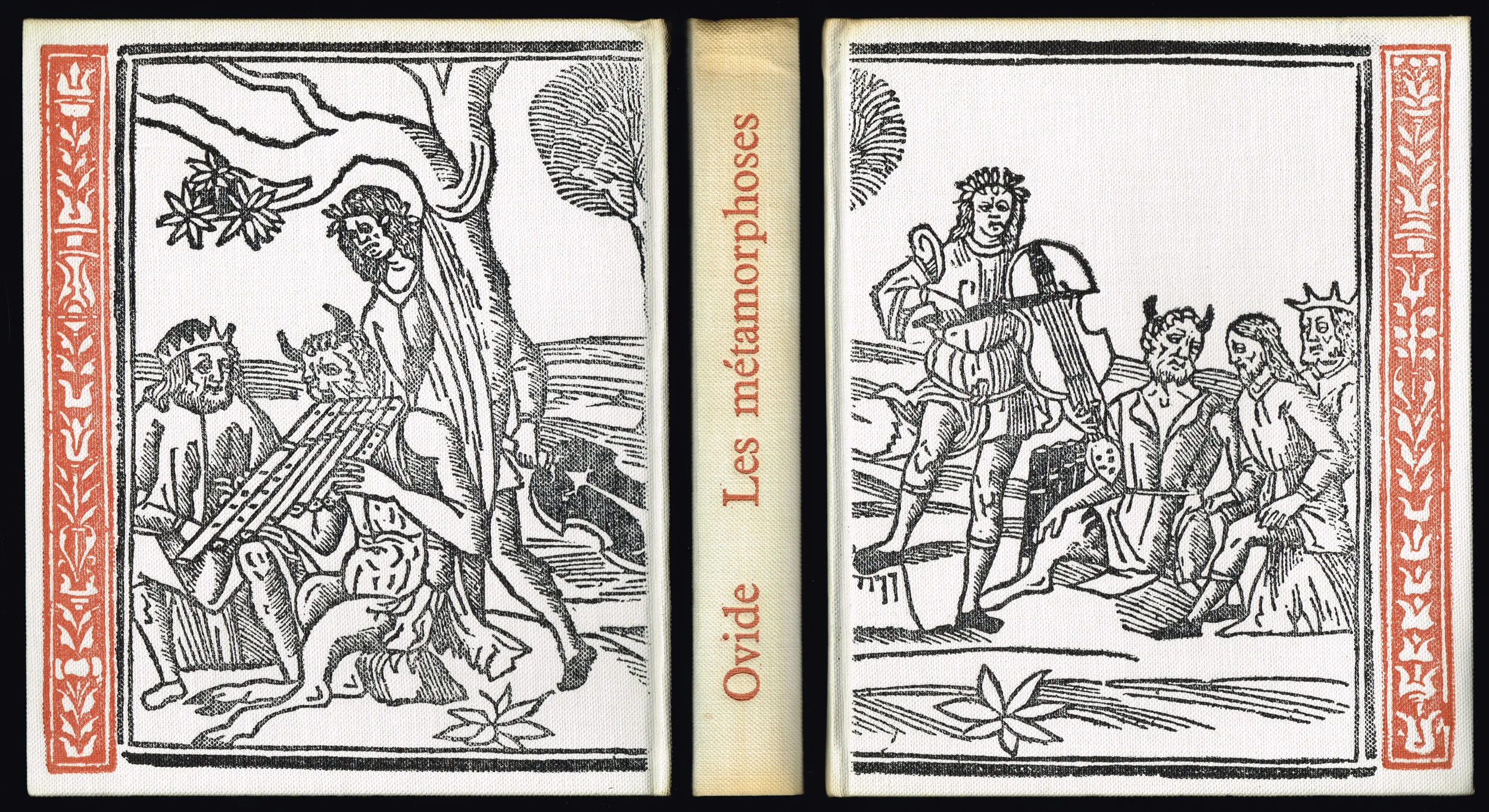
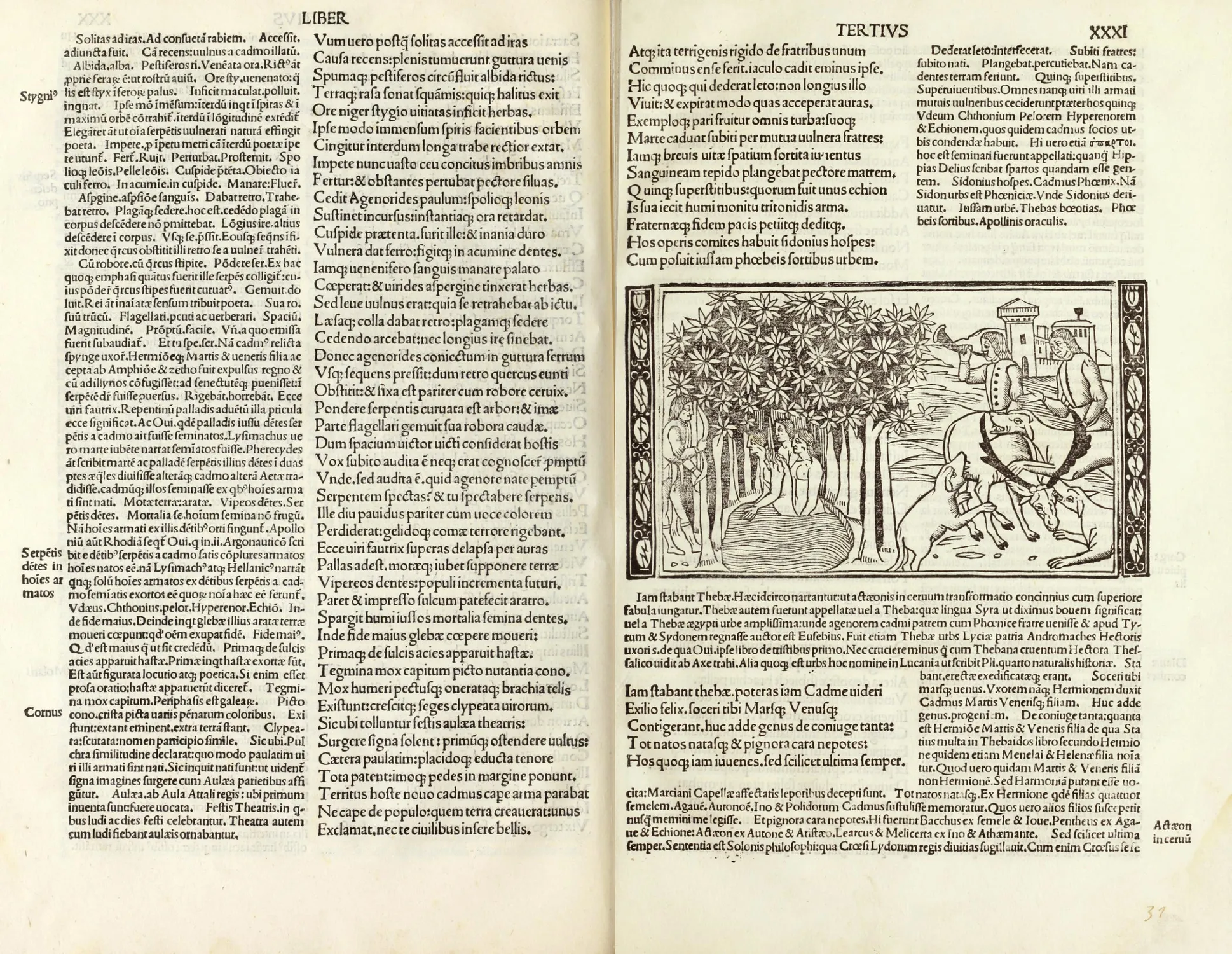
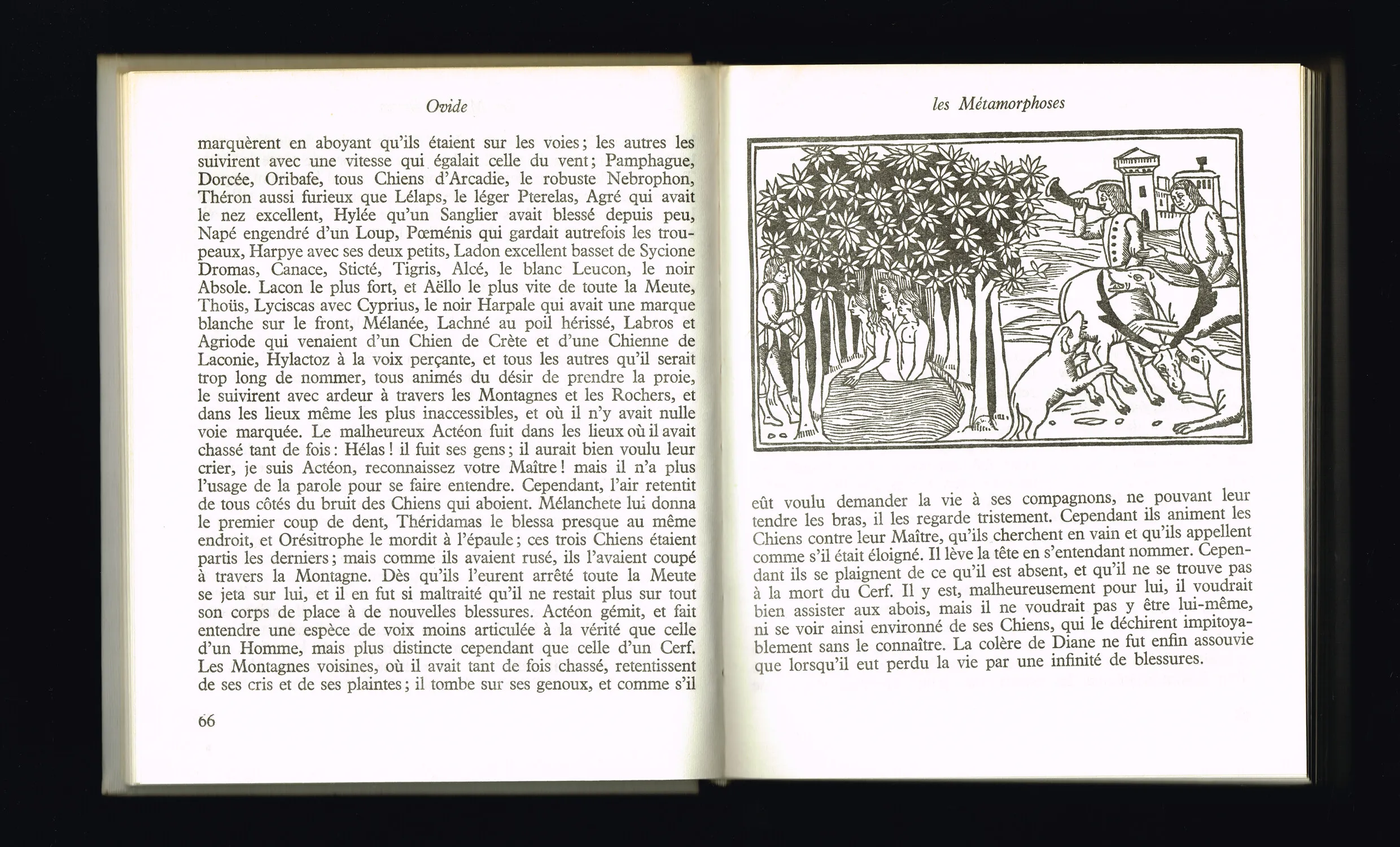
Yes, quite possibly. In fact, all of the engravings that have caught our attention from the start are rarely credited, and when they occasionally are, the reference remains vague. In Ovid’s Metamorphoses CFL653, the title page reads “illustrated with 16th-century woodcuts”. One must dig deeper to uncover the 1501 Italian edition 22 from which Jacques Daniel sourced the illustrations.
But returning to Jeanine Fricker, she seems to be one of the few designers who regularly worked with an iconographer, Dominique Raoul Duval, whose name appears in several colophons. Their images always come from the Bibliothèque Nationale de France.
MLH
She must have worked there, since she can be seen in Alain Resnais’ film Toute la mémoire du monde 23, wandering through the labyrinthine shelves that give the library its special charm.
ZL
Libraries, in fact, play a crucial role in our investigation. While their maze-like aisles initially appear as repositories of the written word, they also play a fundamental role in preserving images. These spaces of memory are the rallying points for iconographers; a practise that became professional in the 1960s 24. The Bibliothèque Nationale de France, with its department of prints, became the nerve centre for image research.
The renowned iconographer Nicolas Bouvier claimed to have spent countless hours in such places, which he viewed as a vast archipelago of images. I found a singular description he had made of his profession: “An iconographer is someone who seeks out the images requested by a varied clientele – scholars, publishers, magazine editors, graphic designers, jokers – and, in doing so, stumbles upon others that are even more beautiful and amusing, though no one asked for them.” 25
Bouvier wrote extensively about this profession, which he helped bring to prominence, and his reflections shed light on the dual practise of image investigator and duplicator. In the book Nicolas Bouvier, iconographe 26, I read that his favourite visual forms were illustrations taken from manuscripts, scientific books, botanical and alchemical treatises and playing cards. 27. This iconography closely resembles what we found in Club books and I think it would be interesting to understand Nicolas Bouvier’s relationship with this ancient, popular material. For him, these images are “flashes of past-present” and he claimed to become indifferent to their chronology. 28
Could it be then that the ancient, naïvely-drawn engravings appeared to Massin, Faucheux, Darche or Fricker as temporally fluid – blurring their historical contours and turning them into thoroughly contemporary images?
MLH
Indeed, as these images pass through their hands and under their gaze, they can slide from one space-time to another. Their history grows richer with new layers of meaning, readings and interpretation.
In this regard, I see a profound connection between the work of book designers and that of iconographers. In the case of Club books, designers bear significant responsibility for enriching the critical dimension of the main narrative. Beyond (typo)graphic layout, there is a genuine intent to contextualise and comment on the literary text, particularly through the addition of external material. Embracing the idea that surprise can emerge from a document from the past, designers embark on a meticulous task of iconographic exploration. The images they select, adapt and paradoxically treat as “unpublished” allow them to shape the books entrusted to them.
ZL
French iconographer Jacques Ostier goes even further, by standing as “co-author-creator” of the works he contributed to. For him, the research for images isn’t solely an act of execution, but involves a deeply subjective interpretation of the text. 29
MLH
For the designers of Club books, the role of researcher is coupled with that of creator. Via chromatic transformations, cropping, stylistic simplifications, scale effects and other graphic tricks, they become “image-makers” in their own right.
Their multifaceted interventions visibly shape the path of the editorial object and, in my opinion, truly resemble a process of writing.
As such, it is common to draw parallels between the practice of graphic designers and that of translators. In Latin, to translate (traducere) means “to carry across” and the German equivalent (übersetzen) indicates “transporting beyond”, or “moving further”. Like the designer’s act, the translator’s task consists in relocating existing content into an entirely new form.
Images take part in this displacement. On the one hand, they improve the text and influence how readers engage with it; on the other, they stand as genuine tools of writing, wielded by designers to tell fresh stories. Just as a text can be turned into something to be seen, the image here becomes something to be read. Two narratives meet, told through two distinct languages.
Adorning the pages of Club books, the visual paratext extends the narrative, giving readers the chance to experience it from an entirely new angle. While this iconographic addition plays a key role in the reading of the reissued text, it is equally relevant to consider its less-discussed reciprocal: how does the meaning of images evolve when paired with textual content? Does the text also significantly influence how we read them?
ZL
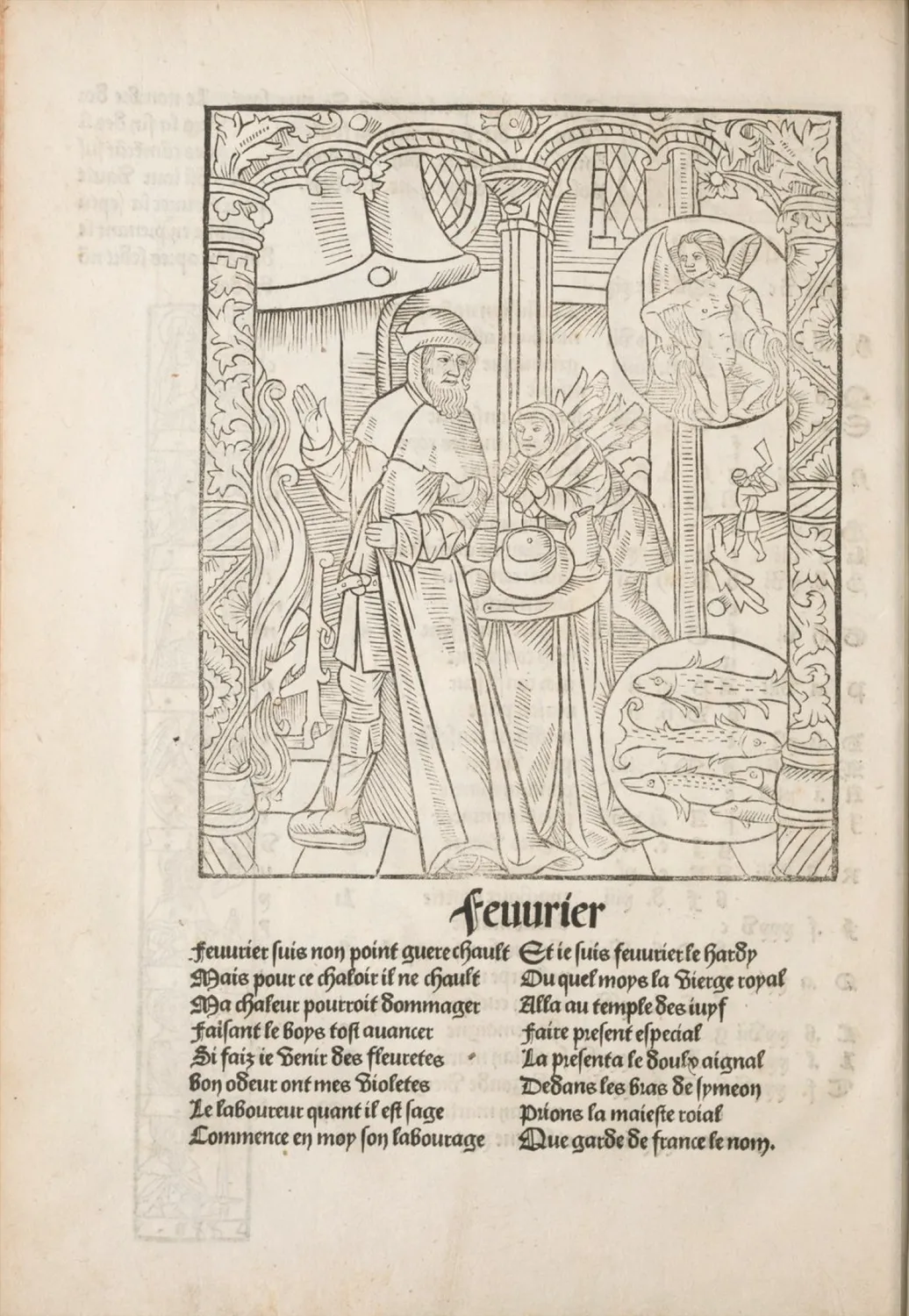
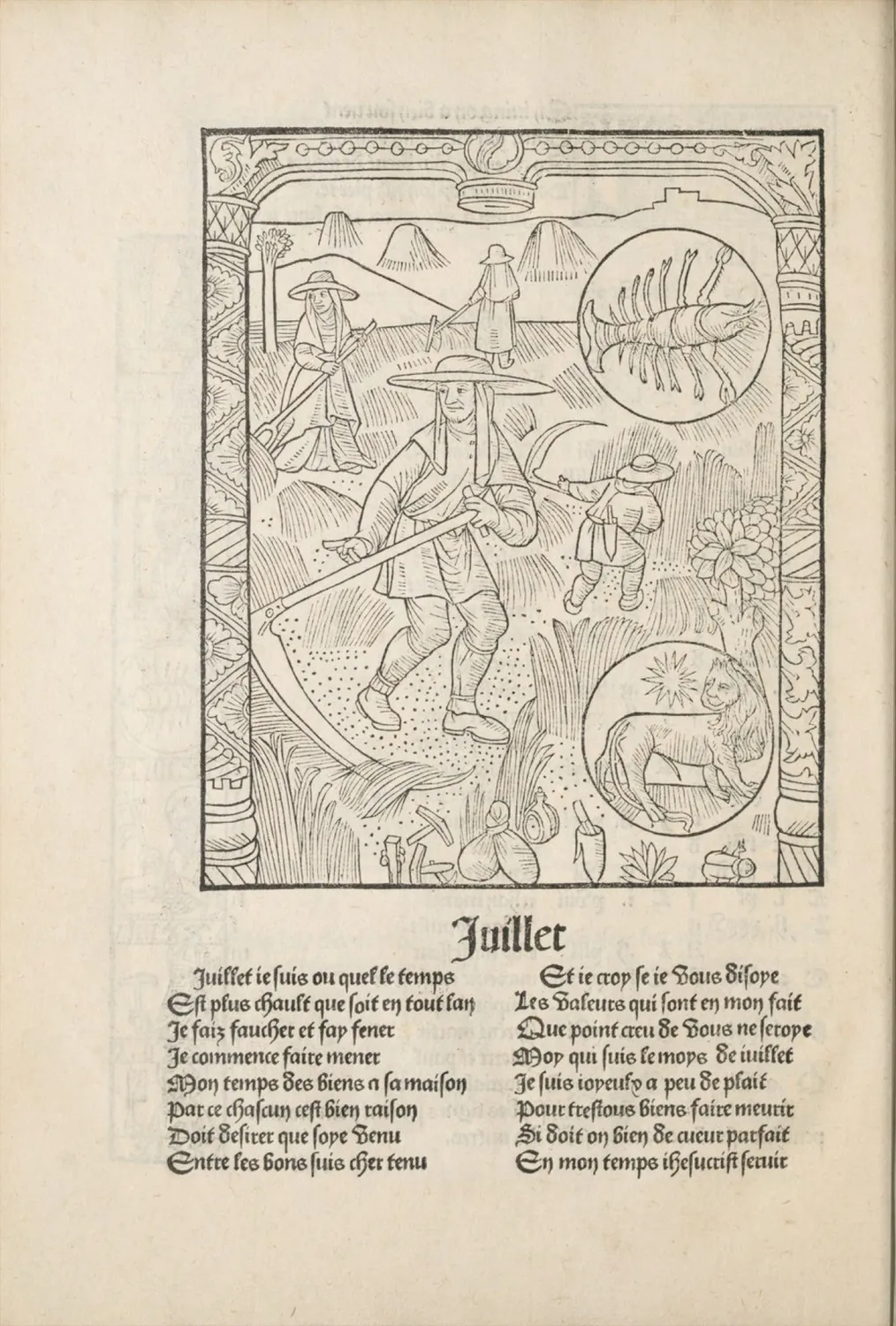
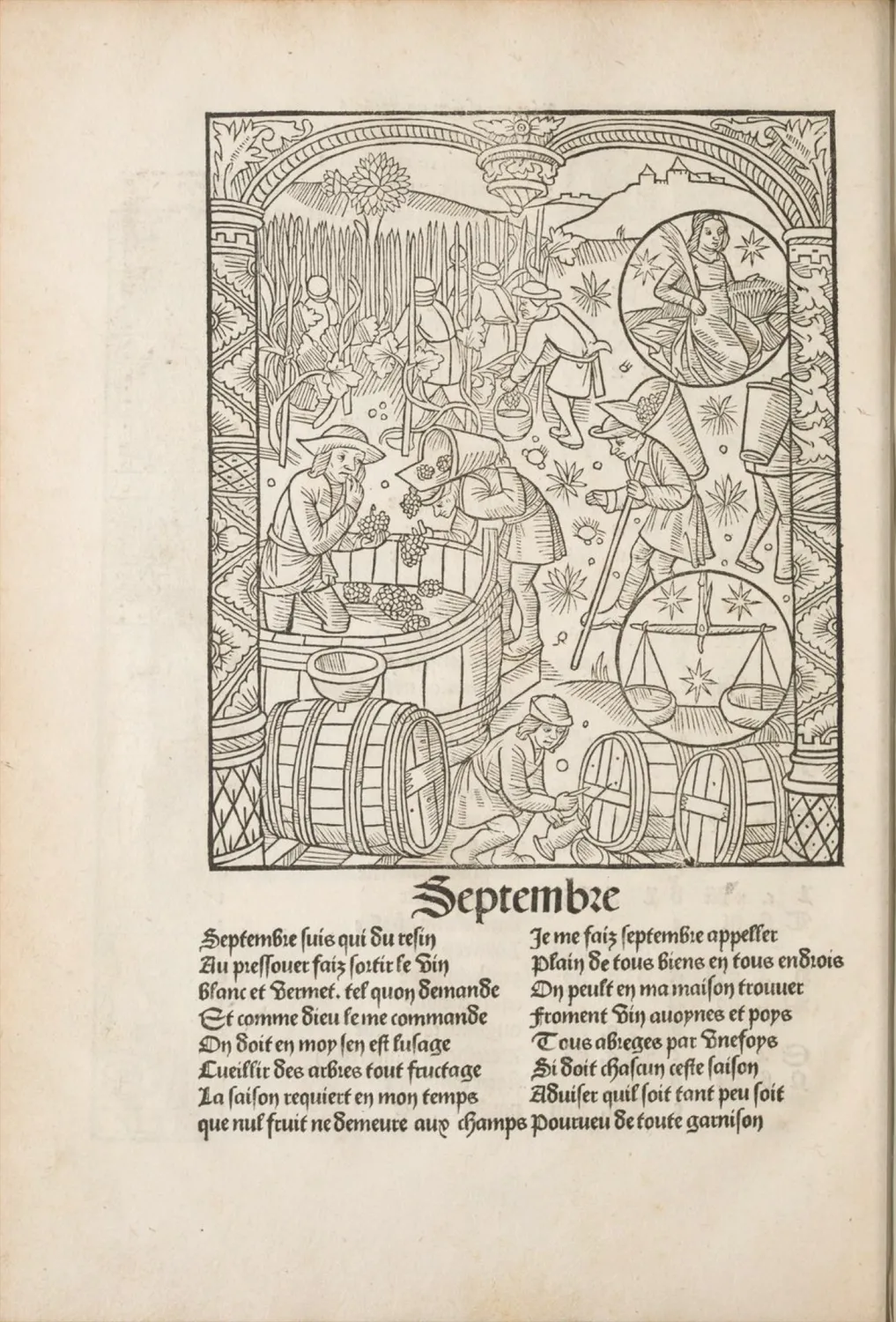
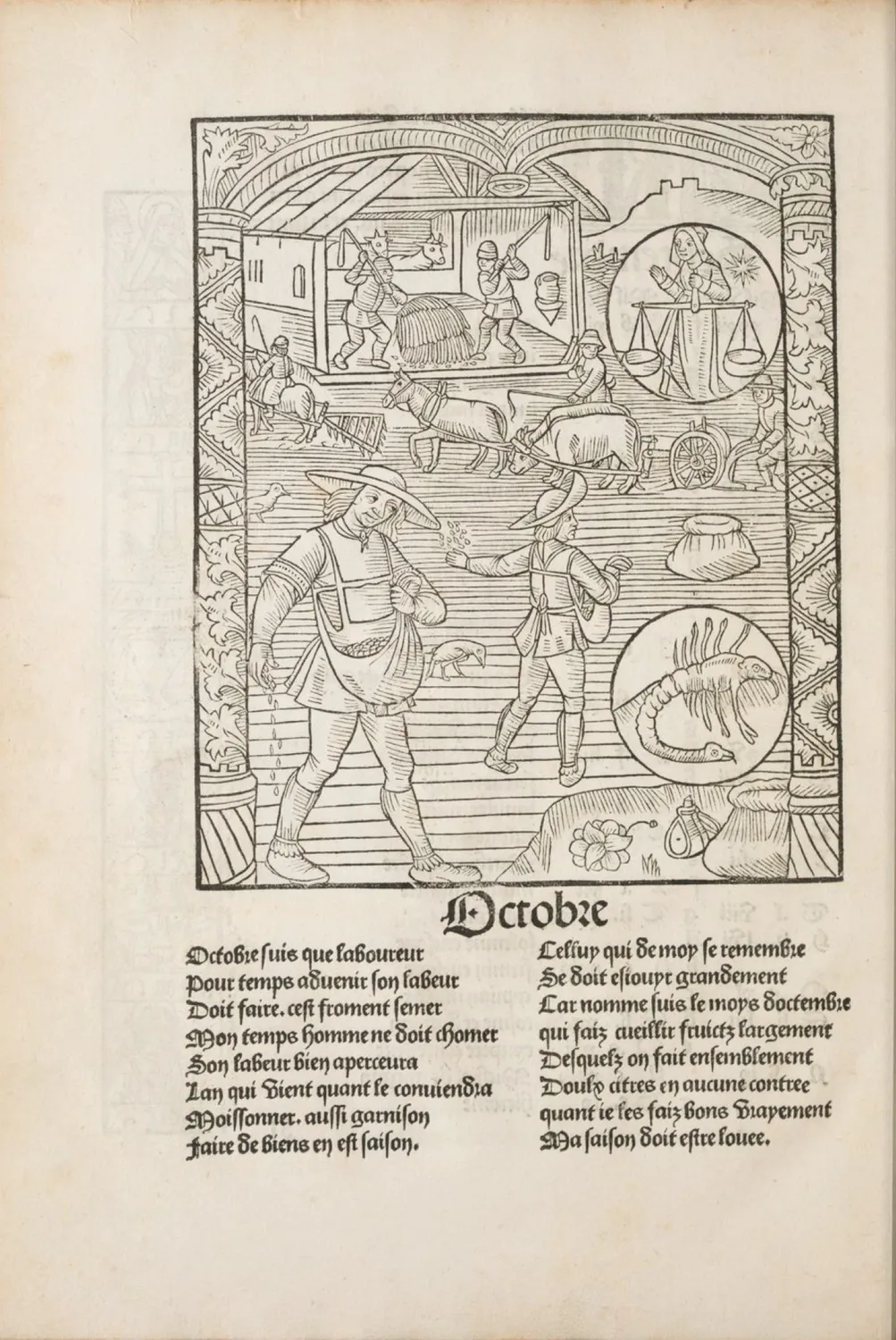
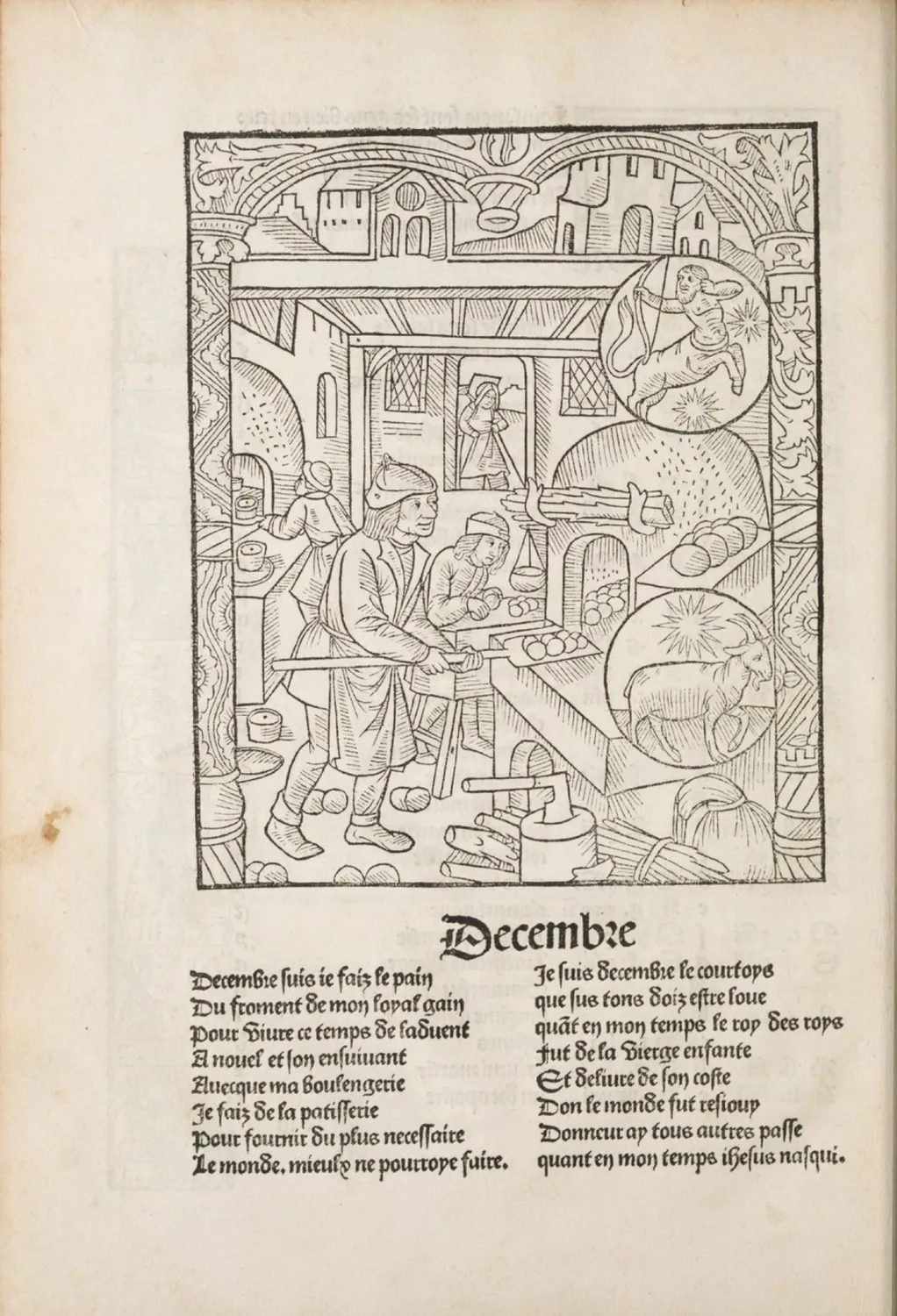
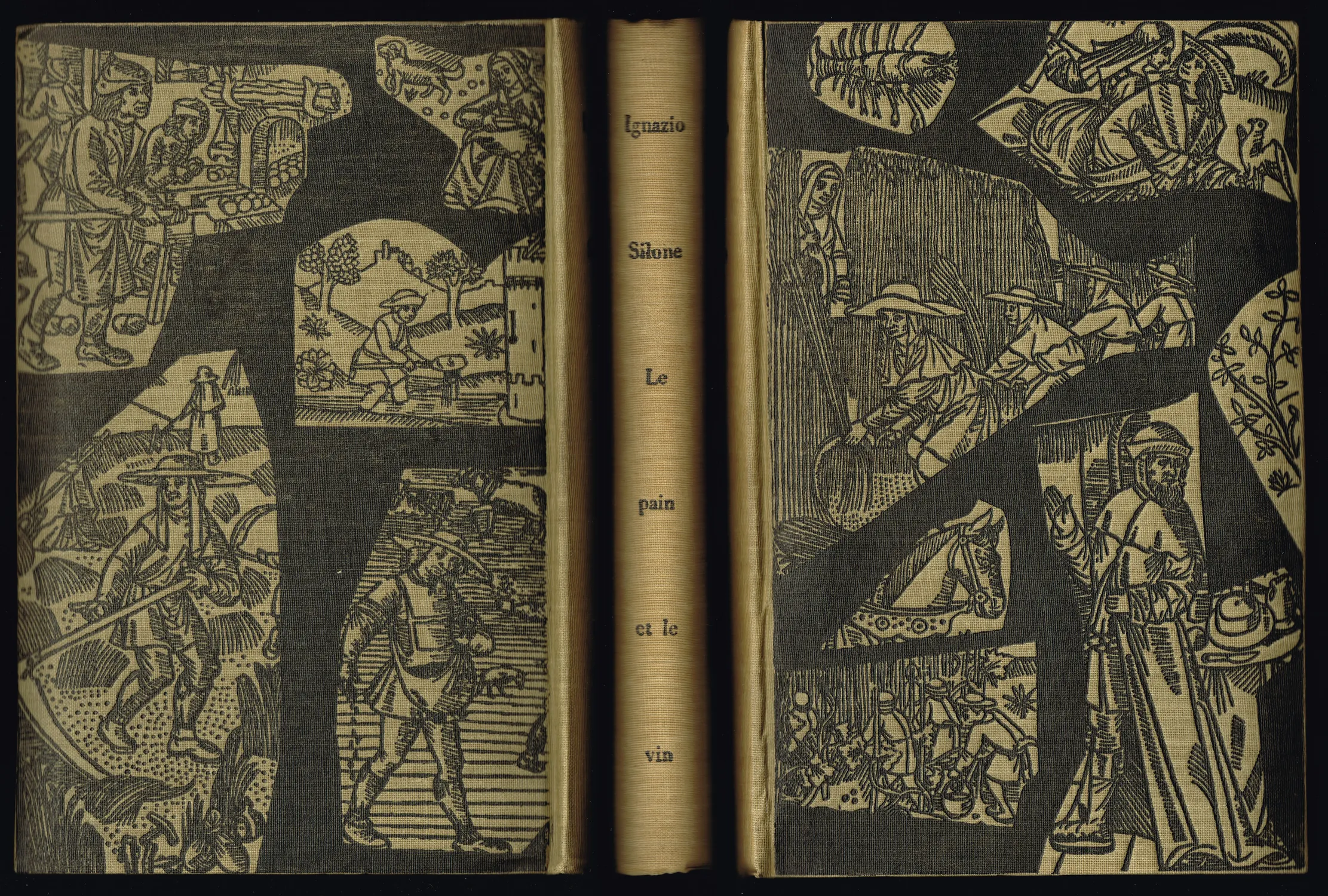
To do so, let’s take Ignazio Silone’s novel Le pain et le vin CFL159 from the shelf, designed by Pierre Faucheux in 1950. The front and back cover pages display fragments of engravings taken from a Calendrier des bergers 31. This small, practical, and moral guide was filled with images: zodiac signs, anatomical boards, danse macabre scenes, and depictions of farming and craft activities, all intended to guide men and women toward salvation 32.
MLH
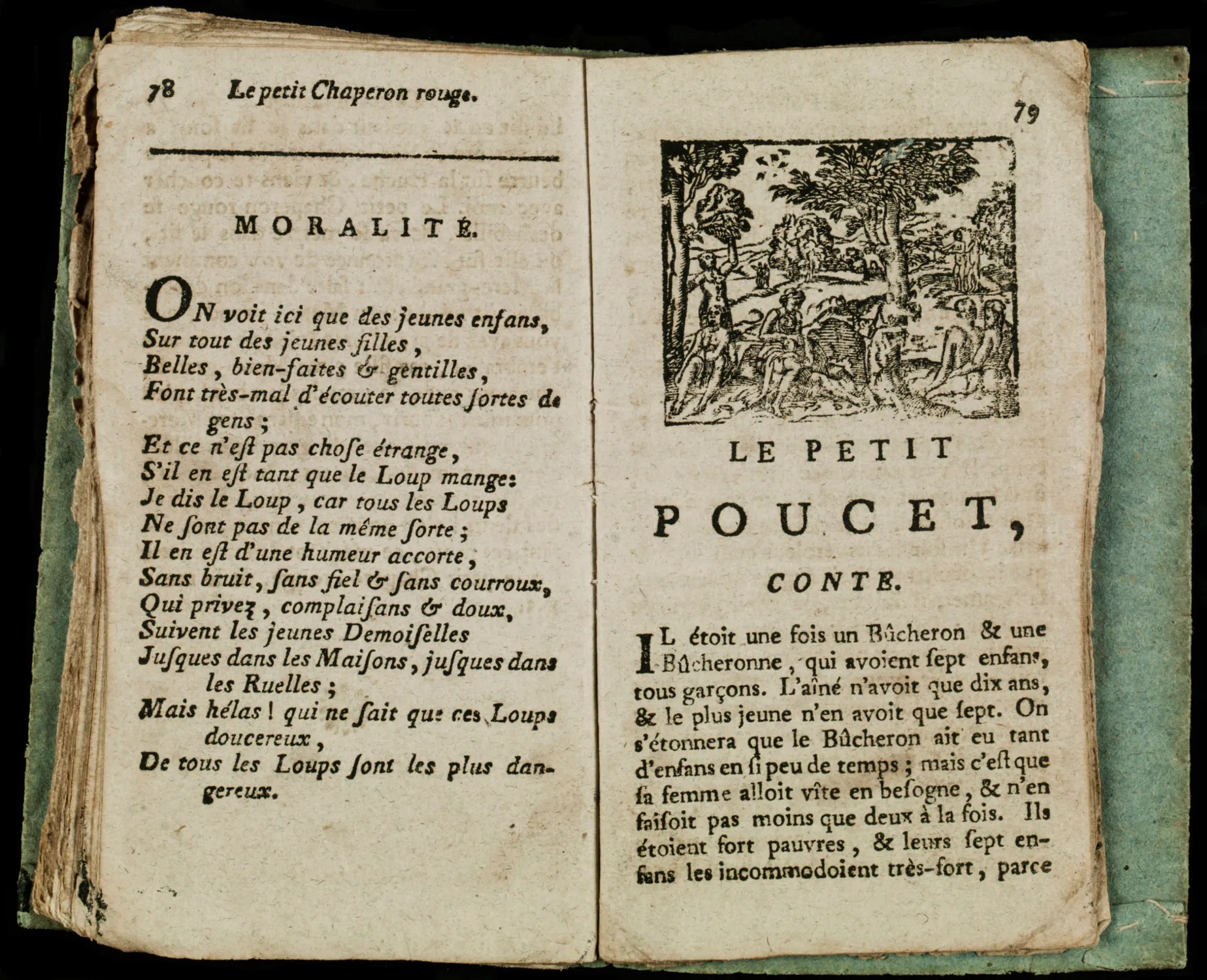
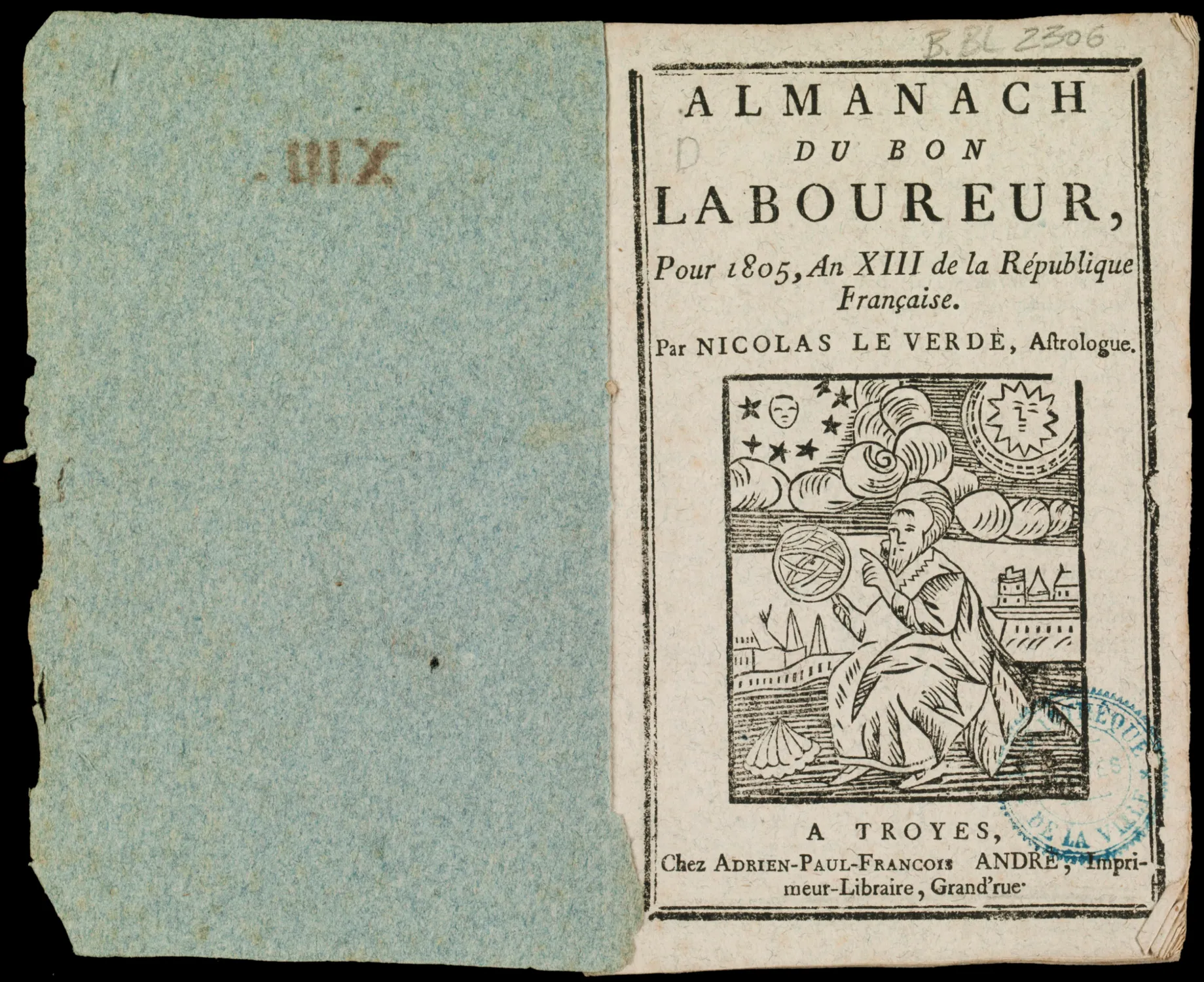
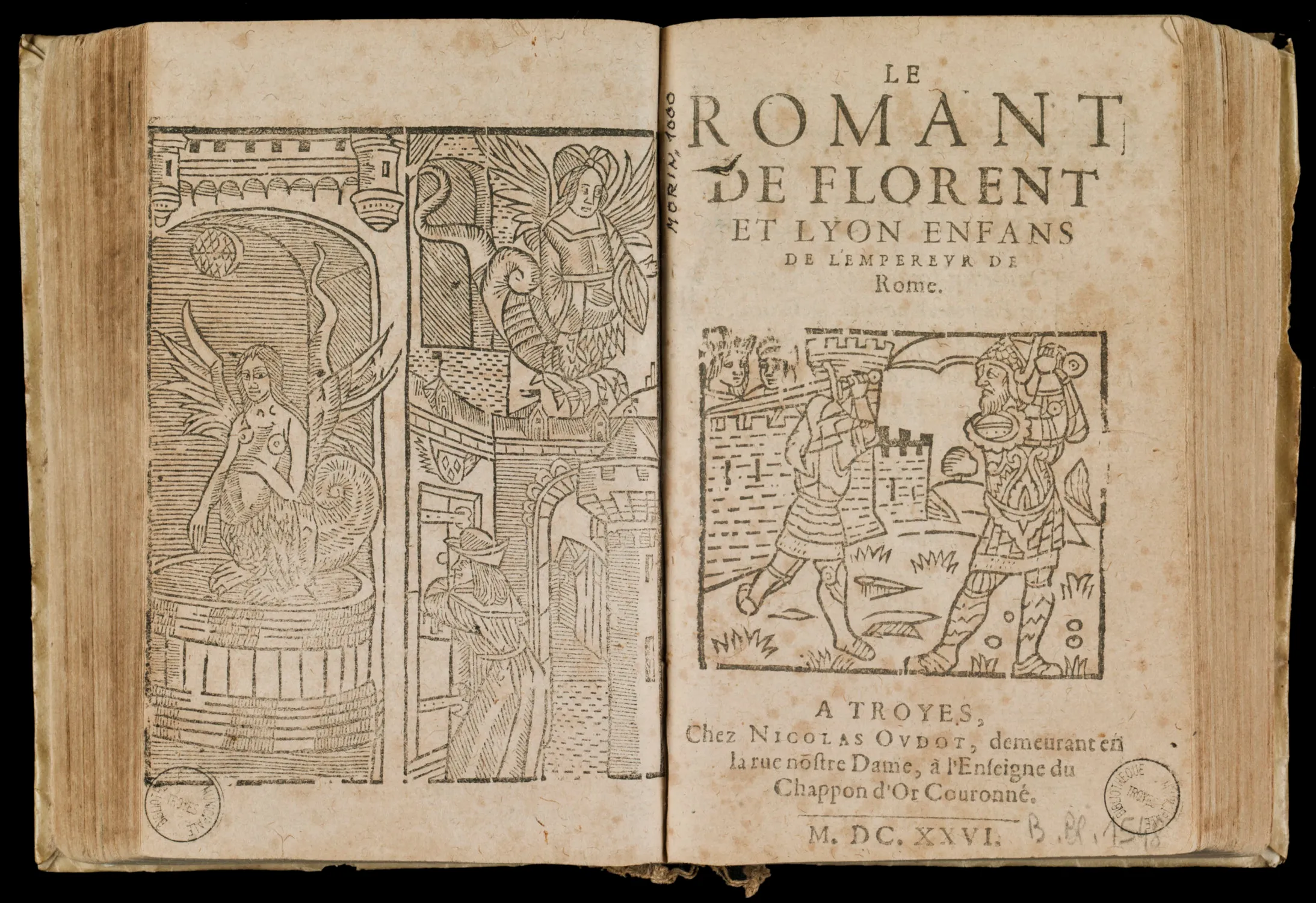
In the early 17th century, the Calendrier des bergers became a part of the Bibliothèque Bleue, a collection largely printed in Troyes and distributed by travelling salesmen.
Beneath the blue-grey paper that gave the collection its name, one finds fragile, hastily-bound pages, blackened with chivalric novels, pious texts, books of hours, and also “practical” content such as almanacs and primers.
To illustrate these writings, Troyes publishers acquired old, worn, and outdated woodcuts, which they endlessly reused, recut and reprinted.
It is fascinating to observe the dual movement of these popular images. A movement that is both spatial (since distributed by itinerant salespersons) and temporal (since they circulated through books and across eras), layering their stories with rich semantic depth.
ZL
Indeed, these images have spanned over several centuries, experienced multiple editorial adventures, and been seen by countless eyes before finding their way onto the pages of Club books.
For Silone’s novel, Pierre Faucheux selected images from a Calendrier des bergers depicting craftsmen and peasants busy at work. They introduce the story of a young Italian communist activist returning from exile during Mussolini’s dictatorship. Forced into hiding, he disguises himself as a priest in a remote corner of the Abruzzo region. Written in 1937, the novel bears witness to this dark period, enriched by the author’s own experience as a communist leader living clandestinely under the fascist regime. How can images from the late 15th century be read centuries later in this social-political context?
MLH
The images adorning the entire cover are visually and semantically dense, and Pierre Faucheux’ position may give rise to multiple interpretations. Could the dark colour evoke the Blackshirts of Mussolini’s government? Do the assembled images of workers and peasants symbolise the unity of labour forces advocated by the Italian Communist Party? Is the Battle for Grain 33 being denounced in the woodcut engravings of labouring men and women on the back cover? And do these fragmented images incriminate the division of the population under the dictatorial regime?
At the same time, we know that Ignazio Silone renewed with his Christian roots in the early 1950s. The Calendriers des Bergers was designed to popularise religion and strengthen the faith of its readers. Perhaps, through this iconographic selection, Faucheux also sought to illustrate the newly rekindled bond between Ignazio Silone and his spirituality?
ZL
The cover of this novel also highlights the phenomenon of image circulation within the Clubs. The sower glimpsed at the bottom of the back cover is also the main character of Jean Giono’s Regain CML197 in the Club du Meilleur Livre version designed by Jeanine Fricker in 1960. This time, the figure, completely isolated from its pastoral surroundings, takes up the entire front cover.
MLH
We see, then, how a single engraving can be used by different designers, in different books, from different Clubs. These iterations shed light on the very nature of prints: endlessly replicable.
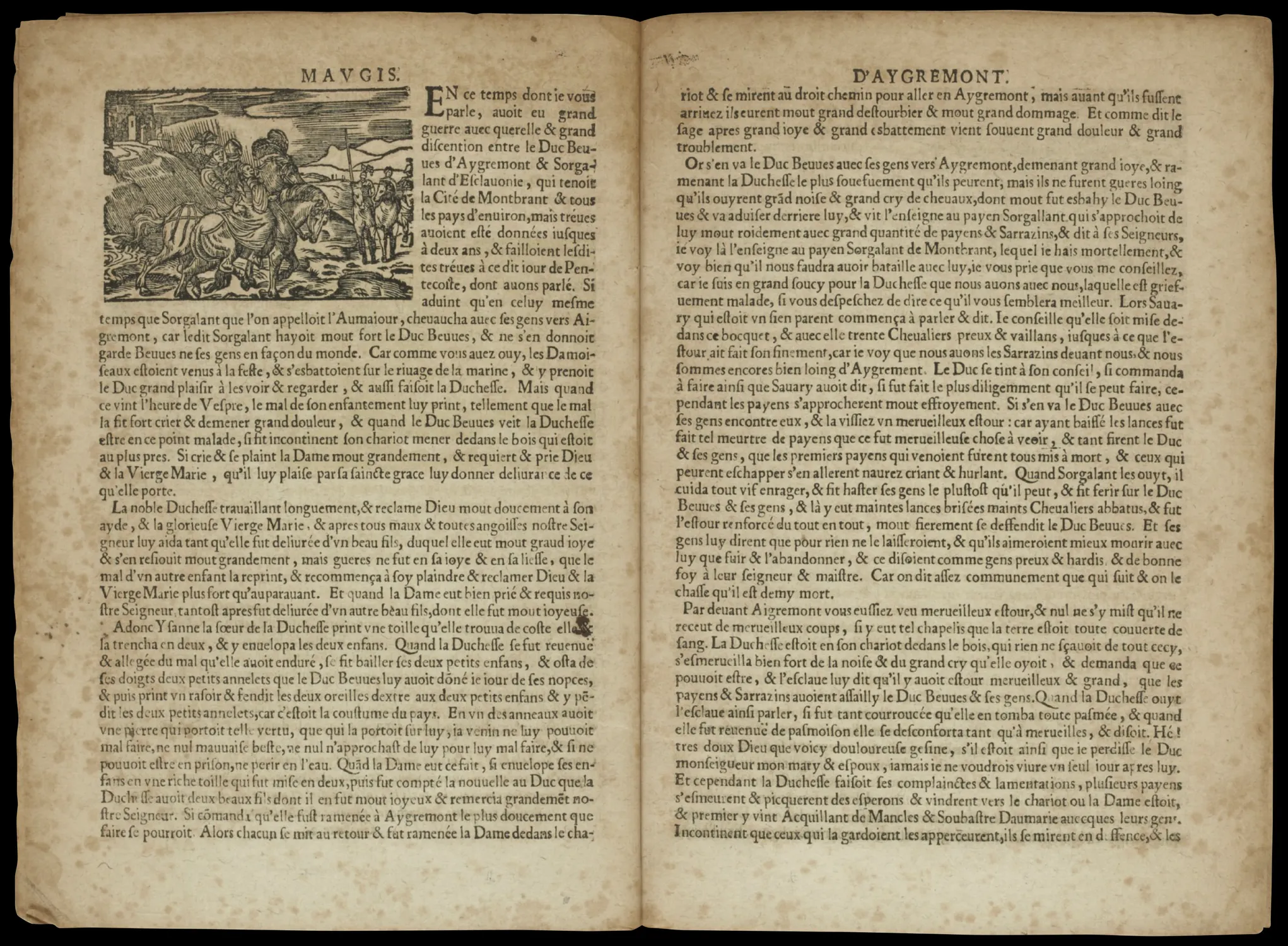
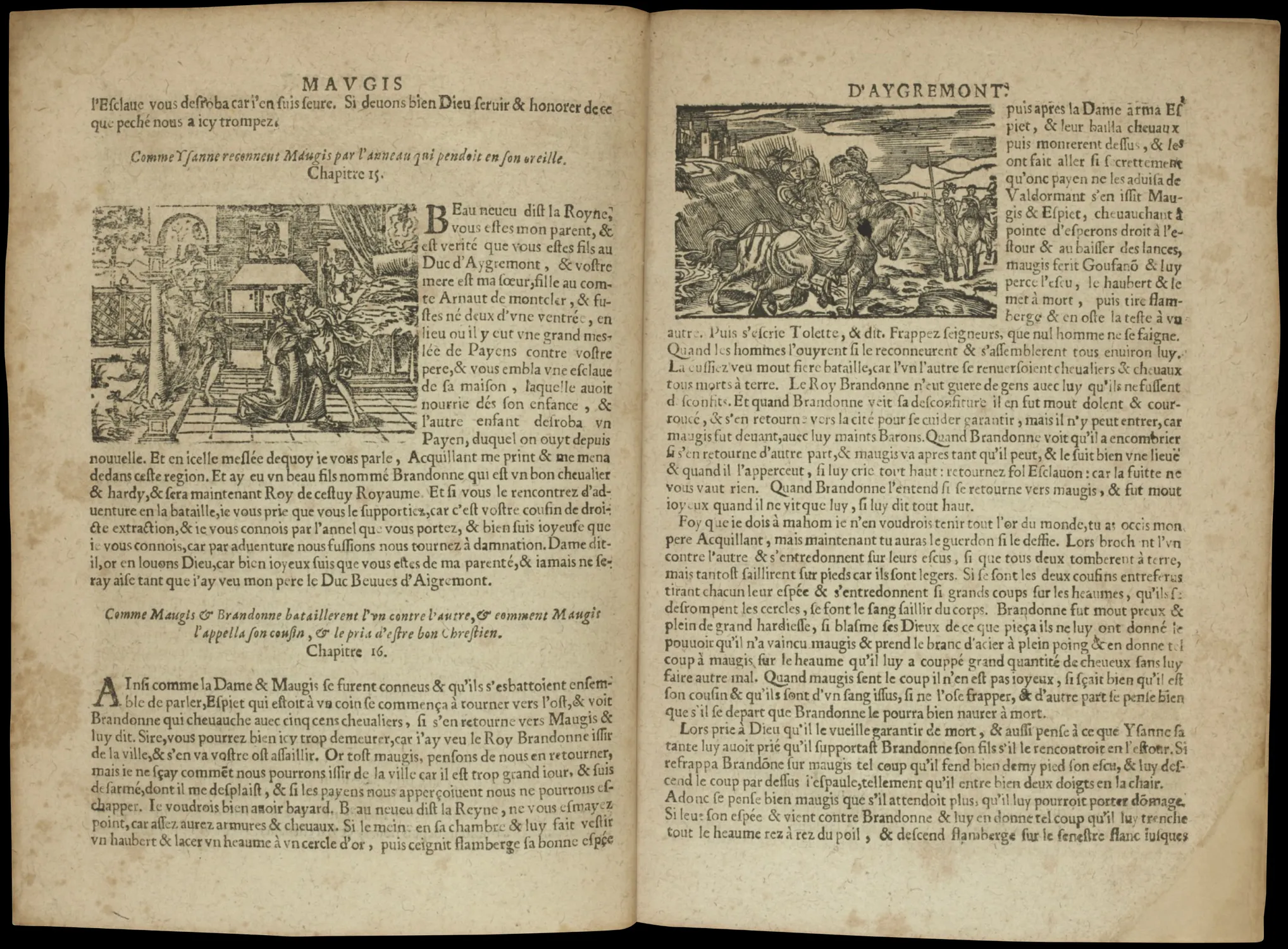
If we take the time to explore the Bibliothèque Bleue catalogue, we again find images repeated, reused from one book to another, sometimes even printed multiple times in the same booklet.
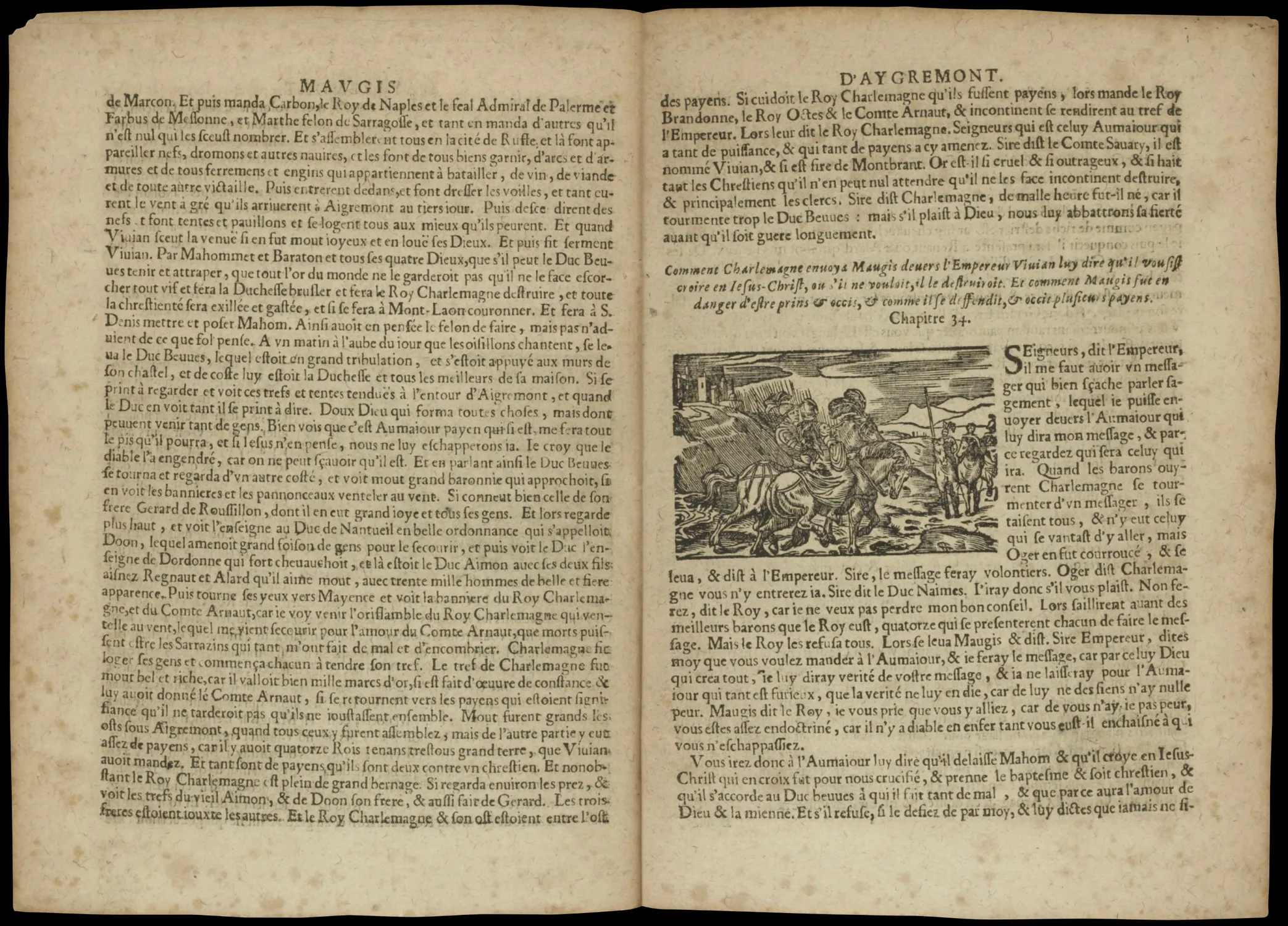
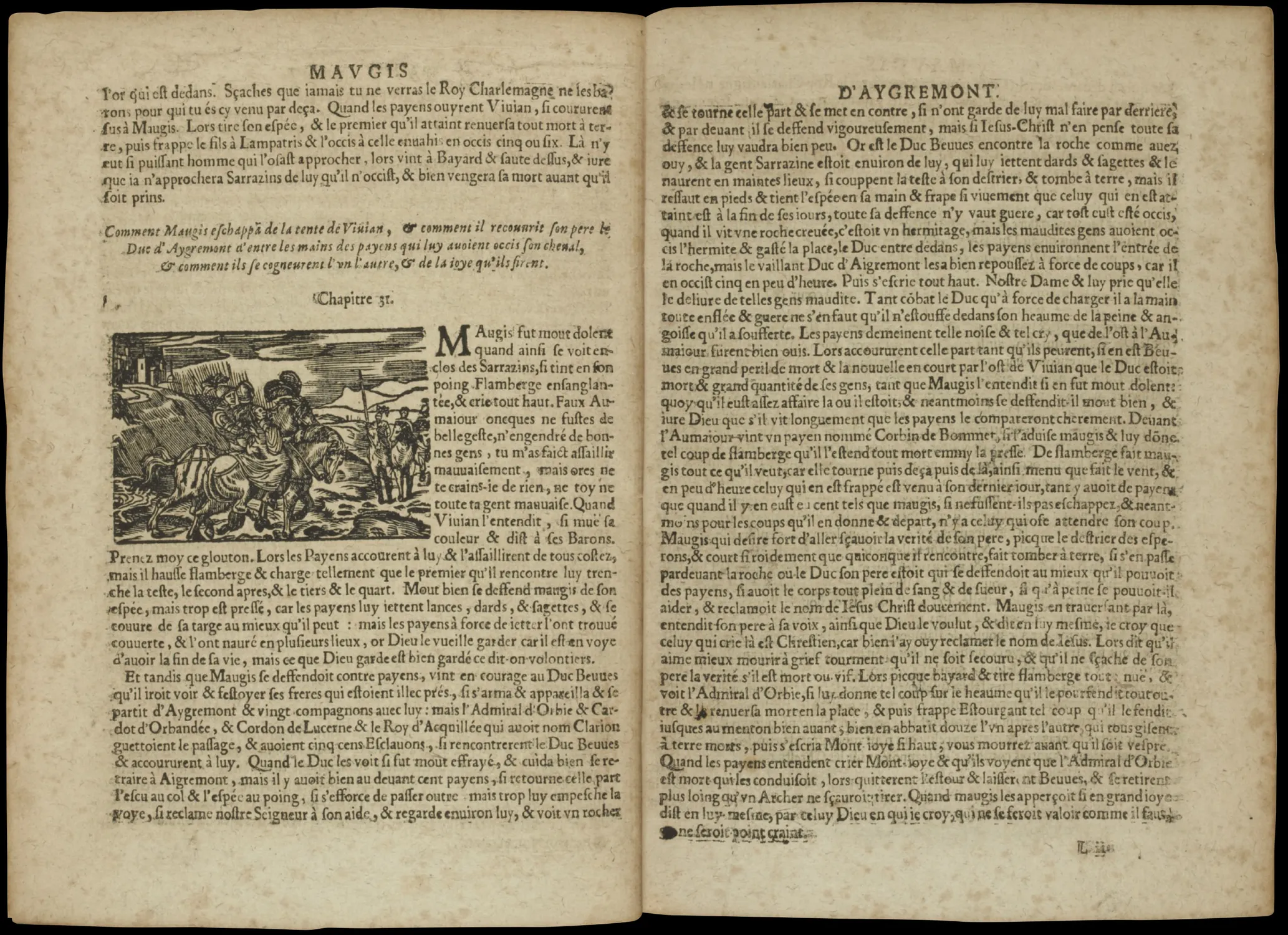
ZL
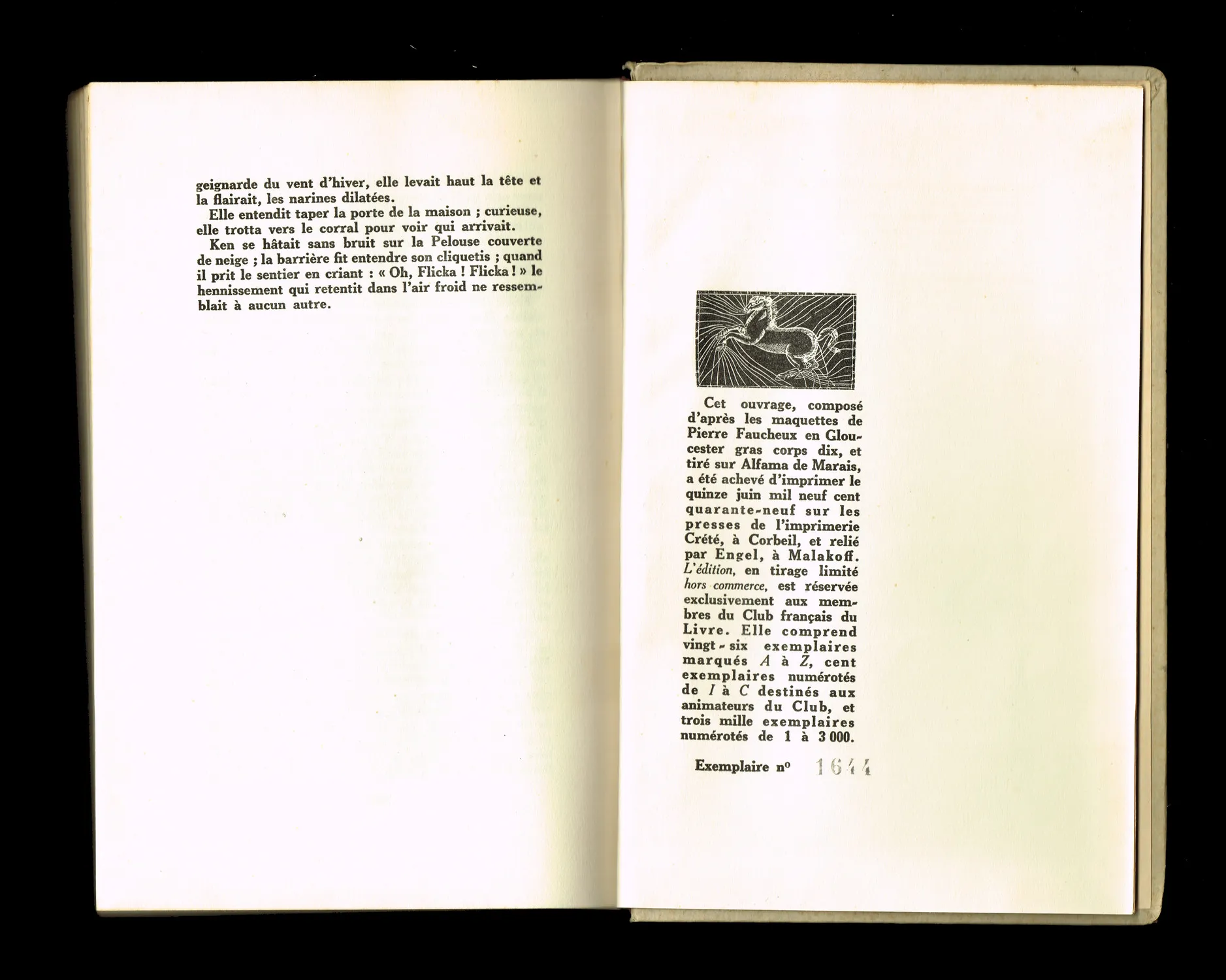
Centuries later, Pierre Faucheux revisited this process in Mon amie Flicka CFL108: the same horse gallops across the cover page, wanders through the pages and ends its run in the colophon. With each appearance, its size and coat colour shift, until the end of the book where it is printed in negative.
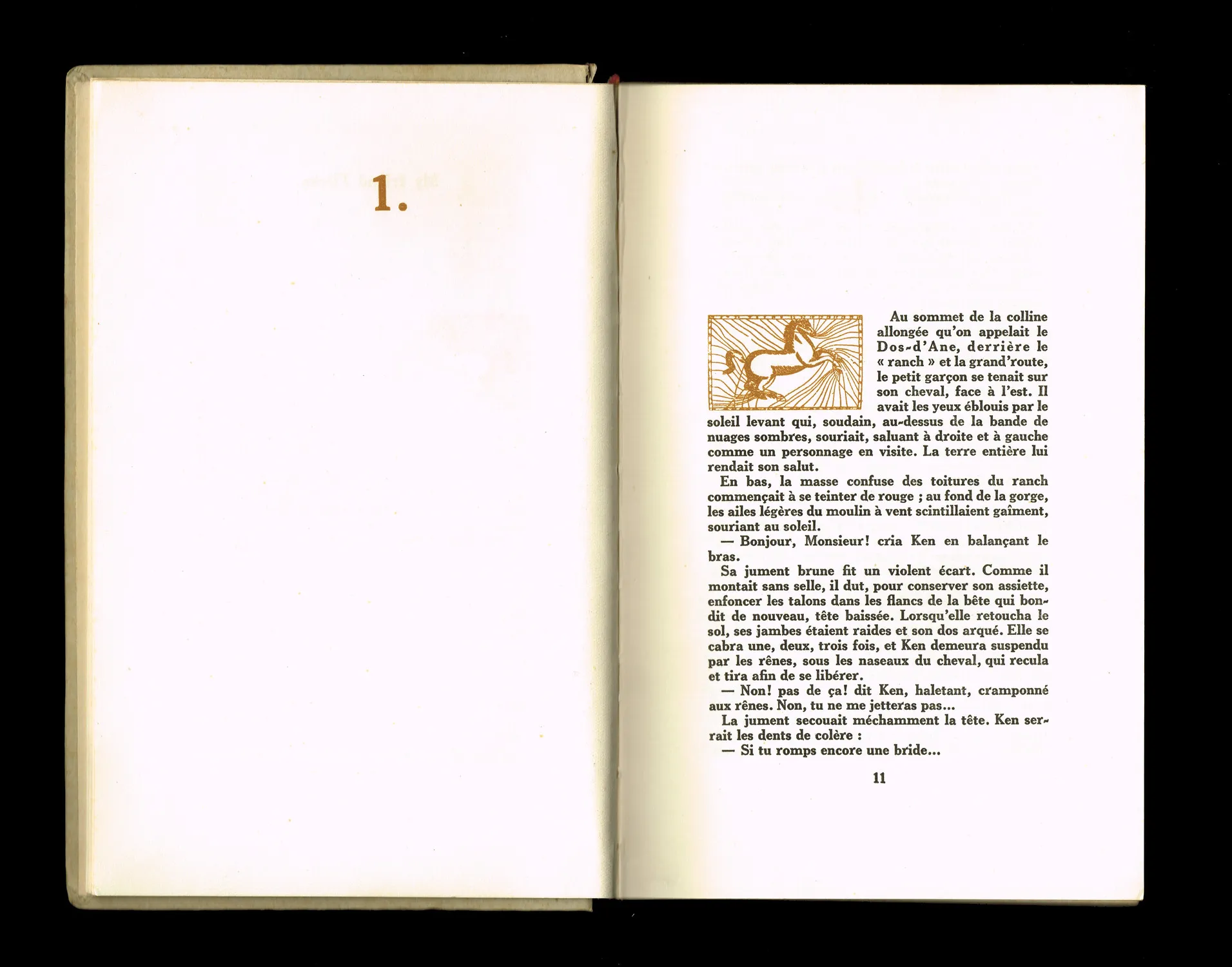
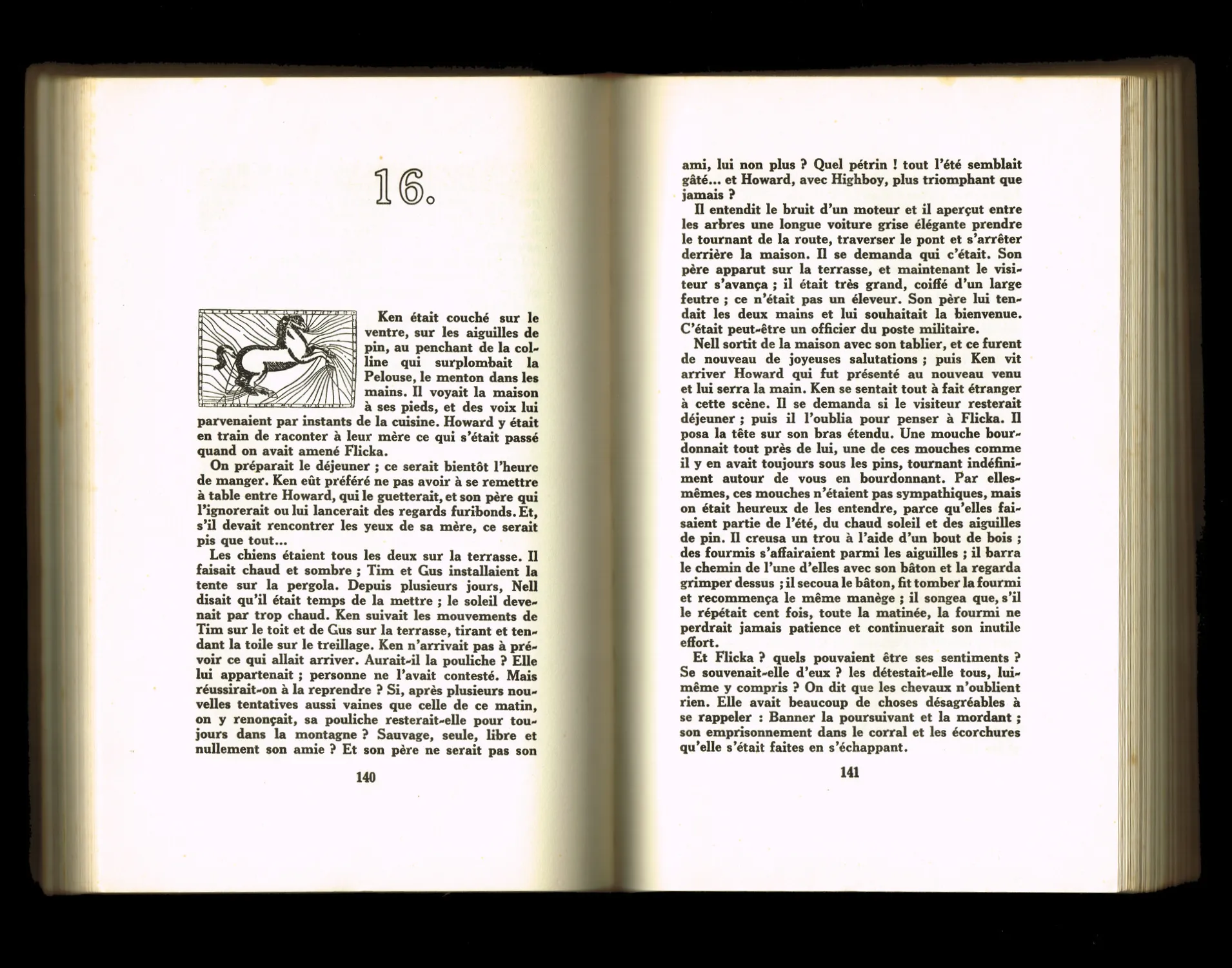
MLH
True to form, this image also originates from the Bibliothèque Bleue, itself sourced from a 17th-century practical guide 36, which here became a playground for graphic experimentation.
ZL
That’s true and I feel as though we are going round in circles, much like these images that seem to follow a cyclical path, never escaping the confines of books and tracing a closed loop of iconography.
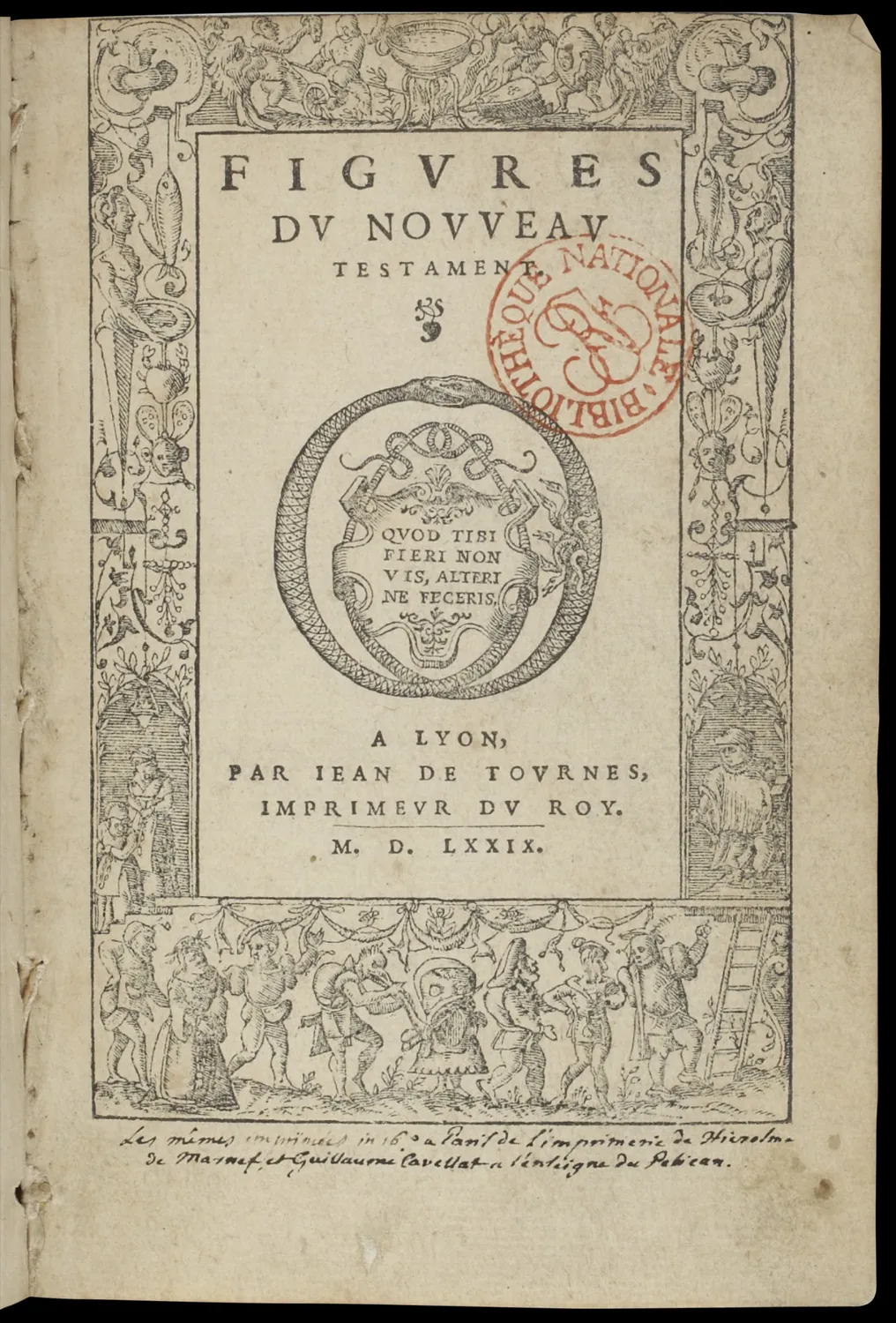
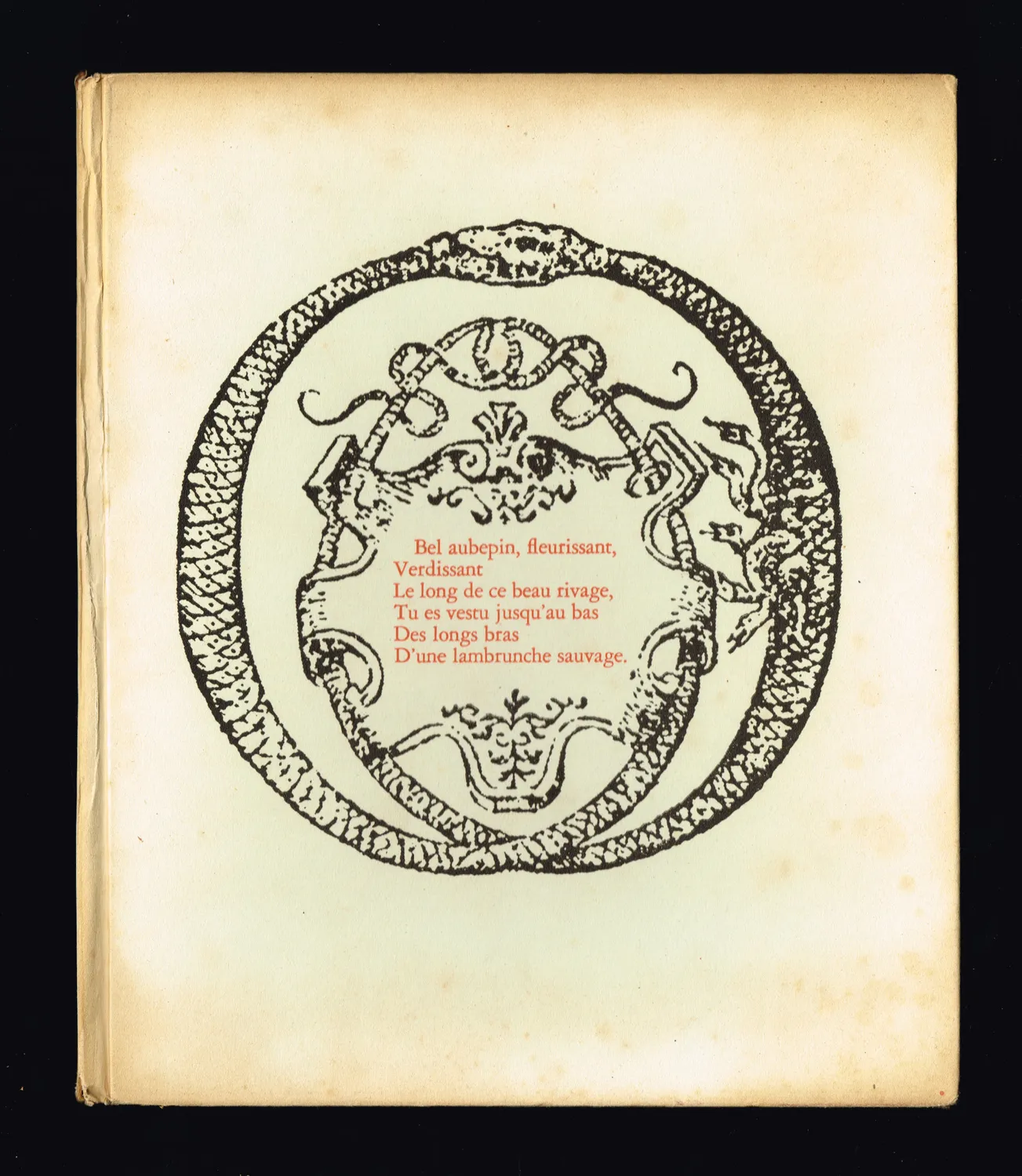
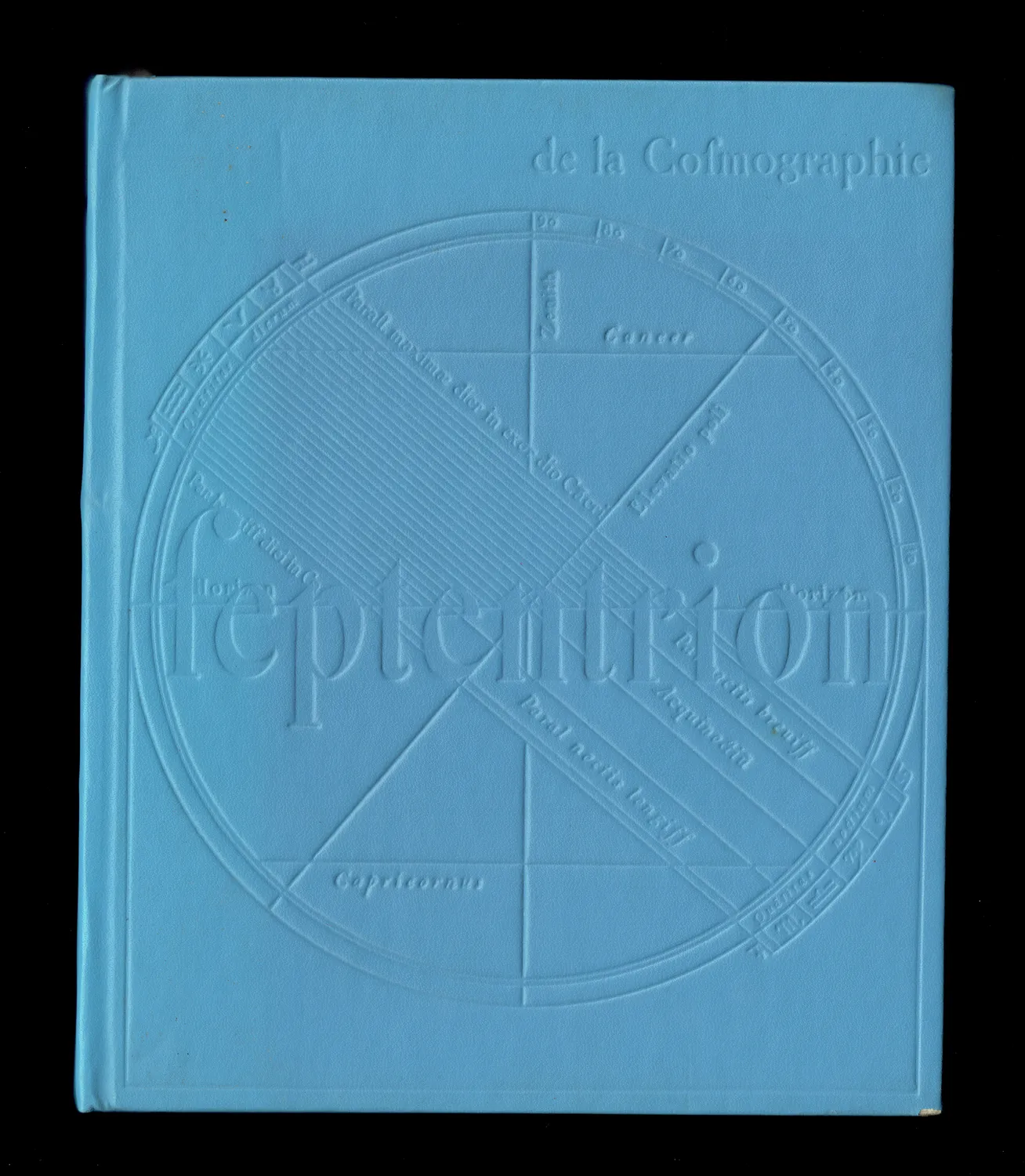
This notion of the cycle is, in fact, literally embedded in the chosen engravings. Pierre Faucheux crowned the cover of Ronsard’s Œuvres choisies CFL69 with an imposing ouroboros, used by Jean de Tournes (16th-century printer from Lyon) as a typographic mark 38. Alain Le Breton covered Marco Polo’s *Le Devisement du monde 39 with a volvelle, a calculating instrument used to determine astronomical cycles 40. As for Jeanine Fricker, she enveloped the blue cover of Le Mas Théotime CML152 with the twelve astrological figures from a Calendrier des bergers 42.
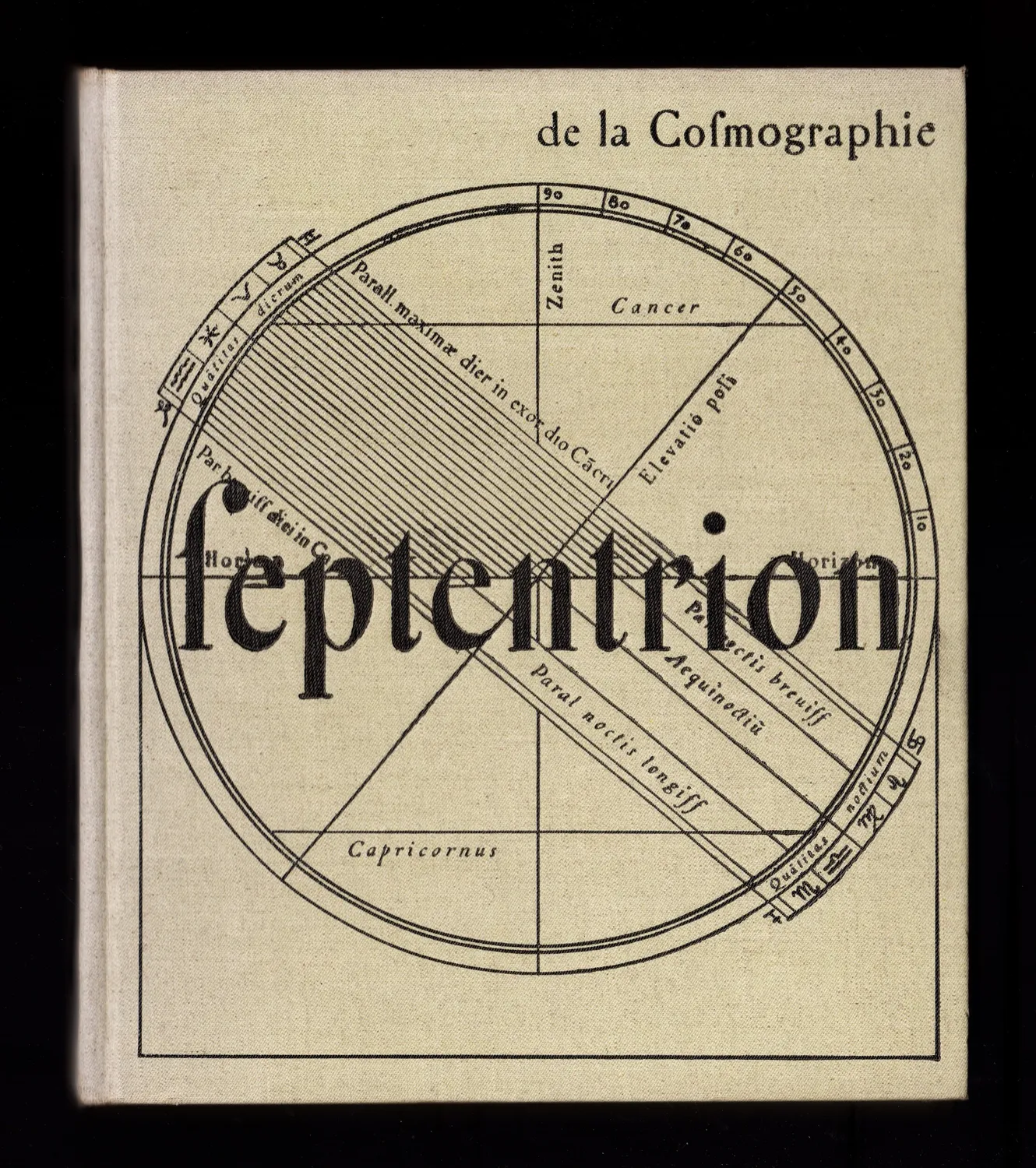
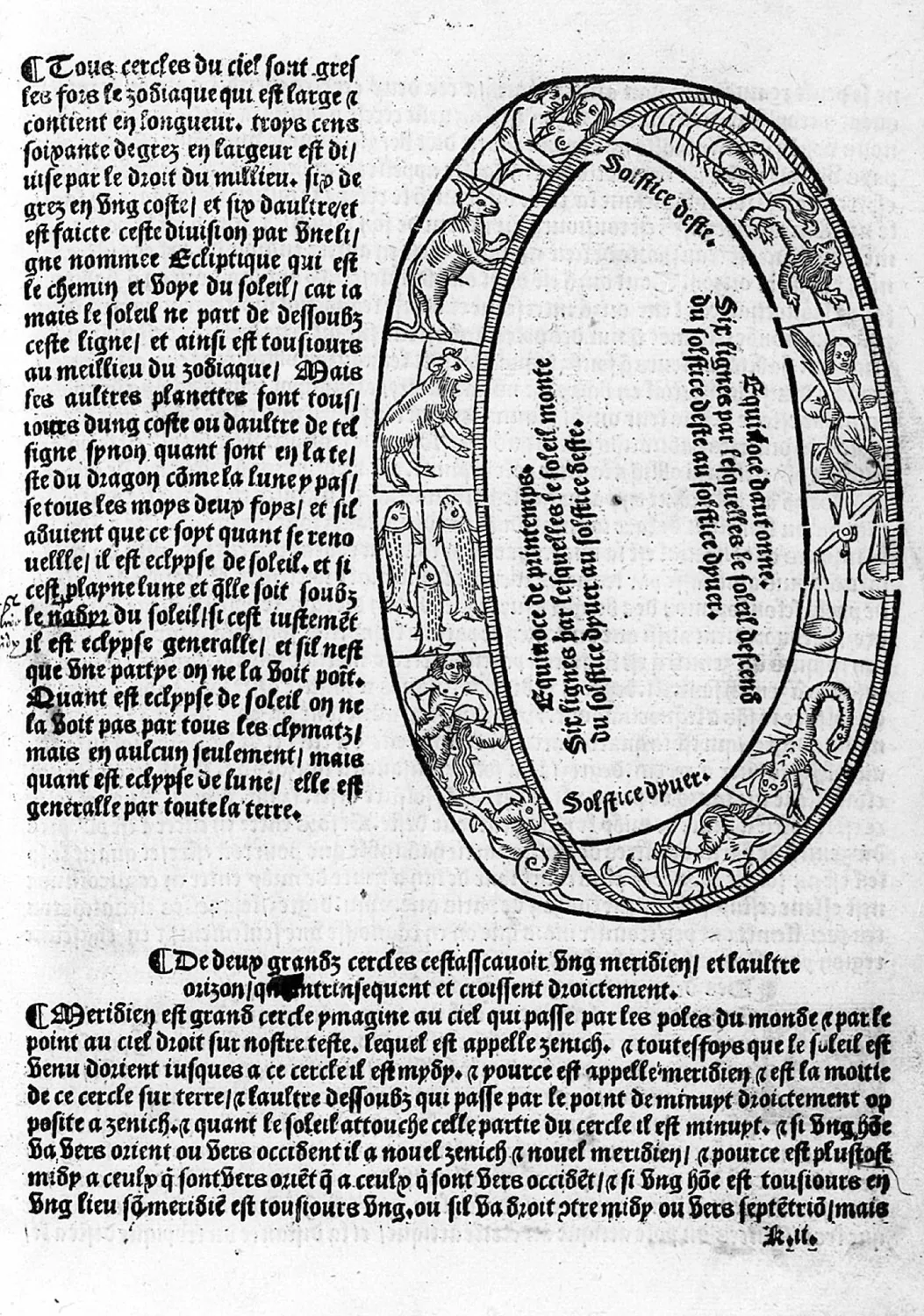

MLH
Let’s not forget the moons and suns, quintessential cyclical symbols, which adorn Club books by the dozen, from interior pages to bookbinding cloths. Take, for example, the cover of Enfants du bon Dieu CML38, which boasts the laughing face of the sun – the same sun that, in 1948, already illuminated Les Aventures du roi Pausole, the very image that sparked our investigation.